
Eriophyes ramotus mite
Eriophyes ramotus
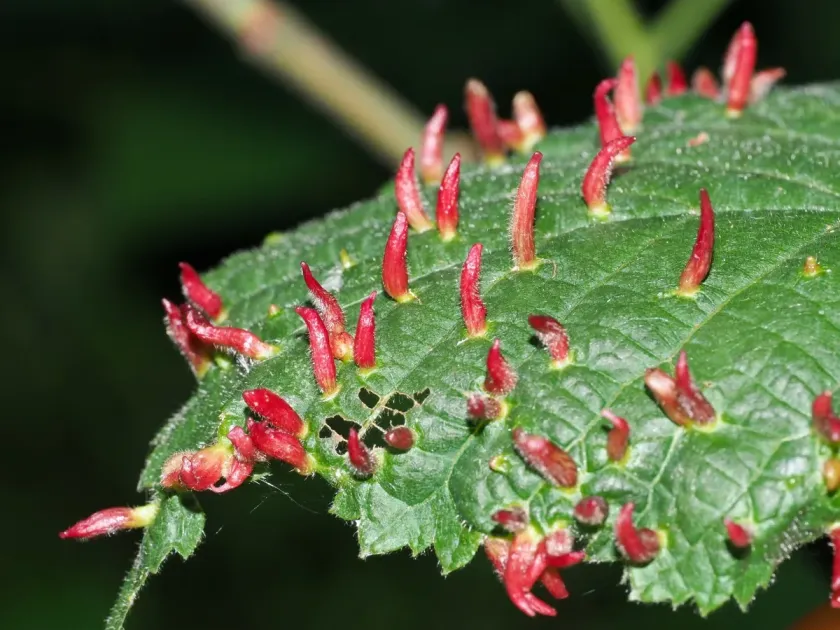
Description
How to identify
Eriophyes ramotus belongs to the Eriophyidae family, commonly known as gall mites. These are microscopic organisms characterized by an elongated, worm-like body and only two pairs of legs located at the anterior end.
Because they measure only about 0.2 mm, they are invisible to the naked eye. Their presence is usually confirmed by the characteristic physical changes they induce in the host plant tissues.
The life cycle is strictly specialized to host plants. Fertilized females overwinter in protected niches, such as bud scales or bark crevices, waiting for favorable spring conditions to begin feeding.
The mite goes through egg, nymph, and adult stages. Due to their rapid reproductive cycle, a single season can host multiple overlapping generations of the pest.
They are primarily dispersed by wind or physical contact with contaminated garden tools, which makes them difficult to contain once established in a new area.
What it damages
These mites are notorious for causing the formation of galls — abnormal tissue growths — which act as their protection and source of nutrition throughout the growing season.
By injecting salivary secretions during feeding, they disrupt plant growth hormones, leading to leaf deformation, stunted shoots, and generalized physiological stress.
Heavy infestations significantly reduce the photosynthetic capacity of the plant, which often leads to decreased yields and poor plant vigor over time.
The damaged tissue is prone to developing secondary infections, as the punctures create entry points for various pathogens, including fungi and bacteria.
Ornamental plants suffer primarily from the aesthetic loss caused by the unsightly gall formations and the distortion of the leaves and stems.
When it appears
Activity typically begins in early spring, synchronized with the onset of bud break, as the mites emerge from their overwintering sites to migrate toward tender foliage.
The population reaches its peak density during the rapid growth phase of the plant when nutrients are most available in the succulent young leaves.
During the hot summer months, the mites continue their cycle inside the galls, which provide a stable microclimate protected from external environmental fluctuations.
As temperatures drop in the autumn, the adult mites initiate their migration back to the buds or bark to find suitable sheltered spots for hibernation.
The number of generations per year is largely determined by local climatic conditions, with warmer regions supporting much higher populations than cooler climates.
Signs of infestation
The most reliable sign of an infestation is the development of leaf galls, which vary in shape and color depending on the host species and the mite's activity.
Distorted, curled, or "witches' broom" growth patterns on new shoots are strong indicators that the mites are interfering with the plant's normal physiological development.
Discoloration, including chlorotic or reddish patches, often appears on the leaves where the mites are feeding, reflecting the localized damage to cell structures.
Visible swelling or abnormal bud development is a sign that the mites have colonized the reproductive or vegetative buds, preventing healthy growth.
- Formation of characteristic galls and leaf protrusions.
- Severe curling and twisting of young foliage.
- Reduced plant vigor and poor fruit set.
- Premature leaf drop and drying of affected branches.
Control measures
Sanitation is the primary management strategy; pruning and destroying infested plant parts early in the season is critical to preventing the spread of the mite population.
Chemical control using acaricides is effective only during the short migration window in early spring before the mites retreat inside the protective gall tissue.
Consistent monitoring and the use of pest-free propagation material are essential steps to avoid introducing the mite to unaffected parts of the garden or greenhouse.
Biological control, utilizing predatory mites (such as phytoseiids) which are natural enemies of eriophyids, can be a sustainable option for large-scale management.
Maintaining optimal plant health through proper fertilization and watering helps plants tolerate light infestations and recover more effectively from mite-induced damage.
Taxonomy
- Latin name
- Eriophyes ramotus
- Order
- Mites
- Family
- Eriophyidae
- EPPO code
- ERPHRA
Discussion
No discussions yet — be the first.