
Pear leaf blister mite
Eriophyes pyri
Description
How to identify
The pear leaf blister mite (Eriophyes pyri) is a microscopic pest belonging to the family Eriophyidae. These mites are extremely small, typically measuring about 0.2 mm in length, making them invisible to the naked eye without magnification.
They possess a worm-like, elongated body that is creamy-white or translucent in color. Unlike other spider mites, they have only two pairs of legs situated near the front of the body, which they use for locomotion on leaf surfaces.
The mites overwinter as adults, hiding deep within the bud scales of the host trees. As spring temperatures rise and sap begins to flow, the mites emerge from their winter shelter to colonize newly developing leaves.
Their life cycle is closely synchronized with the phenology of the pear tree. Under favorable conditions, the mites reproduce rapidly, completing multiple generations throughout a single growing season.
Environmental factors, particularly humidity and temperature, significantly influence their reproduction rates. Warm, moist conditions generally accelerate their development, leading to increased pressure in the orchard.
What it damages
While the pear tree is the primary host, this mite can also infest apple, mountain ash, and quince trees. This wide host range allows the pest to persist in diverse landscapes and move between related species.
The mites feed by piercing the leaf epidermis and sucking fluids from the cells. During this process, they inject salivary enzymes that trigger abnormal cell growth, resulting in the formation of distinct galls.
Heavy infestations can lead to severe damage to the foliage, which reduces the photosynthetic capacity of the tree. This often results in weakened trees, poor fruit set, and reduced vigor over time.
In addition to leaves, the mites may attack young fruitlets. This feeding causes cosmetic damage in the form of spots and bumps, which significantly lowers the marketability of the pears.
Prolonged infestation can lead to leaf drop, which often mimics drought stress. If left unmanaged, chronic attacks can reduce the overall productivity and lifespan of the orchard.
Signs of infestation
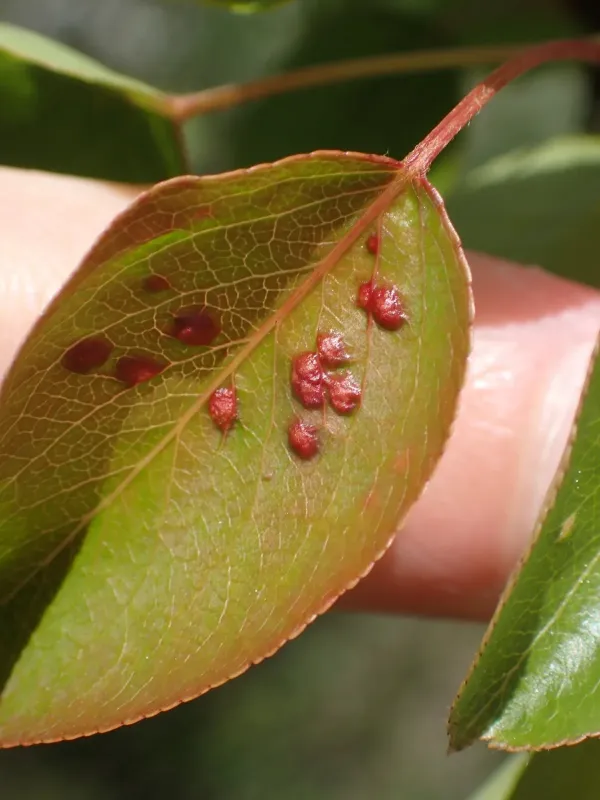
The most recognizable sign of infestation is the development of blister-like galls on the leaves. Initially, these galls are small and light green, but they eventually turn red and then dark brown or black.
Galls are usually clustered around the leaf midrib. As the infestation progresses, these galls can merge, covering large areas of the leaf surface and causing the entire leaf to curl, distort, or wither prematurely.
Early leaf drop is a common symptom of a severe infestation. This defoliation during the summer weakens the tree, as it loses the ability to produce the energy required for the next season's buds.
Fruit symptoms include localized dark spots or corky patches. While these do not typically affect the internal quality of the fruit, they render the harvest unsightly and unsuitable for commercial sale.
Regular monitoring during the bud break period is crucial. Inspecting the young leaves for the very first signs of pale-green bumps allows for prompt intervention before the population explodes.
Control measures
Chemical control is the most effective strategy for managing pear leaf blister mites. Acaricide applications should be timed carefully, ideally during the dormant season or at the very beginning of bud break.
Systemic acaricides can be effective during the growing season; however, it is critical to use them responsibly and rotate active ingredients to prevent the mites from developing resistance to common chemical groups.
Good horticultural practices include the removal and destruction of infested branches or heavily damaged foliage. This sanitation effort is essential for reducing the local mite population in the garden.
Maintaining tree vigor through proper fertilization and watering is key to helping trees withstand and recover from pest attacks. Healthy trees generally exhibit higher natural resistance.
- Apply dormant oil sprays to target overwintering adults.
- Remove and destroy fallen leaves to reduce overwintering sites.
- Use selective acaricides during the early season.
- Avoid overuse of broad-spectrum insecticides that kill beneficial predatory mites.
Taxonomy
- Latin name
- Eriophyes pyri
- Order
- Mites
- Family
- Eriophyidae
- EPPO code
- ERPHPI
Discussion
No discussions yet — be the first.