
Apple leaf mite
Eriophyes mali
Description
How to identify
The apple leaf mite, or apple gall mite (Eriophyes mali), belongs to the order Trombidiformes and the family Eriophyidae. These are extremely small, vermiform arachnids measuring about 0.2 mm in length.
They are characterized by having only two pairs of legs located near the head, which distinguishes them from other mite species. Due to their microscopic size, they are rarely seen without magnification, making symptoms the primary tool for identification.
What it damages
This pest specifically targets apple trees, although it can occasionally be found on other related Rosaceae species. The mites feed by piercing leaf cells and injecting saliva that causes abnormal tissue growth.
The result of this feeding activity is the formation of galls—abnormal structures that restrict the tree's photosynthetic capacity. Heavy infestations can significantly impact the overall vigor and productivity of the tree.
When it appears
The mites overwinter as adult females sheltered under the scales of dormant buds or within bark crevices. As temperatures rise and buds begin to swell, the mites emerge to infest the emerging green tissue.
The life cycle involves multiple overlapping generations throughout the growing season. The spread is most active during the spring flush when the mite populations move from the buds to the developing leaves.
Signs of infestation
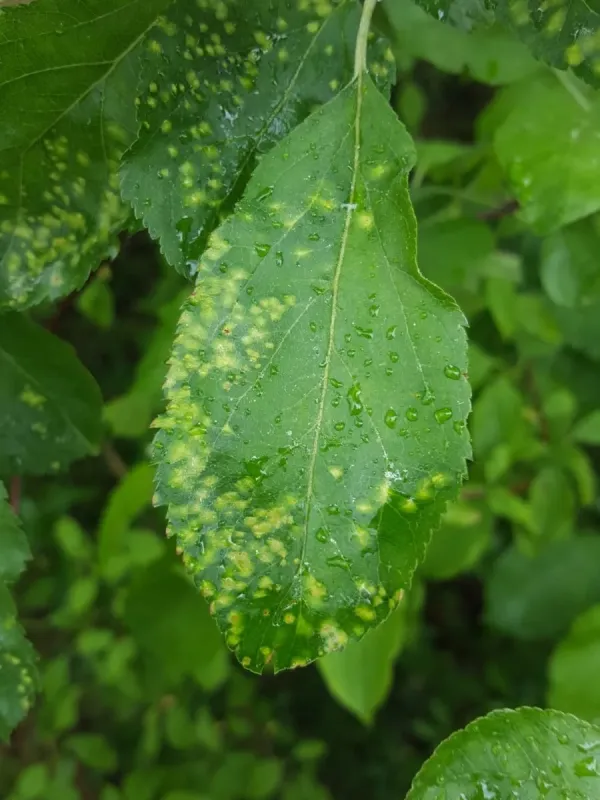
The hallmark symptom is the appearance of small, raised galls on the upper or lower leaf surface. These galls start as light green or yellowish spots and eventually turn brown or black as the tissue dies.
Severe infestations cause leaves to curl, blister, and drop prematurely. This stress weakens the tree, potentially affecting fruit size and quality, as well as reducing the tree's hardiness for the following winter.
Control measures
Control is challenging because the mites are protected within the galls once they are formed. Effective management relies on early spring applications of miticides (acaricides) before the buds break to kill overwintering mites.
Pruning out heavily infested shoots and removing fallen leaves in autumn helps reduce the overwintering population. Promoting healthy tree growth through proper nutrition and water management can help the tree better tolerate the damage caused by these mites.
Taxonomy
- Latin name
- Eriophyes mali
- Order
- Mites
- Family
- Eriophyidae
- EPPO code
- ERPHMA
Discussion
No discussions yet — be the first.