
Gall mite Eriophyes lineatus
Eriophyes lineatus
Description
How to identify
Eriophyes lineatus belongs to the family Eriophyidae, commonly known as gall mites. These are microscopic pests characterized by an elongated, vermiform body shape, measuring approximately 0.2–0.3 mm in length, making them invisible to the naked eye during regular inspections.
The morphology of this mite includes only two pairs of legs located at the front of the body, which is a hallmark of the Eriophyidae family. Their translucent bodies, ranging from whitish to pale yellow, allow them to blend into the plant tissue surfaces where they reside and feed.
The mite's life cycle is intimately linked to the host plant. They spend the majority of their developmental stages protected within plant tissues or the galls they induce. This shelter provides an optimal microenvironment that shields them from adverse weather and many predators.
Fertilized females overwinter in sheltered locations such as bark crevices, bud scales, or protected areas on the plant branches. With the onset of favorable spring temperatures, they emerge and migrate to developing tissues to begin the new reproductive cycle.
Dispersal is primarily passive, facilitated by wind currents, raindrops, insect vectors, or by contact with gardening tools and clothing. This efficient dispersal mechanism allows the mite population to spread rapidly across host plants within a localized environment.
What it damages
The primary hosts for Eriophyes lineatus are various willow species and related woody shrubs. The pest specifically targets succulent, actively growing tissues such as young leaves and expanding leaf buds, which are nutrient-rich.
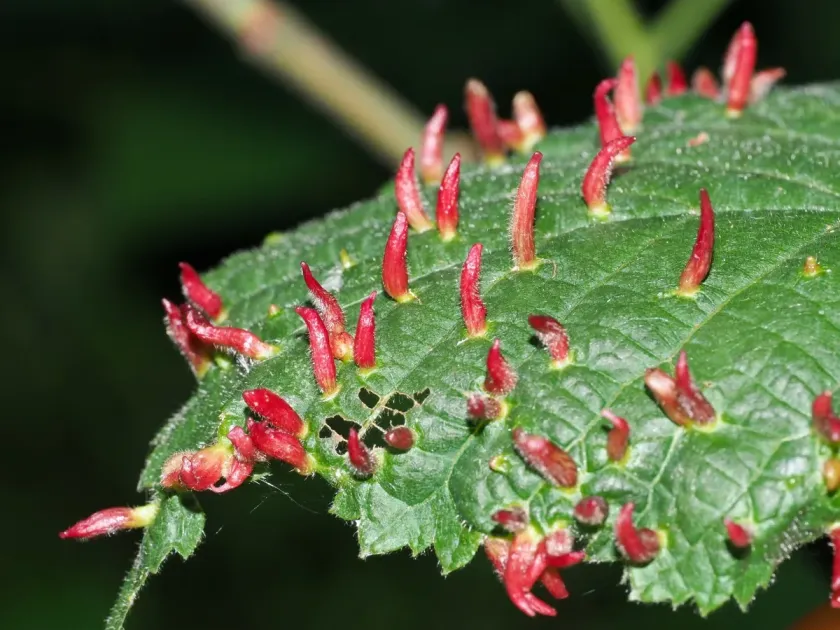
Feeding triggers a physiological response in the host plant, characterized by the injection of enzymes during the feeding process. This leads to the formation of galls—abnormal, tumor-like growths that serve as both a food source and a secure living chamber for the mites.
These galls significantly disrupt the plant's normal metabolic processes, including photosynthesis and respiration. By damaging the leaf architecture, the mites reduce the plant's overall photosynthetic efficiency, leading to a decline in energy storage and vigor.
In cases of severe infestation, plants may exhibit stunted shoot growth, leaf deformation, and premature leaf drop. These factors weaken the plant, making it more susceptible to environmental stressors, such as frost, and secondary infections by pathogens.
From an aesthetic standpoint, infestations cause significant visual degradation, particularly in nursery and ornamental settings. The presence of numerous galls, twisted foliage, and stunted growth diminishes the ornamental value and health of the trees and shrubs.
Signs of infestation
The most diagnostic sign of an infestation is the appearance of specific growths known as galls on the leaf surface. These vary in size and color, often appearing as wart-like bumps, red, yellow, or brown discolorations, depending on the host species.
- Deformation of young leaves, causing them to curl or crinkle abnormally.
- Presence of non-typical excrescences on leaf petioles and main veins.
- Stunted development of terminal buds and inhibited shoot elongation.
- General chlorosis or yellowing of foliage in the vicinity of the galls.
Inspection using a hand lens or microscope will reveal the presence of tiny, mobile mites inside the galls. This is essential for confirming the diagnosis, as symptoms may sometimes be confused with fungal infections or other physiological disorders.
Infestations typically start in localized areas, often on lower or inner branches, and spread throughout the canopy over time. Early detection is crucial to prevent the population from reaching levels that require extensive chemical intervention.
As the season progresses, older galls may dry out and turn necrotic, creating a rusty or scorched appearance on the foliage. While these galls may no longer harbor live mites, they signify that the population has already completed its development cycle and migrated.
Control measures
Effective management begins with strict sanitation practices. Removing and incinerating heavily infested branches or fallen leaves during the dormant season is a primary method for reducing the overwintering population and limiting early spring outbreaks.
Chemical control focuses on the use of acaricides. Due to the mites' protected life within the galls, choosing systemic or translaminar products is vital to ensure the active ingredient reaches the pests effectively.
Applications should be timed to coincide with the mites' migration periods, particularly during the emergence from overwintering sites. It is generally recommended to perform several sequential treatments at 10–14 day intervals to manage emerging mite populations.
To prevent the development of pesticide resistance, it is important to rotate chemical products with different modes of action. Incorporating biological control agents or soft, eco-friendly options can also enhance the overall success of the protection strategy.
Promoting general plant health through proper irrigation, balanced fertilization, and appropriate pruning helps the plant withstand mite-induced stress. A vigorous plant can better tolerate minor feeding pressure and recover more rapidly from structural damage.
Taxonomy
- Latin name
- Eriophyes lineatus
- Order
- Mites
- Family
- Eriophyidae
- EPPO code
- ERPHLS
Discussion
No discussions yet — be the first.