
Linden velvet mite
Eriophyes lateannulatus
Description
How to identify
The linden velvet mite (Eriophyes lateannulatus) is a member of the Eriophyidae family, commonly known as gall mites. These are microscopic arthropods that are invisible to the naked eye.
They possess a worm-like body shape with only two pairs of legs, a trait that distinguishes them from other types of mites found on trees.
These mites overwinter as adults, finding shelter in crevices of the tree bark, dormant buds, or under scales on the twigs, preparing for the next season.
As soon as the leaves begin to bud in the spring, the mites migrate from their hibernation spots to the fresh, expanding leaf tissue to begin feeding and reproduction.
Multiple generations are produced throughout the growing season, which allows the population to multiply rapidly if weather conditions are favorable for their development.
What it damages
The primary host for this pest is the lime tree (Tilia). The mite induces the plant to create specialized structures known as galls, which serve as their habitat.
Feeding activities disrupt the photosynthesis and general physiological processes of the leaves, putting stress on the overall health of the tree.
Significant infestations lead to premature leaf drop and loss of ornamental value, which is particularly detrimental in urban landscaping and municipal parks.
Consistent damage over several years can lead to reduced vigor, stunted shoot growth, and an increased susceptibility to other environmental stressors.
While rarely fatal to healthy, mature trees, the aesthetic and physiological impact makes the linden velvet mite a persistent problem for arborists.
Signs of infestation
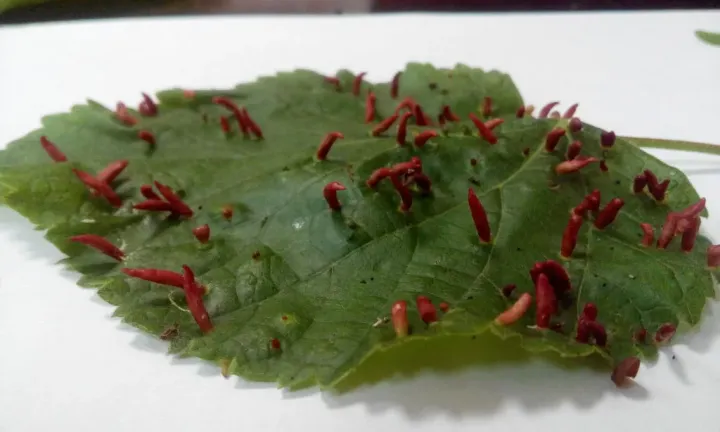
The most prominent sign of infestation is the formation of velvet-like galls on the leaves. These patches are dense clusters of hair-like growths induced by the mites.
The color of these galls can change over time, often transitioning from pale green or yellow to vivid red or brown, depending on the severity of the colonization.
Leaves affected by these mites frequently show signs of distortion, curling, or puckering, which alters the standard foliage appearance of the linden tree.
If you examine the underside of a gall, you will find a thick mat of trichomes (hairs) where the mite colonies reside and reproduce, hidden from many predators.
Infestations typically start in small, isolated patches before spreading to cover large sections of the canopy, indicating the need for early intervention.
Control measures
Managing the linden velvet mite requires the use of effective acaricides, as traditional insecticides are often ineffective against these specific types of mites.
The best time to apply control measures is during the early spring as the buds break and the mites emerge to infest the new leaf growth.
In cases of heavy infestation, repeat applications of mite-specific products may be necessary to target subsequent generations emerging from the galls.
Pruning and destroying heavily infested branches can help reduce the local population density and minimize the spread of the mites to healthier parts of the tree.
- Apply systemic acaricides during the spring growth flush.
- Practice proper tree maintenance to boost host immunity.
- Monitor for gall formation early in the season.
- Clear away and destroy fallen leaves to reduce overwintering sites.
Taxonomy
- Latin name
- Eriophyes lateannulatus
- Order
- Mites
- Family
- Eriophyidae
- EPPO code
- ERPHLT
Discussion
No discussions yet — be the first.