
Lantana gall mite
Eriophyes lantanae
Description
How to identify
The lantana gall mite (Eriophyes lantanae) is a microscopic mite belonging to the Eriophyidae family. Unlike typical spider mites, these pests are worm-like and cannot be seen with the naked eye.
They are obligate parasites that induce the formation of galls, which are abnormal growths on the plant tissue. These galls serve as a protective habitat and a nutrient source for the mites.
Their life cycle is specialized, with multiple generations developing inside the plant tissues. The mites prefer the succulent, growing parts of the plant, such as leaf buds and young shoots.
The spread of this species often occurs through the movement of infested nursery stock or by wind currents carrying the mites from plant to plant.
Diagnosis requires high-magnification microscopy or clear visual evidence of the characteristic galls on the host plant to confirm the presence of this specific pest.
What it damages
The primary host for this mite is Lantana camara. The feeding activity of the mites disrupts the hormonal balance of the plant, leading to the development of unsightly galls.
These galls interfere with the normal photosynthetic process, reducing the plant's overall energy production and leading to stunted growth or decline in vigor.
Severe infestations result in the deformation of flowers, preventing them from opening properly and significantly impacting the ornamental quality of the shrub.
In some regions where Lantana camara is considered an invasive weed, this mite is utilized as a biological control agent to check its population growth.
The structural damage caused by the mites makes the plant more vulnerable to secondary pathogens, including various fungal and bacterial infections.
Signs of infestation
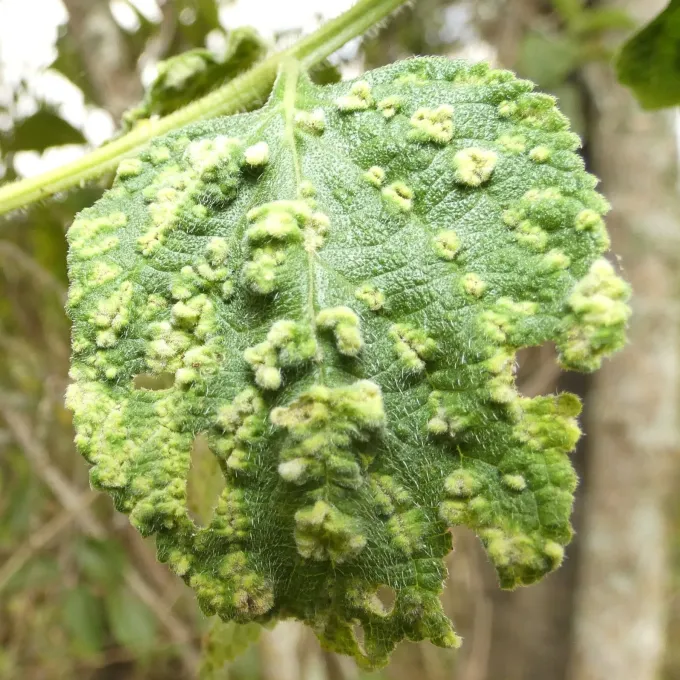
The most distinctive sign is the appearance of small, raised bumps or distorted tissue growth on the leaves and terminal shoots of the plant.
Shoots affected by the mite often become shortened, twisted, or form dense clusters that look like "witches' brooms" due to abnormal cell proliferation.
The surface of the galls may change color, turning yellowish, reddish, or brown as the tissue matures and the mite colony continues its development.
Flower buds fail to bloom correctly, often appearing withered or extremely distorted, which is a clear indicator of a significant infestation within the growth points.
General plant decline, characterized by a lack of new growth and premature leaf drop, typically signals that the mite infestation is well-established.
Control measures
Sanitation is key; physically pruning and destroying all affected plant parts is the first line of defense to reduce the local mite population.
Systemic acaricides are recommended for chemical control, as they are absorbed by the plant and can reach the mites hidden deep within the gall tissues.
To prevent introduction, thoroughly inspect all new lantana plants before placing them in the garden and avoid purchasing specimens with visible distortions.
Maintaining optimal plant health through balanced fertilization and proper irrigation can help the plant tolerate and recover from mite pressure.
In controlled environments like greenhouses, biological control using predatory mites that hunt eriophyids can be an effective and sustainable management strategy.
Taxonomy
- Latin name
- Eriophyes lantanae
- Order
- Mites
- Family
- Eriophyidae
- EPPO code
- ERPHLN
Discussion
No discussions yet — be the first.