
Fuchsia gall mite
Eriophyes fuchsiae
Description
How to identify
The fuchsia gall mite (Eriophyes fuchsiae) is a microscopic pest belonging to the Eriophyidae family. These mites are worm-like in shape and are invisible to the naked eye, measuring only a fraction of a millimeter in length.
They inhabit the tissues of the fuchsia plant, often hiding deep within growing tips and leaf axils where they are protected from environmental factors and contact pesticides.
The mite reproduces rapidly under favorable conditions, typically warm and humid, creating overlapping generations that can quickly overwhelm a single plant or an entire collection.
These mites possess only two pairs of legs, which is a characteristic feature of eriophyid mites that allows them to move and crawl effectively over the surface of the plant's epidermis.
Dispersal occurs mainly through contaminated cuttings, though they can also travel via wind currents, splashing water, or by hitchhiking on the clothing and tools of gardeners.
What it damages
The fuchsia gall mite is a host-specific pest that attacks various species and hybrids within the Fuchsia genus. It disrupts the plant's normal growth processes through systemic feeding.
By injecting toxic saliva into the plant tissues, the mites force the plant to create abnormal growths known as galls, which provide the pests with food and shelter.
These galls redirect energy and nutrients away from healthy floral development, leading to stunted growth and the cessation of blooming, which is the primary value of the plant.
Severe infestations cause the plant to become woody and deformed, eventually resulting in the decline of the plant's health and the potential loss of the entire specimen if left untreated.
Damage is not restricted to leaves; it often affects stems and flower buds, causing severe morphological changes that make the plant lose its ornamental form.
Signs of infestation
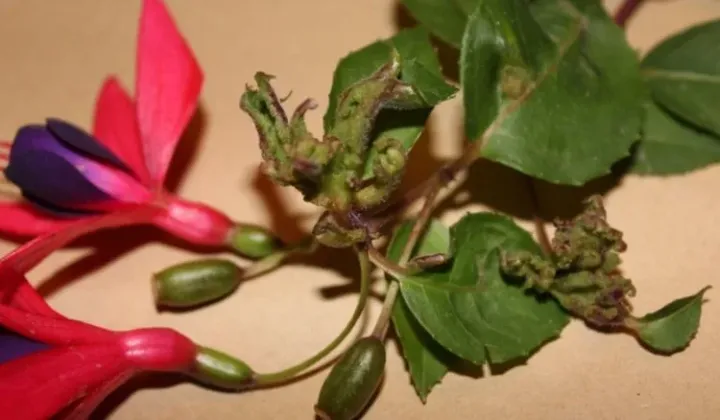
The most distinctive sign of infestation is the appearance of distorted, thickened, and curled leaves at the shoot tips, often accompanied by reddish or pale discolored bumps.
The plant growth becomes bushy and cramped due to the shortened internodes, which give the stems a stunted, rosette-like appearance that is impossible to ignore.
Flower buds are frequently affected, becoming hardened and misshapen, often failing to open or producing malformed blooms that are completely uncharacteristic of the variety.
In many cases, the surface of the damaged tissue develops a dense layer of hair-like structures, a reaction known as erineum, which is a clear indicator of gall mite presence.
The overall vigor of the plant declines, and despite adequate watering and fertilization, the specimen fails to show progress, showing signs of metabolic distress.
Control measures
Pruning is the first line of defense; all symptomatic growth must be removed and destroyed immediately to prevent the spread of mites to healthy foliage and other plants.
Chemical control involving systemic or contact acaricides is essential, as these must reach the mites hiding deep within the plant tissues during their active growth phases.
Strict hygiene practices, including the sterilization of pruning tools with alcohol after every use, are crucial to prevent the mechanical transmission of the pest.
New plants should be kept under quarantine for an extended period to ensure they are free of infestation before they are introduced to the primary plant collection.
Environmental management, such as increasing airflow and avoiding overhead irrigation, can help create a less hospitable environment for mite proliferation and survival.
Taxonomy
- Latin name
- Eriophyes fuchsiae
- Order
- Mites
- Family
- Eriophyidae
- EPPO code
- ERPHFU
Discussion
No discussions yet — be the first.