
Cherry gall mite
Eriophyes emarginatae
Description
How to identify
The cherry gall mite (Eriophyes emarginatae) is a microscopic pest classified within the Eriophyidae family. These mites are worm-like and extremely small, measuring only a fraction of a millimeter in length. Due to their minute size, they are rarely seen directly, and their presence is detected primarily by the symptoms they induce.
What it damages
This species is a specialized pest that targets various species of Prunus, particularly the bird cherry (Prunus padus). By injecting substances into the plant tissue, the mite forces the host plant to create specialized structures known as galls, which serve as both food sources and protection for the developing mite colonies.
When it appears
The life cycle is tightly synchronized with the host plant's phenology. Adults overwinter in protected areas, such as bark crevices or bud scales. As the buds swell in spring, the mites migrate to the newly emerging leaves to begin feeding and reproduction, generating several generations throughout the warm months.
Signs of infestation
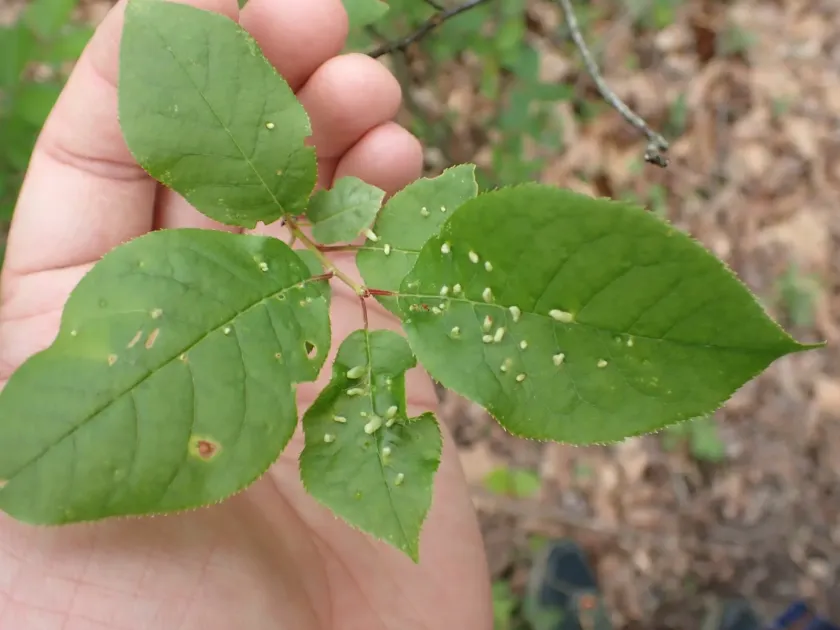
Infestation is marked by the appearance of distinctive galls on the leaf blades. These can manifest as small, rounded, or elongated outgrowths, often varying in color from yellow-green to intense red. Severe infestations lead to leaf curling, premature drying, and potentially early leaf drop, causing physiological stress to the tree.
Control measures
Effective management requires applying acaricides specifically during the bud-break phase when mites are most vulnerable. Cultural practices, such as pruning and destroying heavily infested branches during the dormant season, help reduce the overwintering population. Promoting general tree vigor through proper irrigation and nutrition can also assist the plant in mitigating damage.
Taxonomy
- Latin name
- Eriophyes emarginatae
- Order
- Mites
- Family
- Eriophyidae
- EPPO code
- ERPHEM
Discussion
No discussions yet — be the first.