
Linden gall mite
Eriophyes bistriatus
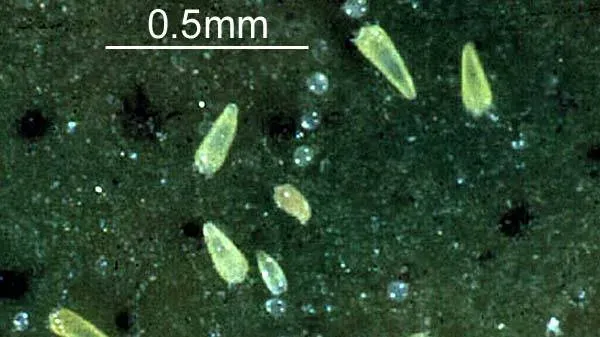
Description
How to identify
The linden gall mite (Eriophyes bistriatus) is a microscopic pest belonging to the family Eriophyidae. Due to its extremely small size, typically under 0.2 mm in length, it is invisible to the naked eye and requires professional equipment for identification.
The body of this mite is elongated, worm-like, and divided into a cephalothorax and an abdomen with numerous rings. It possesses only two pairs of legs, which is a characteristic feature of the four-legged mite family.
The biological cycle starts with fertilized females overwintering under bud scales or in deep bark crevices. With the onset of spring temperatures, they emerge and migrate toward young, developing foliage.
Upon settling on leaves, they initiate feeding, which causes the plant tissue to react by forming galls. Within these galls, the mites find shelter, food, and optimal humidity for their development.
Multiple generations can occur throughout the growing season. The speed of the mite's life cycle is directly correlated with ambient temperatures, which accelerates the population growth during warmer months.
What it damages
The primary host for Eriophyes bistriatus is the linden or lime tree (Tilia). The mites feed on the sap of the leaves, causing pathological changes in the plant cells, leading to the formation of characteristic galls.
These galls appear as protruding outgrowths on the leaf surface. High levels of infestation can cover a large portion of the tree's foliage, significantly hindering the tree's photosynthetic capability.
Weakened trees exhibit slower annual growth and reduced vitality. If the infestation is severe and persistent over several years, the tree's overall structure and health can be compromised.
The aesthetic value of trees in parks and urban settings is greatly diminished by the presence of these disfiguring galls, which often turn brown or necrotic as the season progresses.
While the mite does not typically kill a mature, healthy tree, the secondary stress caused by the infestation makes the host susceptible to other diseases and environmental stressors.
Signs of infestation
The most prominent sign of infestation is the development of numerous conical or cylindrical galls on the upper side of the linden leaves, which may show yellow to reddish discoloration.
Leaves affected by the mites become distorted, crumpled, and exhibit irregular growth patterns. The surface texture changes significantly compared to healthy, flat leaves.
When observing a gall closely, especially under a magnifying glass, one might notice the entrance hole. Dissecting the gall reveals the internal space occupied by the mite colony.
In cases of heavy infestation, the leaves may show signs of premature wilting or yellowing. In late summer, the foliage may look scorched or withered due to the loss of nutrients.
The presence of these characteristic deformations is the primary indicator for arborists to initiate management steps before the infestation spreads throughout the entire canopy.
Control measures
Effective control is challenging because the mites are protected inside the galls. Systemic acaricides are necessary, as they can be absorbed by the plant and reach the mites through the sap.
The optimal time for application is early spring, specifically during the bud-burst phase, when the overwintering females are active and moving to the young leaves before gall formation is completed.
Cultural practices play a key role in management. Collecting and destroying fallen, infested leaves during autumn significantly reduces the overwintering population of the mites.
Ensuring the tree is well-hydrated and properly fertilized improves the tree's natural defense mechanisms, helping it withstand the physiological stress imposed by the mite infestation.
- Use of systemic acaricides during the early growth season.
- Sanitation: removal and disposal of infested leaf litter.
- Regular inspections of Tilia foliage starting in spring.
- Improving tree vigor through proper horticultural maintenance.
Taxonomy
- Latin name
- Eriophyes bistriatus
- Order
- Mites
- Family
- Eriophyidae
- EPPO code
- ERPHBI
Discussion
No discussions yet — be the first.