
Burchell's zebra
Equus quagga
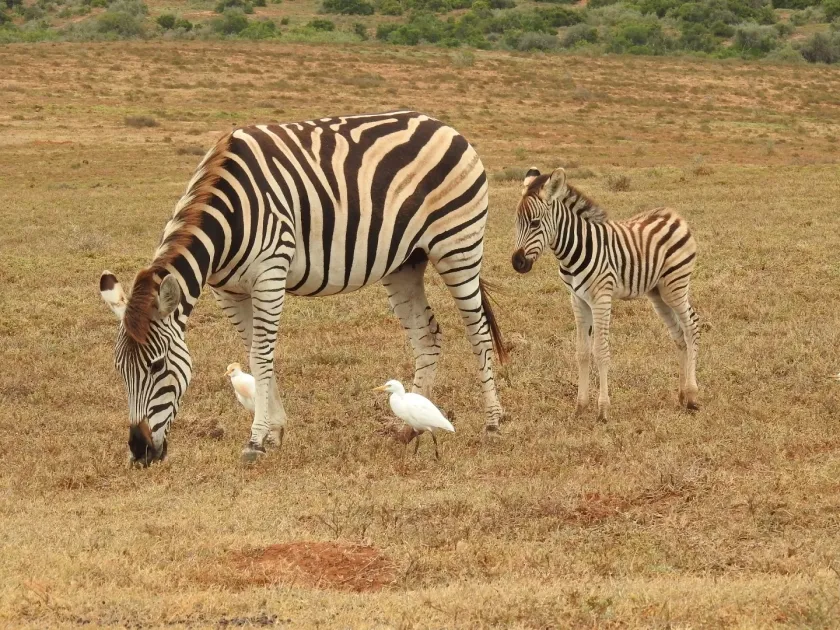
Description
How to identify
Burchell's zebra (Equus quagga) belongs to the order Perissodactyla and the family Equidae. It is a large, social mammal known for its distinct striped pattern.
These animals are characterized by robust physical features and are highly adapted to nomadic movement across vast landscapes.
Adult zebras weigh approximately 300 to 350 kg, making them significant grazers within their natural habitat.
They move in structured family groups, which makes large-scale control of their movement a complex task for agricultural land managers.
The biological cycle of the species is linked to environmental conditions, determining their patterns of movement and site selection.
What it damages
In agricultural settings, Burchell's zebras act primarily as competitors for grazing resources, consuming vegetation intended for livestock.
When they encroach upon cultivated lands, they can cause direct crop losses by trampling and feeding on grain or fodder crops.
The physical presence of a herd leads to soil compaction, which inhibits plant root development and reduces the overall yield potential of the field.
Damage to agricultural infrastructure, such as fences and water storage tanks, represents a significant hidden cost for farmers.
Competition for water sources often stresses local cattle populations, decreasing their growth rates and overall health during critical drought periods.
When it appears
The presence of zebras in farming areas is highly seasonal, driven by migratory patterns in search of forage and permanent water sources.
During the dry season, herds are more prone to move into areas where agricultural irrigation provides fresh green growth.
Migration activity typically peaks during shifts in weather patterns, making the end of the rainy season a high-risk period for crop encroachment.
They are most active during dawn and dusk, which dictates when monitoring and mitigation measures should be most rigorously applied.
Social and reproductive cycles also influence their movement, occasionally leading to larger congregations of animals in specific fertile areas.
Signs of infestation
Primary signs of presence include well-worn trails created by group movement and distinctive, deep hoof prints in the soil.
Grazing evidence presents as large, irregularly eaten patches of vegetation, often accompanied by significant waste deposits.
Physical damage to perimeter fencing and gates is a definitive indicator of herd movement through the area.
Disturbed soil and flattened crops indicate areas where the herd has lingered, with significant biomass removal visible in the immediate vicinity.
Audible cues, such as vocalizations heard during evening or early morning hours, are reliable indicators of nearby zebra groups.
Control measures
Robust fencing solutions, particularly those equipped with electric deterrents, are the most effective method for excluding zebras from crops.
Acoustic and visual deterrents, including flashlights and motion-activated sound emitters, can disrupt herd behavior and discourage entry.
Buffer zones consisting of unpalatable plant species can be used to redirect or discourage grazing near sensitive high-value fields.
Implementing a regular inspection schedule for perimeter integrity ensures that any breaches are addressed before large-scale damage occurs.
- Installation of electric fencing systems.
- Motion-activated acoustic and visual repellents.
- Development of unpalatable plant buffer zones.
- Ongoing perimeter monitoring and maintenance.
Taxonomy
- Latin name
- Equus quagga
- Family
- Equidae
- EPPO code
- EQUUQB
Discussion
No discussions yet — be the first.