
Donkey
Equus africanus
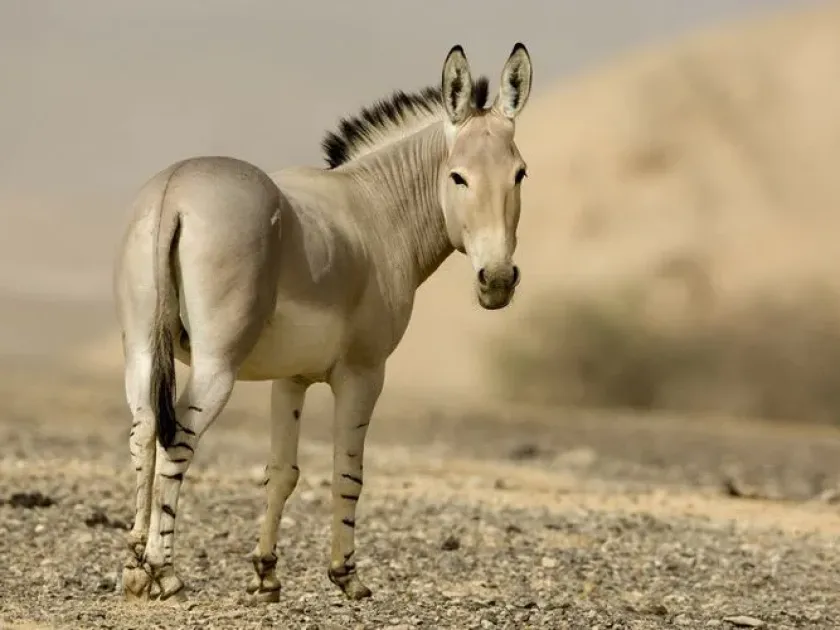
Description
How to identify
The donkey (Equus africanus) is a member of the Equidae family. While primarily a domestic animal, in agricultural settings, its presence on crop fields without proper management can lead to significant economic losses due to feeding and trampling.
Donkeys are characterized by their sturdy build and hard, heavy hooves. These features allow them to navigate diverse terrains, but when they enter cultivated fields, they exert high pressure on the soil, leading to soil compaction and disruption of root development.
These animals are highly intelligent and social, tending to move in groups. This behavior significantly increases the scale of damage in a field, as multiple animals can strip a crop area in a very short time.
With their ability to leap or push through weak barriers, they can access fields that might be considered protected. Understanding their behavior is essential for developing effective prevention strategies.
From an agronomical perspective, the donkey is categorized as a vertebrate pest, requiring exclusion methods rather than chemical deterrents to protect high-value crops.
What it damages
Donkeys pose a threat to various agricultural crops, especially cereal grains like wheat, barley, and oats. They are attracted to these crops during the dough stage, where they consume the heads and damage the stalks.
Vegetable crops are also vulnerable. Donkeys frequently consume succulent vegetables like carrots, beets, and melons, while simultaneously destroying the surrounding soil structure with their hooves.
Pastures and forage grasses intended for hay production suffer greatly. Excessive grazing and trampling by donkeys stunt grass regrowth and significantly reduce the overall yield of the forage fields.
Fruit tree orchards are at risk from young tree damage. Donkeys often gnaw on the bark of saplings, which can disrupt the vascular system and lead to the death of the trees or provide entry points for plant diseases.
- Cereal grain crops.
- Vegetables and melons.
- Young saplings in orchards.
- Forage grass fields.
When it appears
The risk of donkey damage is highest during the active growing season, spanning from early spring to late autumn. During this time, the lush green vegetation in fields serves as a primary attractant.
In arid regions, the pressure on agricultural fields intensifies during the dry summer months. Donkeys seek out irrigated crops as a source of both food and hydration, leading to destructive foraging behavior.
The autumn harvest season is particularly critical. As vegetables and field crops reach their peak nutrient density, they become highly enticing to animals seeking to store energy for the winter.
The biological cycle of the donkey does not directly influence crop cycles, but their opportunistic feeding habits mean they will exploit any stage of plant development that provides sufficient caloric intake.
In regions with mild winters, the threat persists year-round, especially for winter cover crops or winter cereals, which can be severely grazed if not properly protected.
Signs of infestation
The most prominent sign of a donkey's presence is the identification of large, deep hoof prints in the soil. These prints are distinct from other livestock and provide clear evidence of animal intrusion.
The presence of manure within or at the borders of the field is a reliable indicator that animals have been feeding in the area recently.
Plants damaged by donkeys exhibit ragged, torn edges. Unlike insects that leave skeletonized leaves, donkeys pull and rip parts of the plant, often causing the entire plant to be uprooted.
Damage to perimeter fencing, such as broken wire or snapped posts, confirms that the animals have successfully breached the field's protective measures.
Well-defined trails or patches of flattened crops leading into the field are classic signs of established entry routes used by donkeys to access feeding grounds.
Control measures
The most effective strategy for preventing donkey damage is the installation of robust, high-quality perimeter fencing. Heavy-duty woven wire or solid rail fences are recommended to withstand their physical force.
Electric fencing (electric shepherds) is highly effective as it provides a corrective stimulus, teaching the animals to associate the barrier with a mild, unpleasant shock, thus preventing future attempts.
Acoustic and visual deterrents provide limited protection. While they might scare animals away initially, donkeys are observant and often learn to ignore these measures over time.
Good agricultural management practices, such as maintaining clear field boundaries and removing potential attractants nearby, can help reduce the likelihood of attracting animals to the crops.
The use of livestock guardian dogs remains one of the most reliable and traditional methods for protecting crops and livestock from intrusion by large vertebrates in agricultural settings.
Taxonomy
- Latin name
- Equus africanus
- Family
- Equidae
- EPPO code
- EQUUAA
Discussion
No discussions yet — be the first.