
Horse
Equus
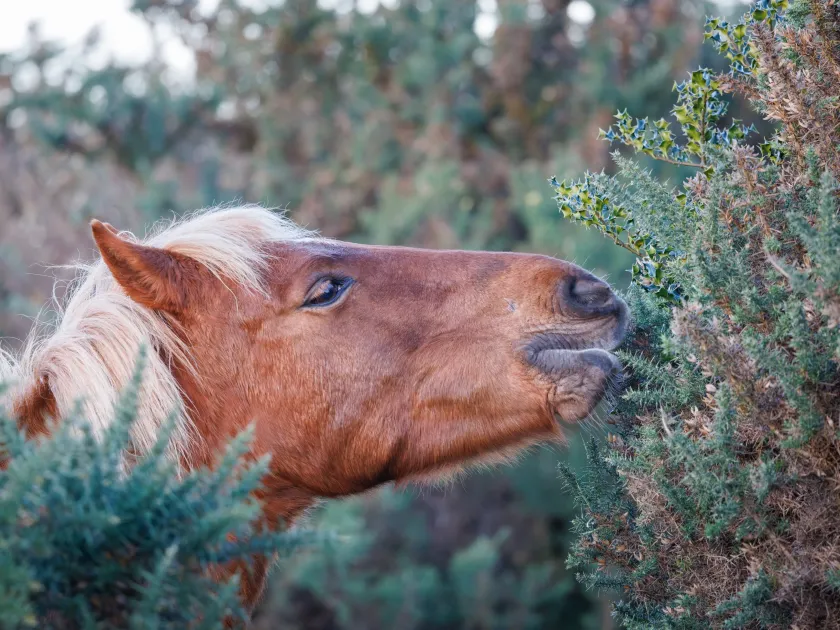
Description
How to identify
The horse (lat. Equus) belongs to the order Perissodactyla, family Equidae. As a large mammal, when grazing uncontrolled or entering farmland, it represents a serious threat to agro-ecosystems.
The animal possesses high mobility, powerful musculature, and hooves capable of destroying the structure of the topsoil. In feral or semi-feral conditions, herds can travel significant distances in search of forage.
The anatomical structure of the horse's digestive system requires the consumption of large volumes of plant mass. The daily requirement of an adult for green fodder can reach 30–50 kilograms, making them extremely hazardous to cultivated areas.
High activity and social behavior lead to group movement. Herd behavior intensifies the impact on the field, as animals follow each other, creating paths and expanding the damaged area.
Intelligence allows horses to find weaknesses in fences. They are capable of jumping over barriers or destroying them through mechanical force, which complicates the protection of crops.
What it damages
The main crops susceptible to damage are cereals and legumes. Horses actively graze on the vegetative mass of winter and spring crops, often destroying plantings at early developmental stages.
Pastures and hay meadows are at particular risk, where horses engage in "selective grazing." They choose the most nutritious plant species, leading to degradation of the vegetation cover and a shift toward less valuable species.
Vegetable crops such as potatoes, cabbage, corn, and root vegetables also become targets. Upon entering vegetable fields, horses can destroy a significant portion of the marketable yield in a short time.
Young plantations of fruit trees and shrubs are also damaged. Horses strip the bark from trunks, leading to the death of saplings or significant weakening of the trees, which makes them vulnerable to infectious diseases.
Beyond consumption, colossal damage is caused to soil structure through trampling. Hooves create deep indentations, compact the soil, and destroy the root systems of crops, reducing productivity for years to come.
When it appears
The primary period of activity occurs during the spring, summer, and autumn seasons when abundant green vegetation is present in the fields. During this time, animals show the highest interest in succulent fodder.
In winter, damage may manifest as the consumption of hay stacks, straw, and feed storage left in fields or open areas. In conditions of food shortage, horses may cause damage even to the woody parts of shrubs.
Peak activity correlates with the period of intensive crop growth. Specifically, during the tillering and stem elongation phases of cereals, crops are highly attractive due to their succulence.
Weather factors influence pest presence. During droughts, when natural pastures dry out, horses migrate more frequently in search of irrigated fields, sharply increasing the risk of crop grazing.
The circadian rhythm of activity is not strictly defined: animals can raid fields both during the day and at night, making monitoring by field owners or guards difficult.
Signs of infestation
The presence of specific horseshoe-shaped prints in soft soil or between rows is the first sign of horse presence.
The characteristic "mowed" look of vegetation, where stems are cut evenly but often pulled out by the roots due to the structure of the animal's teeth.
The presence of manure in the field, easily identifiable by shape and content of plant fibers, is clear evidence of herd visitation.
Mechanical damage to fences, knocked-over posts, or torn wire netting around the perimeter of the protected area.
Reduced density of vegetation or crops in certain areas, often in the form of trampled tracks along which the animals moved through the field.
Control measures
Installing high-quality and robust fencing is the most effective method of protection. It is recommended to use sections with high mechanical durability.
The use of electric fencing (electric shepherds) creates a psychological barrier that effectively deters animals from the field boundaries.
The use of visual and auditory deterrents can temporarily prevent animals from entering the plot, although habituation occurs relatively quickly.
Organizing regular field patrols, especially during critical ripening periods when the attractiveness of crops to animals increases.
Cooperation with livestock owners to organize grazing on specifically designated land, preventing the possibility of uncontrolled movement across agricultural fields.
Taxonomy
- Latin name
- Equus
- Family
- Equidae
- EPPO code
- EQUUSP
Discussion
No discussions yet — be the first.