
Currant leaf rust mite
Epitrimerus trilobus
Description
How to identify
The currant leaf rust mite, scientifically known as Epitrimerus trilobus, is a member of the Eriophyidae family. These microscopic pests have elongated, wedge-shaped bodies and are pale yellow or whitish in color.
Given their extremely small size, usually around 0.2 mm, they are invisible to the naked eye. Agronomists typically use a hand lens with at least 10x magnification to inspect the undersides of young foliage for signs of presence.
What it damages
The primary host for this mite is black currant, though it can also infest red currants and gooseberries. The mites feed by piercing the surface of young leaves and sucking out the cell contents, which disrupts plant growth.
Feeding damage prevents normal leaf development and can cause stunted growth in developing shoots. This significantly stresses the plant, reduces photosynthetic efficiency, and may decrease total fruit production over the season.
When it appears
The life cycle is closely synchronized with the phenological development of the currant bushes. Adult females overwinter in bark crevices or under bud scales and emerge as temperatures rise in early spring.
Multiple generations occur during the growing season. Peak activity and population growth typically coincide with the rapid expansion of young leaves in late spring and early summer when resources for feeding are most abundant.
Signs of infestation
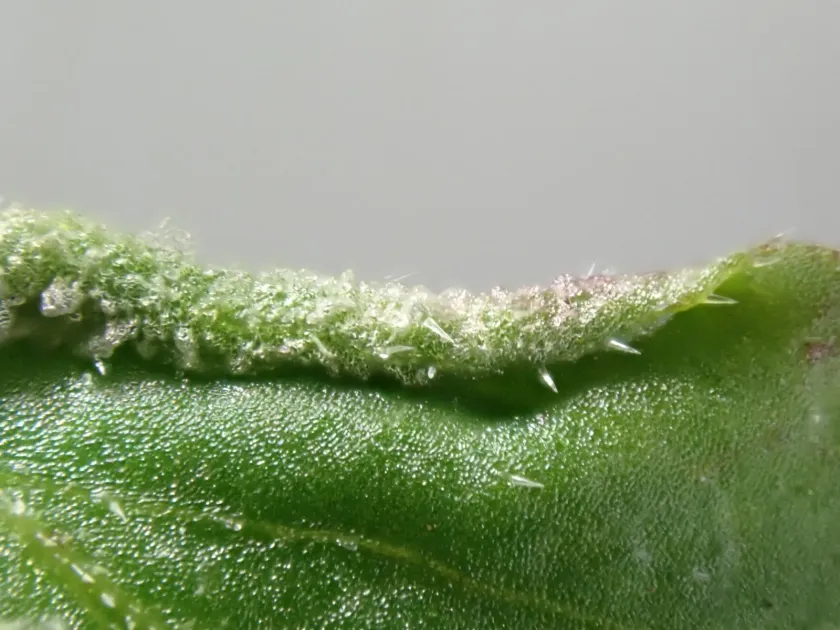
The most visible symptom of an infestation is leaf distortion. Leaves appear crinkled, curled, or stunted, often exhibiting an asymmetric or deformed shape compared to healthy foliage.
Severely infested tips of shoots may show a curled or "witches' broom" appearance. The leaves may lose their healthy green color, becoming brittle or dull, while the internodes of the shoots often become shorter than usual.
Control measures
Management requires an integrated approach to reduce population levels effectively. Starting with certified mite-free planting stock is the most important step for long-term prevention in new orchards.
Chemical control involving acaricides should be applied during the early season or post-harvest to manage peak mite densities.
- Pruning and destroying heavily infested branches to reduce the source of infection.
- Using sulfur-based sprays, which are effective against various eriophyid mites.
- Ensuring adequate irrigation to help plants withstand infestation stress.
- Monitoring populations regularly to apply treatments only when thresholds are exceeded.
Taxonomy
- Latin name
- Epitrimerus trilobus
- Order
- Mites
- Family
- Eriophyidae
- EPPO code
- EPITTR
Discussion
No discussions yet — be the first.