
Ephysteris promptella
Ephysteris promptella
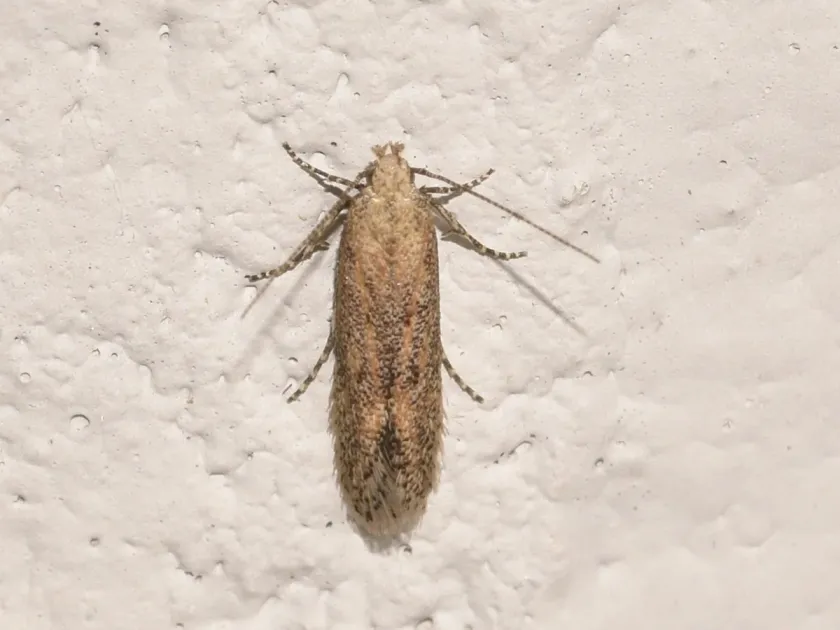
Description
How to identify
Ephysteris promptella belongs to the Gelechiidae family, order Lepidoptera. This small moth is characterized by cryptic coloration, which allows it to camouflage effectively on the soil surface and plant debris, making it difficult to detect during daylight hours.
The adult moth has narrow wings covered with fine scales in shades of gray and brown. The wingspan typically ranges from 10 to 15 millimeters. Field detection often requires the use of pheromone traps, as the moths are small and inconspicuous against their natural background.
The larvae are typical of the family: cylindrical in shape with a well-developed head capsule and thoracic legs. Their color ranges from light cream to grayish-green, providing excellent camouflage while they feed inside plant tissues.
The lifecycle includes four stages: egg, larva, pupa, and adult. Development is highly dependent on environmental factors, and the pest can complete multiple generations within a single growing season if temperature conditions remain favorable for reproduction.
The species typically overwinters in the pupal or late larval stage, either in the soil or protected within plant residue. This strategy ensures a high survival rate even during harsh winter conditions, allowing for rapid population growth in the spring.
What it damages
Ephysteris promptella is a polyphagous pest, posing a threat to a variety of agricultural crops, including cereals, legumes, and several technical crops. It damages both vegetative tissues and reproductive organs, depending on the stage of the plant.
Early and middle-instar larvae cause the most significant damage by boring into stems, leaf petioles, or developing inflorescences. This boring activity disrupts the plant's nutrient transport and photosynthetic capacity, leading to stunted growth.
During mass outbreaks, larvae can destroy young seedlings, leading to reduced plant density and potentially requiring field reseeding. Damage to the apical meristem often causes shoot deformation and increased lateral branching, negatively affecting yield potential.
Injured tissues become entry points for secondary infections, such as fungi and bacteria. These infections often cause more extensive damage than the primary feeding of the larvae, resulting in significant yield loss and reduced commodity quality.
Economic losses can be substantial, especially in years with warm, dry springs that favor pest development. Effective monitoring is essential to predict outbreaks and implement control measures before significant damage occurs.
Control measures
The control strategy for Ephysteris promptella is based on Integrated Pest Management (IPM), combining cultural, chemical, and biological methods. Crop rotation remains a fundamental practice to disrupt the lifecycle and deplete the local population of the pest.
Deep autumn plowing is a critical cultural practice to eliminate overwintering pupae and larvae. By burying plant debris deep into the soil, farmers reduce the availability of suitable sites for pupation and winter survival, significantly lowering the next generation's pressure.
Chemical control involves the application of systemic or contact insecticides during peak flight periods of the moths or shortly after larval hatching. Monitoring with pheromone traps is vital to ensure that insecticide applications are timed precisely for maximum efficacy.
Biological control agents, such as formulations based on Bacillus thuringiensis, offer a sustainable alternative that effectively manages larval populations while minimizing chemical residues in the harvest. This approach is highly recommended for eco-friendly farming.
General management practices, such as controlling weeds in fields and surrounding headlands, eliminate alternative host plants and reservoirs. Furthermore, planting crops at optimal times allows them to bypass their most vulnerable stages before the peak activity of the pest.
Taxonomy
- Latin name
- Ephysteris promptella
- Order
- Lepidoptera (butterflies)
- Family
- Gelechiidae
- EPPO code
- EPHTPR
Discussion
No discussions yet — be the first.