
Entylia
Entylia
Description
How to identify
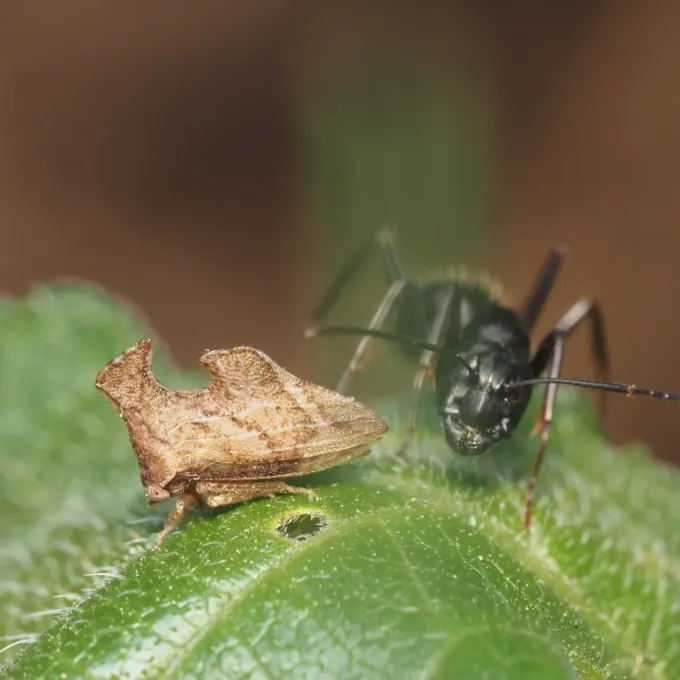
Entylia is a genus of treehoppers belonging to the Membracidae family in the order Hemiptera. These insects are easily recognized by their unique pronotum extension, which often resembles a hump or a rigid shield.
Adults are typically 5–8 mm in size and exhibit cryptic coloration ranging from tan to greenish-yellow. This helps them blend seamlessly with host plant foliage and stems.
Nymphs of the Entylia genus lack fully developed wings and often have distinct body protrusions. They are relatively sedentary and live in groups, often attended by ants that protect them.
The life cycle involves incomplete metamorphosis. Females deposit eggs into plant tissue, particularly along the veins of leaves or within tender stems, making them well-protected from environmental stress.
The symbiotic relationship with ants is a defining biological characteristic. Ants guard the nymphs from predators and parasites in exchange for honeydew, a sugary substance secreted by the nymphs during feeding.
What it damages
Entylia treehoppers are piercing-sucking insects that feed on plant sap. They infest a variety of vegetable crops, ornamental flowers like asters, and numerous weed species, causing significant stress.
The primary damage results from the direct extraction of nutrients, which stunts the growth of the plant and causes foliage chlorosis. This weakens the host plant's overall vigor.
Feeding activities result in the excretion of honeydew, which serves as a medium for the growth of sooty mold. This fungal growth coats the leaves, obstructing photosynthesis and reducing crop yields.
Through their feeding punctures, these insects can transmit viral diseases between plants, turning a minor infestation into a serious phytosanitary threat to the entire field or garden.
High populations often lead to severe twisting and deformation of young shoots, as well as premature leaf drop, which significantly damages the commercial value of ornamental or edible plants.
Signs of infestation
A primary sign of infestation is the presence of ant colonies traversing stems, as ants are frequently attracted to the honeydew excreted by the Entylia treehoppers.
Sticky residue on leaves or stems is a direct indicator of sucking pest activity. If left unchecked, this residue will quickly develop a dark, sooty mold coating.
Tiny, longitudinal scars or necrotic spots along leaf veins indicate sites where females have oviposited, often appearing slightly raised or hardened compared to the surrounding tissue.
Wilting of individual shoots or leaves, despite adequate irrigation, suggests that the localized feeding of treehopper groups is draining vital sap from those specific vascular bundles.
Distorted, curled, or stunted new growth is a hallmark of long-term feeding pressure, as the treehoppers specifically target the most nutrient-rich, developing plant tissues.
Control measures
Sanitation is key to control; removing host weeds in and around cultivated areas disrupts the initial population development and prevents the migration of pests to target crops.
Systemic insecticides are generally the most effective control measure. Since they are absorbed by the plant, they target the pests directly when they ingest the sap, ensuring long-lasting protection.
Managing ant populations within the growing area can deprive the nymphs of their protectors, significantly increasing the effectiveness of natural enemies like lady beetles and lacewings.
Biological control using entomopathogenic fungi is a sustainable alternative that can suppress treehopper outbreaks without leaving harmful chemical residues on edible crops.
Regular scouting and early mechanical removal of infested plant parts are recommended for smaller plots, helping to contain localized outbreaks before they spread across the entire plantation.
Taxonomy
- Latin name
- Entylia
- Order
- Hemiptera (bugs, aphids, leafhoppers)
- Family
- Membracidae
- EPPO code
- ENTISP
Discussion
No discussions yet — be the first.