
Sow thistle fly
Ensina sonchi
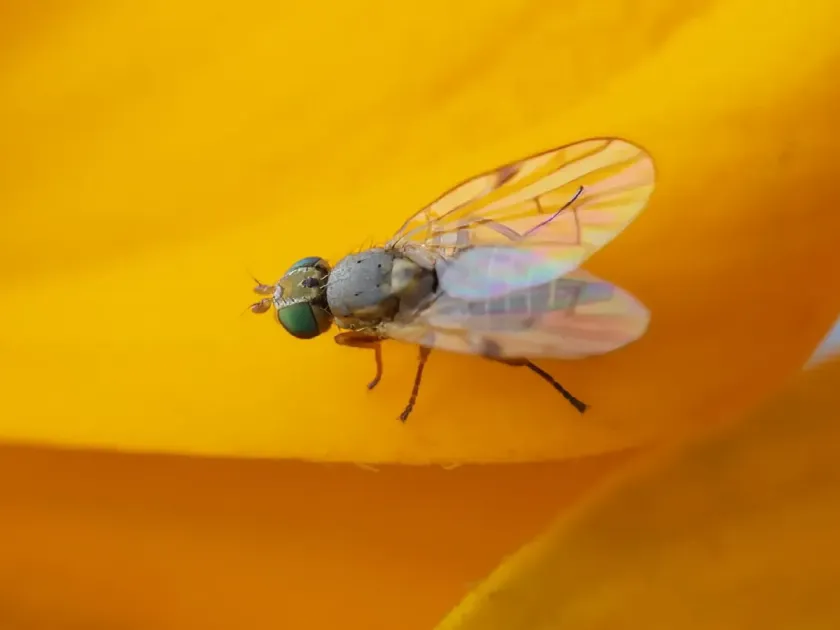
Description
How to identify
The sow thistle fly, scientifically known as Ensina sonchi, belongs to the family Tephritidae, commonly known as fruit flies. It is a widespread insect species that thrives in various habitats across the Palearctic region.
Adult flies are relatively small and characterized by distinctive patterned wings, which is a common trait among members of the Tephritidae family. Their body color typically ranges from yellowish-brown to grey.
The larvae of this species are legless and adapted for life inside the flower heads of host plants. They possess specialized mouthparts that allow them to consume floral tissues and developing seeds efficiently.
The life cycle involves complete metamorphosis, consisting of egg, larva, pupa, and adult stages. Pupation usually occurs either inside the damaged flower head or in the soil near the host plant.
This fly is highly dependent on plants within the Asteraceae family. It is most commonly found in meadows, roadsides, and agricultural field margins where its primary hosts, such as sow thistles (Sonchus), are abundant.
What it damages
The larvae of Ensina sonchi primarily feed on the seeds and the receptacle of various Asteraceae, particularly sow thistles. By boring into the flower head, they disrupt normal seed maturation.
In high populations, the larvae can cause significant damage to the seed head, effectively destroying a large percentage of the potential seed crop for that individual plant.
Although primarily viewed as a pest of weeds, the sow thistle fly can occasionally impact the aesthetic value of ornamental Asteraceae or potentially influence the dynamics of related crops.
Infected flower heads often exhibit signs of stunting or deformation. These plants may fail to open their flowers properly, and the structural integrity of the seed head is frequently compromised.
While the fly reduces the seed set of the weed host, which some might consider a form of biological control, its presence is rarely encouraged due to its potential to spread and its role as a general pest within the Asteraceae group.
When it appears
Adult flies typically emerge in late spring as temperatures begin to rise. The precise timing is heavily influenced by the local climate and the availability of flowering host plants.
Multiple generations can occur throughout the growing season, provided that the weather remains favorable and the host plants are in a suitable phenological stage for egg-laying.
Activity peaks during the summer months when the flowers of sow thistle are in full bloom. During this time, adult flies are highly active, feeding on nectar and seeking out suitable flower heads.
As the weather turns cooler in autumn, the fly population enters a diapause state. The final generation of larvae pupates, and the insects overwinter either in the soil or protected within dried plant remnants.
The seasonal progression is strictly dictated by the flowering period of their host plants, as the presence of soft floral tissues is necessary for larval survival and development.
Signs of infestation
The earliest indicator of infestation is the presence of small, dark entry holes on the outer bracts of the flower head. These marks are often the result of females inserting their ovipositors.
Upon closer inspection, one might find the interior of the flower head filled with larval excrement, which appears as a fine, dark granular mass mixed with damaged plant tissue.
Deformed flower heads that fail to bloom properly are a clear sign of larval activity. Such heads often appear shriveled or exhibit uneven development compared to healthy flowers.
During warm, sunny days, adult flies can often be observed resting on or flying near host plants, particularly when the flowers are in the bud or early bloom stage.
Excessive rotting or premature browning of the flower head during moist conditions is often a secondary symptom caused by bacterial or fungal pathogens invading the larval feeding wounds.
Control measures
Cultural control is the most effective management strategy. Mowing weeds like sow thistle before they reach the flowering stage removes the essential environment required for larval development.
Deep cultivation or plowing at the end of the season can help disrupt the life cycle by burying pupae, making it difficult for the next generation to emerge successfully.
Maintaining clean field borders and managing wild Asteraceae populations on surrounding land significantly reduces the risk of the pest moving into managed agricultural areas.
Chemical control is rarely utilized specifically for this fly due to the economic inefficiency of treating weed infestations; focus is instead placed on preventive agricultural practices.
- Regular mowing of host weeds.
- Post-harvest soil tillage.
- Monitoring flowering stages of surrounding flora.
Taxonomy
- Latin name
- Ensina sonchi
- Order
- Diptera (flies)
- Family
- Tephritidae
- EPPO code
- ENSISO
Discussion
No discussions yet — be the first.