
Ennya chrysura
Ennya chrysura
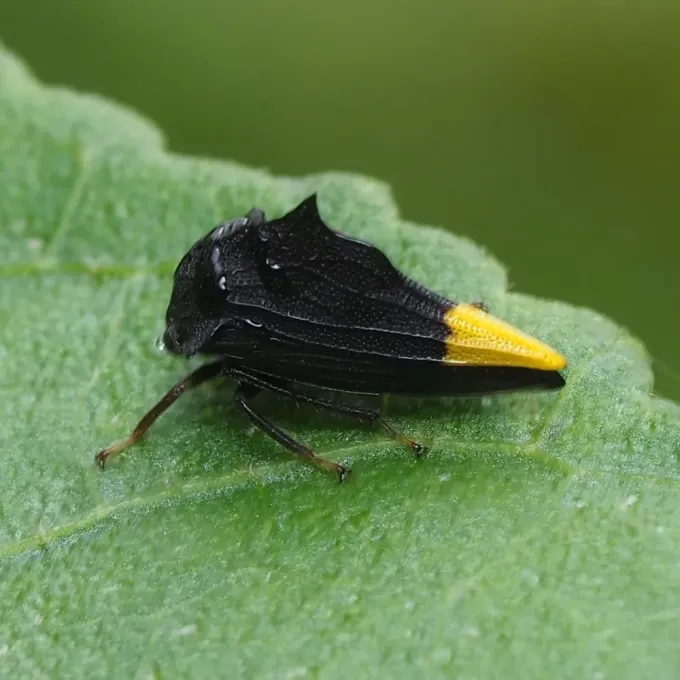
Description
How to identify
Ennya chrysura belongs to the family Membracidae, commonly known as treehoppers. These insects are easily identified by their bizarre, often thorn-like pronotal projections which cover the thorax.
Adults typically measure between 6 and 8 mm in length. Their exoskeleton is robust, and their coloration usually mimics the bark or twigs of the host plant, providing excellent camouflage.
Nymphs differ significantly from the adults, often possessing spines or bristles for defense. They are generally less mobile and tend to aggregate in groups on host plants.
The morphology of the pronotal process is the primary key to identifying this specific species within the Ennya genus, often requiring a hand lens for field inspection.
Like all Hemipterans, they possess piercing-sucking mouthparts. These structures allow them to tap into the phloem of the plant to feed on nutrient-rich sap.
What it damages
The primary hosts of Ennya chrysura are various species of the legume family (Fabaceae). They show a strong preference for woody perennial plants and shrubs.
These insects weaken the host plant by continuously extracting sap. This leads to reduced vigor, stunted growth, and decreased photosynthetic capacity in the affected vegetation.
The oviposition process is physically damaging. The female uses her ovipositor to slice into plant tissues, creating wounds that can act as entry points for bacterial or fungal pathogens.
Affected stems often show signs of curling, swelling, or localized dieback due to the physical trauma and the disruption of the plant's vascular system.
The accumulation of honeydew secreted by the treehoppers promotes the growth of sooty mold, which further interferes with the plant’s ability to conduct photosynthesis.
When it appears
The life cycle of Ennya chrysura is closely linked to the seasonal phenology of their host plants. Eggs generally overwinter within the bark or stems of the plants.
Spring marks the hatching of the first generation of nymphs. These young insects immediately begin feeding on tender new growth, where nutrient content is highest.
Summer is the period of peak adult activity and reproduction. Depending on the local climate, multiple generations may be produced within a single growing season.
As autumn approaches, females seek suitable sites to lay their eggs for the following year, ensuring the survival of the species during the winter months.
Environmental factors such as temperature and humidity significantly influence the speed of development, with warmer conditions typically accelerating their growth cycle.
Signs of infestation
A primary indicator of infestation is the presence of sticky honeydew covering the leaves and stems, which is a byproduct of the insects' feeding activity.
Close inspection of twigs will often reveal small, slit-like scars or punctures from egg-laying, which may show signs of necrosis or discoloration around the wound site.
The presence of ants is a major clue. Ants are attracted to the honeydew and will actively tend to the treehoppers, protecting them from predators in exchange for food.
Visible deformation or curling of terminal shoots is a classic sign of severe infestation, as the feeding nymphs extract resources from these growing tips.
The insects themselves may be visible as stationary, thorn-like objects on branches. Their camouflage makes them difficult to spot, but they are often found in clusters.
Control measures
Cultural control is a first line of defense. This involves pruning and disposing of infested branches to reduce the population size during the dormant season.
Applying sticky bands to tree trunks can effectively prevent ants from accessing the nymphs, thereby exposing the pests to their natural predators, such as ladybugs and lacewings.
Chemical control, if necessary, involves the use of systemic insecticides. These are most effective when applied during the early nymphal stages before significant damage occurs.
Encouraging natural biological control by protecting predator habitats is crucial. Maintaining a diverse ecosystem helps keep treehopper populations under natural regulation.
Consistent monitoring and early detection are key components of an integrated pest management (IPM) strategy, helping to minimize the need for heavy pesticide use.
Taxonomy
- Latin name
- Ennya chrysura
- Order
- Hemiptera (bugs, aphids, leafhoppers)
- Family
- Membracidae
- EPPO code
- ENNYCH
Discussion
No discussions yet — be the first.