
Ennya
Ennya
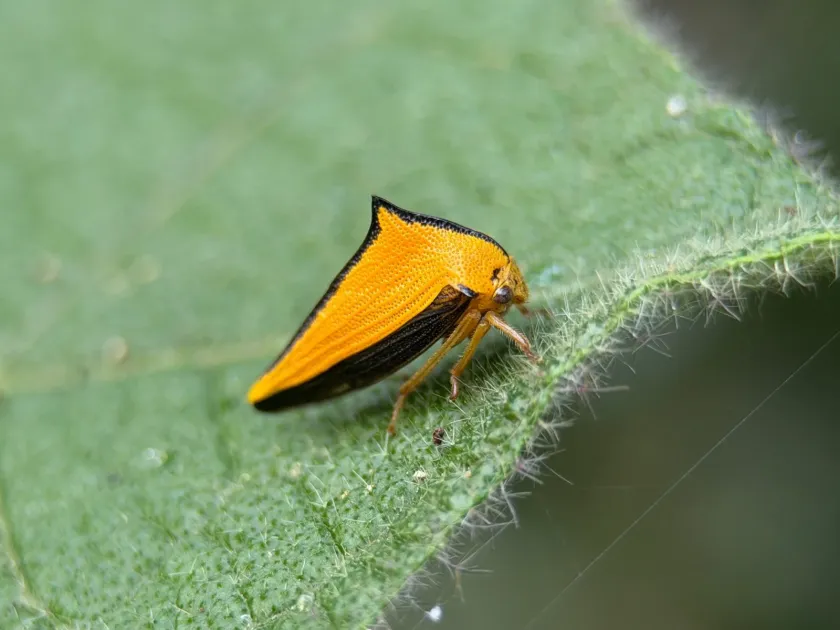
Description
How to identify
Ennya is a genus of insects belonging to the treehopper family (Membracidae) in the order Hemiptera. These insects are easily identified by their unusual pronotal shape, which often features horn-like or spine-like projections.
Adult insects typically measure between 5 and 10 millimeters in length. Their body coloration ranges from dark brown to black, providing effective camouflage against tree bark and stems.
A key morphological feature is their hard cuticle and well-developed wings, allowing adults to actively migrate in search of host plants.
Nymphs have softer integuments and are often covered in waxy secretions or specialized filaments, which serve as a defense mechanism against natural predators.
Both adults and nymphs tend to remain hidden, usually congregating on young shoots and leaf petioles, which makes early detection in fields quite challenging.
What it damages
Both adults and nymphs cause damage by feeding on plant tissues. Ennya primarily affects trees and shrubs, though high populations can spread to ornamental plants and some fruit-bearing trees.
The primary damage is caused by the extraction of plant sap from the phloem and xylem, which disrupts the host plant's metabolism and weakens its overall health.
Heavy infestations result in the twisting of young shoots and stunted plant growth, which significantly reduces the market value of the crop.
Secondary infections often develop at the site of feeding punctures, as wounds provide an entry point for fungal spores and pathogenic bacteria.
Furthermore, these insects may inject specialized salivary enzymes during feeding, which can cause local tissue necrosis and premature leaf drop.
When it appears
The life cycle of Ennya is highly dependent on regional climatic conditions. Insect activity typically commences in late spring as temperatures stabilize.
Population density peaks in the first half of summer, coinciding with the period of peak sap flow and active shoot growth in host plants.
Females deposit eggs directly into plant tissues, choosing young branches or the base of buds, where the eggs remain until the next developmental stage or overwinter.
In warmer climates, the pest can complete several generations within a single growing season, making population control much more difficult.
By autumn, adult activity declines, and the insects enter a state of diapause, seeking shelter in bark crevices or under leaf litter to survive the winter.
Signs of infestation
One of the first signs of infestation is the appearance of specific feeding punctures on the bark of young shoots, often arranged in lines or small clusters.
Observing the insects themselves, which often remain stationary on the undersides of leaves or along stems, is the most direct confirmation of their presence.
Stunted development and chlorotic spots on leaf blades often indicate persistent feeding by nymphs, which drain the plant's resources over an extended period.
The presence of associated microflora or dark spots at the puncture sites also serves as an indirect signal that the tissue integrity has been compromised by sap-sucking insects.
- deformation of shoots;
- premature yellowing of foliage;
- presence of egg clusters beneath the bark;
- slowed growth of the crop.
Control measures
Cultural control methods involve regular sanitary pruning of infested branches and the disposal of plant debris where egg clusters might overwinter.
Maintaining optimal irrigation and proper fertilization helps boost the plant's natural resistance to damage and promotes faster healing of puncture wounds.
In commercial orchards and nurseries, timely applications of contact or systemic insecticides are recommended during the nymph emergence period.
Encouraging natural predators such as parasitic wasps and predatory bugs is essential for keeping Ennya populations below the economic injury level.
Regular monitoring using sticky traps allows growers to detect the start of an infestation and implement targeted protection measures before significant damage occurs.
Taxonomy
- Latin name
- Ennya
- Order
- Hemiptera (bugs, aphids, leafhoppers)
- Family
- Membracidae
- EPPO code
- ENNYSP
Discussion
No discussions yet — be the first.