
Enchenopa concolor
Enchenopa concolor
Description
How to identify
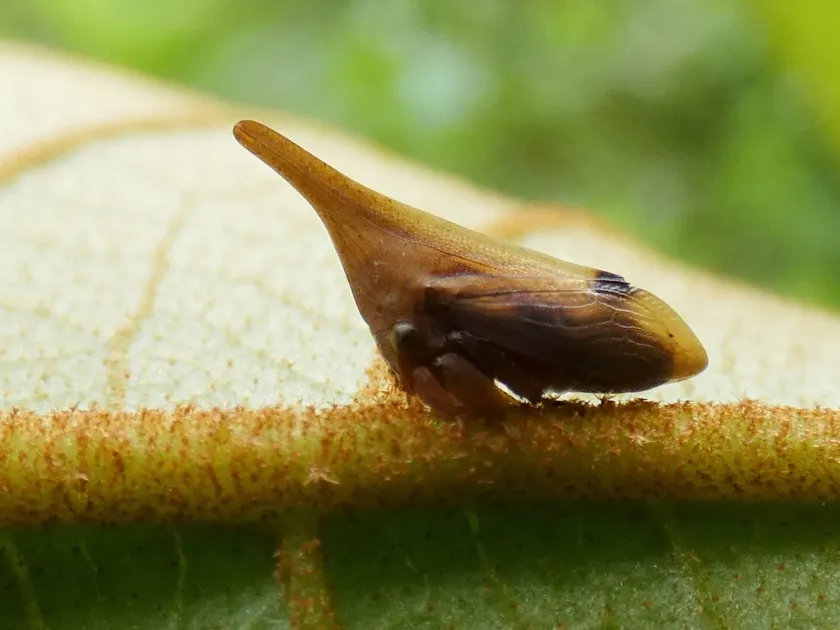
Enchenopa concolor is a species of treehopper belonging to the family Membracidae. These insects are easily distinguished by the unique, often arched, pronotum that extends back over the abdomen.
Adult insects are typically 5–7 mm long and possess a protective coloration ranging from light to dark brown, which helps them blend in with twigs and bark.
The nymphs of this species lack the prominent horn found in adults and are often characterized by their spiky or hairy appearance, which serves as a defense mechanism.
Like other treehoppers, Enchenopa concolor undergoes incomplete metamorphosis, consisting of the egg, nymph, and adult stages.
They are specialized sap-suckers that rely on their host plants for both nutrition and physical support throughout their developmental stages.
What it damages
This pest primarily targets various deciduous trees and shrubs. It is particularly concerning for young plants and nursery stock, where damage can significantly impact growth.
The insects use their specialized mouthparts to pierce the surface of young shoots, extracting essential sap and nutrients from the plant vascular system.
These feeding punctures leave open wounds, which can lead to localized necrosis and serve as entry points for secondary pathogens like fungi and bacteria.
Females inflict physical damage when laying eggs by creating small slits in the bark or twigs, which can cause the death of distal parts of the stem.
Severe infestations often result in stunted growth, deformed leaves, and overall weakening of the affected woody plant structures.
When it appears
Enchenopa concolor typically overwinter in the egg stage, which the female deposits beneath the bark or within slits made in the plant tissue.
Nymphs emerge in the spring, coinciding with the beginning of the plant's vegetative season when succulent new growth becomes available for feeding.
There is generally one generation per year, with adult activity peaking during the warm summer months when they feed and reproduce.
As autumn approaches and temperatures drop, the adult population declines, and females focus on depositing eggs for the upcoming winter season.
The timing of emergence is highly dependent on local climatic factors, but it generally follows the onset of bud break on host trees.
Signs of infestation
The most noticeable sign of an infestation is the slowing of shoot development and the overall wilted appearance of affected tree tops.
Careful inspection of the branches may reveal small scars or blisters on the bark, which indicate where the eggs were deposited.
- Stunted or distorted growth at the tips of shoots.
- Presence of sticky residue on branches, which often attracts ants.
- Visible adult treehoppers residing on the bark or stems.
- Premature yellowing of leaves on damaged branches.
Clusters of nymphs can often be spotted on stems, as they tend to feed in groups, making them easier to identify during regular garden inspections.
Control measures
Management starts with good sanitation practices, including the pruning and destruction of infested branches that show signs of egg-laying during the dormant season.
If chemical intervention becomes necessary, systemic insecticides applied early in the season are most effective against the young nymph stages.
Encouraging biodiversity by protecting natural predators such as lady beetles, lacewings, and parasitic wasps helps keep treehopper populations under natural control.
Providing adequate water and fertilization ensures that trees remain vigorous and better able to recover from the stress caused by sap-sucking insects.
Regular monitoring during the spring and early summer is essential to determine if treatment is needed before the population spreads further.
Taxonomy
- Latin name
- Enchenopa concolor
- Order
- Hemiptera (bugs, aphids, leafhoppers)
- Family
- Membracidae
- EPPO code
- ENCHCO
Discussion
No discussions yet — be the first.