
Citrus leaf miner
Encarsia citrella
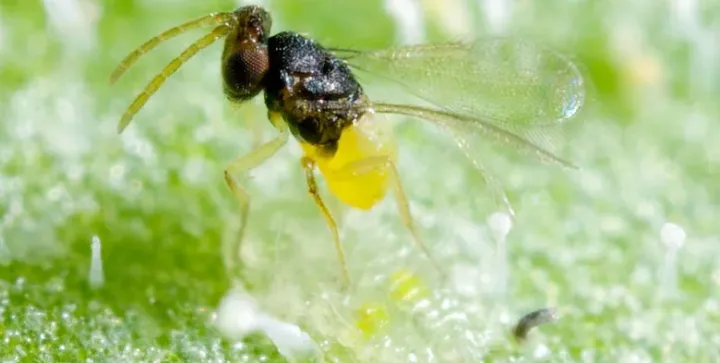
Description
How to identify
The citrus leaf miner is a tiny moth with a wingspan of only 4–5 mm and a characteristic silvery-white appearance with black markings.
The larvae are internal feeders, living and developing entirely within the epidermal layers of citrus leaves and young stems.
Adult moths are nocturnal or crepuscular, hiding in dense foliage during the bright daylight hours to avoid potential predators.
The complete generation cycle can take as little as two weeks in tropical climates, leading to overlapping generations throughout the season.
Pupation typically occurs inside a small curled section of the leaf margin, which serves as a protective chamber for the developing insect.
What it damages
This pest specifically targets members of the Rutaceae family, with a strong preference for citrus species like oranges, lemons, and limes.
Young, succulent growth is the primary target, as the larvae find it much easier to tunnel through soft tissues compared to older leaves.
Extensive tunneling by larvae creates entry points for various bacterial and fungal pathogens, significantly compromising tree health.
Stunted growth is common in young saplings, where the leaf miner can destroy the majority of the new, developing foliage.
Repeated infestations lead to reduced photosynthesis, lower fruit quality, and can significantly decrease overall tree vigor and production.
Signs of infestation
The most visible symptom is the presence of winding, serpentine-shaped silvery mines on the surfaces of the leaves.
Leaves affected by the larvae tend to curl or twist, creating an unsightly and malformed appearance compared to healthy foliage.
Small silk-like webbing may be visible near the site of the pupation chamber on the edge of the rolled-up leaf.
Brown necrotic patches often appear as the leaf tissue dies off due to the extensive internal mining and secondary infections.
Frequent leaf drops, especially in younger plants, serve as a strong indicator that the population density has reached an alarming level.
Control measures
Systemic insecticides are generally required to target the larvae hidden within the leaf tissues effectively.
Pheromone traps are essential for monitoring flight activity and determining the optimal timing for protective spraying schedules.
Integrated Pest Management (IPM) practices recommend using beneficial parasitoid wasps which can naturally suppress leaf miner numbers.
Cultural control involves pruning and disposing of highly infested shoots to reduce the pest reservoir within the garden or orchard.
Maintaining a balanced nutrition program, specifically avoiding excessive nitrogen, helps limit the flush of new growth that attracts the moth.
Taxonomy
- Latin name
- Encarsia citrella
- Order
- Hymenoptera
- Family
- Aphelinidae
- EPPO code
- PRSPCP
Discussion
No discussions yet — be the first.