
Aphelinus affinis
Aphelinus affinis
Description
How to identify
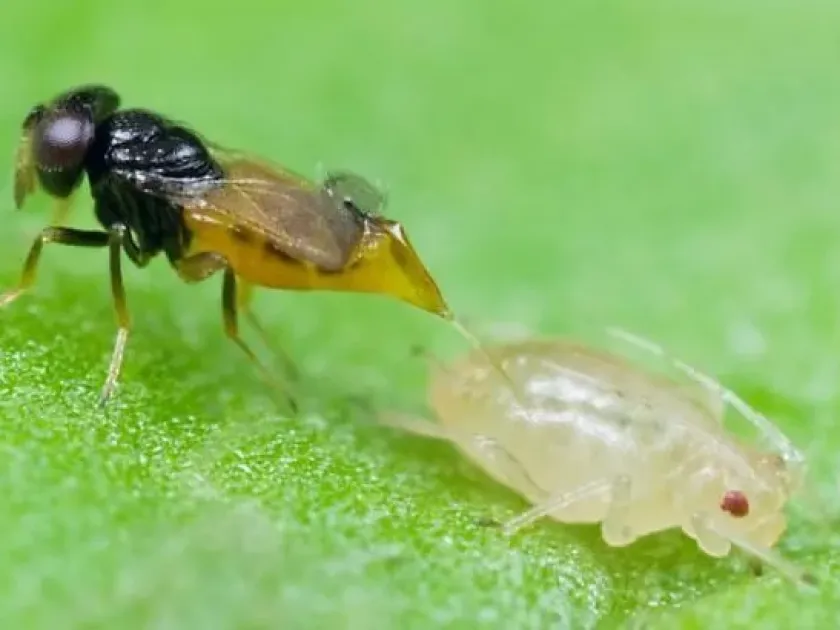
Aphelinus affinis is a minute parasitic wasp belonging to the family Aphelinidae. It is recognized primarily as an effective natural enemy of various aphid species in agricultural landscapes.
The adult insect is extremely small, usually measuring less than 1 mm in length. Its body is typically dark, often displaying a subtle metallic luster, which makes it blend in with the leaf surface.
As an endoparasitoid, Aphelinus affinis specializes in developing inside the body of its host. Morphological features include specific wing venation and antenna structure, which are critical for accurate identification.
In the field, it is often identified not by its adult form, but by the characteristic signs it leaves behind on aphid colonies, particularly the presence of mummified hosts.
Distinguishing Aphelinus affinis from other related species is essential for researchers, as their host ranges can vary, impacting the efficacy of biological control efforts.
What it damages
Aphelinus affinis does not damage crops; on the contrary, it is a valuable asset to integrated pest management. It targets aphids, which are destructive pests that feed on plant sap and transmit diseases.
The wasp oviposits into the aphid host, where the larva hatches and consumes the aphid from within. This leads to the death of the aphid, which then hardens into a protective shell or "mummy".
By keeping aphid populations below the economic injury level, this wasp provides free natural pest control, significantly reducing the need for chemical interventions in the field.
Because of its high level of host specificity, Aphelinus affinis is considered a safe biological agent that does not harm other beneficial insect species.
The impact of this insect is purely beneficial, helping farmers maintain crop health and yield quality through natural regulatory mechanisms within the agroecosystem.
When it appears
The seasonal activity of Aphelinus affinis begins in the spring when temperatures consistently reach levels sufficient for adult emergence from wintering sites.
During the growing season, multiple generations can occur, with their population dynamics closely synced to the development and size of aphid colonies on the target crops.
As autumn approaches and temperatures drop, the insects enter a state of diapause. They successfully overwinter inside the mummified bodies of their hosts, protected from the elements.
Optimal conditions for their development include moderate temperatures and humidity; extreme heat or heavy rain can negatively affect their life cycle and survival rates.
Agronomists are advised to observe the peak activity periods to avoid chemical sprays that would coincide with the emergence of these wasps, thus preserving their natural population.
Signs of infestation
The most reliable sign of Aphelinus affinis activity is the presence of mummified aphids on plant leaves and stems. These aphids look stationary, rigid, and often darker in color.
Closer examination reveals tiny circular exit holes on the dorsal side of the mummies, where the adult wasp has emerged after completing its pupal stage.
Aphid colonies infested by this parasitoid show a marked decrease in mobility and overall size. A significant reduction in the number of live aphids is a hallmark of successful parasitism.
The absence of honeydew accumulation in an aphid-prone area can also serve as an indicator that the colony is under biological suppression by parasitoids.
Field monitoring should include counting the ratio of mummies to healthy aphids to determine the effectiveness of natural control and decide if further action is needed.
Control measures
Managing for Aphelinus affinis involves creating a habitat that supports its survival and reproduction. No active control against the wasp is necessary as it is a beneficial organism.
Farmers are encouraged to establish flower strips or hedgerows that provide nectar and pollen for adult wasps, which enhances their longevity and searching capacity.
If pesticide use is unavoidable, practitioners should choose selective compounds that have minimal negative impact on parasitoids rather than broad-spectrum insecticides.
Leaving unsprayed refugia or buffer zones allows Aphelinus affinis populations to recover and recolonize areas following inevitable field disturbances.
Integrating these biological practices into overall crop management plans is the most effective way to leverage the power of Aphelinus affinis for sustainable agricultural production.
Taxonomy
- Latin name
- Aphelinus affinis
- Order
- Hymenoptera
- Family
- Aphelinidae
- EPPO code
- APHEAF
Discussion
No discussions yet — be the first.