
Ena montana
Ena montana
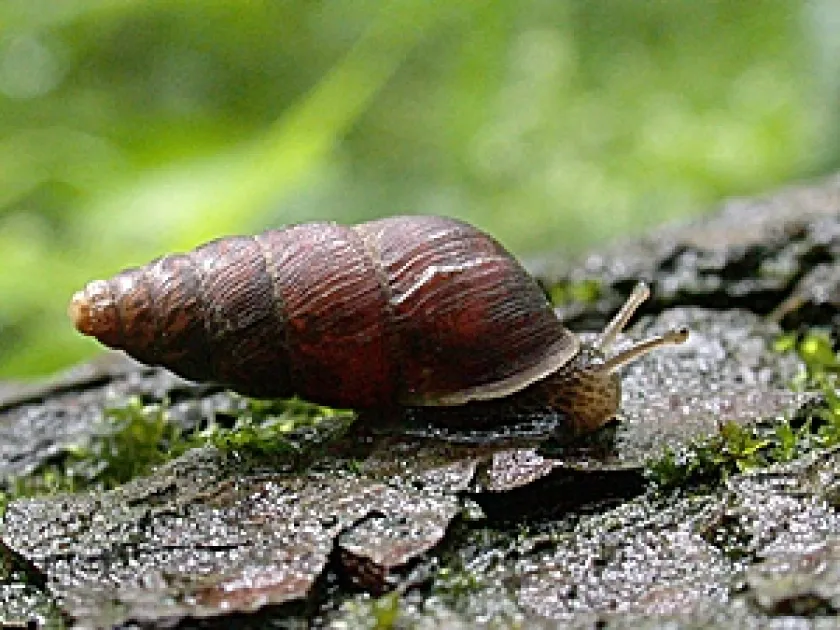
Description
How to identify
Ena montana is a species of land snail belonging to the family Enidae. Its shell is elongated, conical in shape, and typically light brown or greyish, consisting of 7 to 9 whorls with a length ranging from 15 to 18 millimeters, making it a recognizable garden mollusc.
The snail's body is light grey or brownish. It possesses a well-developed foot that allows for efficient movement, not only on the ground but also on vertical structures, including tree trunks, stems, and even walls, which facilitates its spread across various vegetation.
This species thrives in humid environments. It is commonly found in deciduous forests, shrubby thickets, parks, and home gardens where the combination of plant debris and sufficient moisture provides an ideal habitat for survival and reproduction.
Reproduction is achieved by laying eggs in moist soil or under leaf litter. The young snails are well-adapted to the environment, growing rapidly and beginning to feed on plant material shortly after hatching, contributing to the pest population growth.
Ena montana exhibits a unique behavior during dry periods: it enters a state of dormancy (aestivation). By adhering to surfaces and sealing the shell opening with a thin mucus film, it can survive periods of drought, waiting for moisture to return to resume activity.
What it damages
The primary damage caused by Ena montana involves the consumption of young shoots and foliage of various ornamental and agricultural plants. In orchards, these snails often strip the epidermis of bark and consume young buds, significantly weakening young trees.
Vegetable gardens are particularly susceptible to their feeding habits. Crops such as lettuce, cabbage, and young legumes are frequently targeted. These molluscs can cause extensive damage, leaving behind ragged leaf edges and potentially devastating young seedlings overnight.
Furthermore, their presence increases the risk of plant diseases. As they feed, they create open wounds on leaves and stems, which serve as entry points for various bacterial and fungal pathogens, potentially leading to plant decay and secondary infections.
Snails also damage fruits that lie near or on the soil surface. This feeding activity leaves visible tracks and scars on the surface of the fruit, making them unmarketable and susceptible to rot, which ruins the quality of the harvest.
In cases of high infestation, the cumulative effect of constant foliage feeding and bark damage can lead to reduced plant vigor, stunted growth, and in extreme cases, the death of young seedlings or ornamental plants within the garden.
When it appears
Activity typically begins in the early spring once temperatures consistently stay above 10-12 degrees Celsius. After emerging from hibernation, the snails begin intensive feeding on newly emerged spring vegetation.
The peak of their harmful activity occurs during periods of high humidity and rainfall, usually late spring and early summer. During these months, the population is most active, and rapid growth makes them more noticeable in garden beds and greenhouses.
Mid-summer activity can decline significantly if drought conditions occur. During these dry intervals, the snails retreat to hidden, shaded, and moist areas, such as deep mulch or leaf piles, to conserve moisture and remain protected until the next rain.
Autumn brings a resurgence of activity as the snails feed heavily to store energy for the winter. During this time, they may target late-season vegetables and roots, causing damage before they enter their winter diapause phase.
Overwintering occurs in the soil or beneath thick layers of organic debris. By burying themselves to a depth of several centimeters, they successfully avoid the harshest winter frosts, ensuring a high survival rate and potential population rebound in the following spring.
Signs of infestation
The most prominent sign of an infestation is the presence of silvery, dried mucus trails on leaves, stems, and soil surfaces. These tracks indicate the movement paths of the snails during their nocturnal foraging activities.
Ragged, irregular holes in the foliage are a classic symptom of snail damage. Unlike insect pests that may skeletonize leaves, Ena montana eats through the tissue in jagged patterns, often leaving only the larger leaf veins intact.
Daytime discovery of the snails themselves is a clear indication of a resident population. Checking under mulch, stones, or the undersides of large leaves during the day often reveals the snails resting in their protective shells.
Damage to the bark of young trees or shrubs appears as superficial lesions or scraped areas. On smooth-barked plants, this damage is easy to spot after rainfall, as the snails are often found clustered nearby feeding on the outer tissue.
Finding clutches of eggs in damp soil or under decaying organic matter suggests an active breeding cycle. Detecting these eggs early in the season is a critical indicator that preventative measures must be implemented to manage future population surges.
Control measures
Cultural control is the most effective approach to managing Ena montana. Regular weeding, removal of plant debris, and soil cultivation disturb the snails' hiding places, expose eggs to desiccation, and reduce their ability to breed successfully.
Physical barriers can protect high-value plants. Placing materials that are abrasive or desiccating, such as crushed eggshells, coarse sand, or hydrated lime, around the base of plants creates a difficult surface for snails to cross, preventing them from reaching the stems.
Chemical control can be utilized in cases of severe infestation, primarily using molluscicide pellets containing metaldehyde. These should be applied carefully in evening hours, ensuring they are placed where the target pests congregate while avoiding direct contact with edible produce.
Encouraging natural predators such as hedgehogs, frogs, toads, and birds is a highly recommended biological control strategy. By providing water and suitable nesting sites, you can naturally keep the snail population under control without resorting to harsh chemicals.
Trapping with fermented baits is a simple and effective monitoring and control tool. Containers filled with beer or a mix of yeast and water, buried flush with the soil surface, will attract the snails, allowing for their easy collection and disposal each morning.
Taxonomy
- Latin name
- Ena montana
- Order
- Molluscs
- Family
- Enidae
- EPPO code
- ENAXMO
Discussion
No discussions yet — be the first.