
Ena
Ena
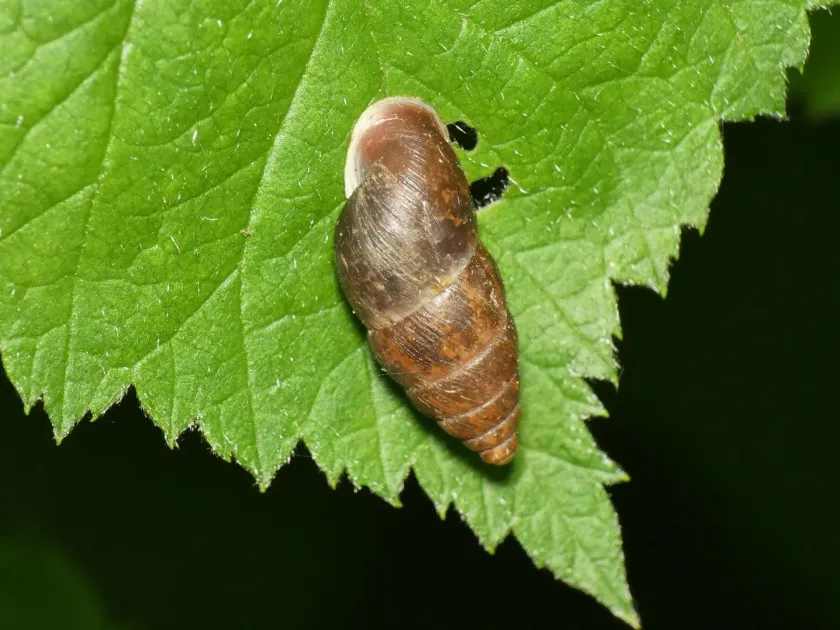
Description
How to identify
Ena is a genus of land-dwelling gastropods belonging to the Enidae family. These snails are characterized by an elongated, conical, or spindle-shaped shell, which typically ranges from light brown to grey, allowing them to blend into soil and debris.
Adult snails usually reach a size of 10–20 mm. Their shell features a robust aperture lip, which serves as a protective mechanism to retain internal moisture during dry spells, allowing the mollusk to survive unfavorable conditions.
Taxonomically, they are classified under the order Stylommatophora (air-breathing land snails). In an agricultural context, they act as opportunistic pests that thrive in moist, shaded environments with high vegetation cover.
They are primarily nocturnal, spending daylight hours hidden in soil, under rocks, or within dense foliage. This behavior makes them difficult to monitor until significant damage has already occurred.
Reproduction is achieved by laying eggs in loose, moist soil. After hatching, the juveniles immediately begin feeding on tender plant tissues, and their population can expand rapidly when environmental conditions are suitable.
What it damages
Ena snails feed on a wide variety of agricultural crops. Vegetables such as lettuce, cabbage, and tomatoes, as well as young seedlings and ornamental plants, are particularly susceptible to their grazing activities.
Both adults and juveniles cause damage by rasping holes into the leaf blades. In many cases, they completely consume young seedlings, leading to significant yield losses and sparse crop stands in affected areas.
Greenhouses and nurseries are at high risk due to consistently high humidity levels. In these controlled environments, the population density of Ena snails can increase rapidly, leading to sustained pressure on crops throughout the growing season.
Beyond physical consumption, the snails contaminate the produce with slime and excrement. This significantly lowers the marketability of the product and creates an ideal environment for secondary bacterial and fungal infections.
While the overall damage is more severe in wet years, consistent irrigation practices in professional farming can inadvertently create perfect conditions for these snails, requiring regular monitoring and intervention.
When it appears
The activity period for Ena snails starts in the spring as soil temperatures rise and continues through the autumn, depending on moisture availability and the onset of winter frost.
During the spring season, post-hibernation activity coincides with the germination and early growth of most crops. This is the period when plants are most vulnerable to defoliation by snails.
Mid-summer peak activity is heavily dependent on rainfall. Extended periods of rain trigger increased mobility, allowing the snails to migrate from soil surfaces to the stems and leaves of plants, where they feed extensively.
As autumn progresses, the snails move towards their overwintering sites. They typically burrow into the deeper soil layers or hide under dense organic matter to survive the winter dormant phase.
The lifecycle is highly synchronized with agricultural cycles. Because they are moisture-dependent, their population dynamics fluctuate according to regional rainfall patterns and the irrigation management of the farm.
Signs of infestation
The most reliable sign of an Ena infestation is the presence of characteristic irregular holes in leaves, often accompanied by shiny, silver-like trails of dried mucus found on foliage or the soil surface.
During morning inspections, you may find the snails themselves hiding under mulch, in moist debris, or on the underside of large leaves near the ground level. Their presence in these shelters confirms the infestation.
Seedlings that fail to emerge or are found partially consumed are tell-tale indicators. On fruits such as tomatoes, surface lesions or small pits might appear, which often become sites for rot development.
The presence of empty shells on the soil surface can also indicate a previously active population. Monitoring these areas during damp, overcast weather is the most effective way to observe the pests in action.
- Shiny silver mucus trails on leaves or soil.
- Irregular, ragged holes in leaf tissue.
- Destruction of young seedlings.
- Direct observation of snails under daytime shelters.
- Secondary rot appearing at feeding sites on fruits.
Control measures
Cultural control methods are essential for managing Ena populations. Regular tillage and clearing of debris, weeds, and stones remove the daylight shelters where snails congregate and survive heat.
Physical barriers can be highly effective for small-scale gardens. Sprinkling substances like crushed shells, wood ash, or lime around plant bases can deter snails by causing irritation or dehydration.
Chemical control involving molluscicides, such as those containing metaldehyde or iron phosphate, can be used in cases of heavy infestation. These should be applied according to local safety guidelines to protect non-target organisms.
Implementing biological control strategies is encouraged by fostering habitats for natural predators. Hedgehogs, frogs, lizards, and ground beetles are known to feed on Ena snails and their eggs, keeping populations in check.
Drip irrigation systems are preferred over overhead watering in infested areas to keep the foliage dry and reduce the moisture levels at the base of plants, making the environment less inviting for the snails.
Taxonomy
- Latin name
- Ena
- Order
- Molluscs
- Family
- Enidae
- EPPO code
- ENAXSP
Discussion
No discussions yet — be the first.