
Palm weevil
Dynamis borassi
Description
How to identify
The palm weevil, Dynamis borassi, is a beetle species belonging to the order Coleoptera and the family Curculionidae, known for its significant impact on various palm species.
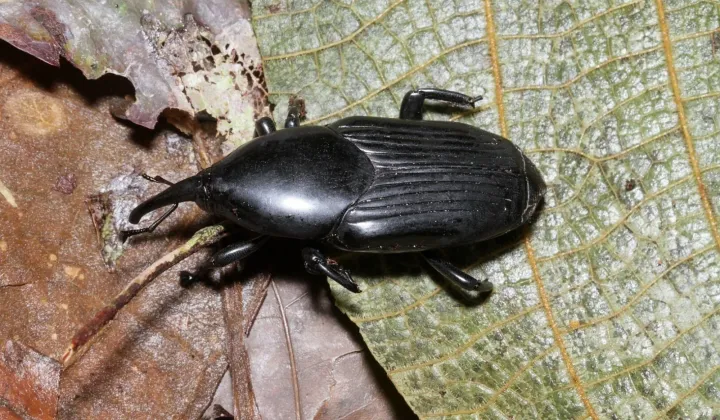
Adult insects are characterized by a robust, dark body and an elongated snout (rostrum), which is a diagnostic feature used by females for drilling into plant tissue to lay eggs.
The larvae are legless, fleshy, and cream-colored with a hardened brown head capsule, specialized for boring into the fibrous tissues of their host plants.
They undergo a complete metamorphosis, with the pupal stage occurring within a protective cocoon made of plant fibers constructed by the mature larvae before transformation.
Identification often requires careful inspection, as adults are nocturnal and usually hide in crevices or the crown of the palm during daylight hours.
What it damages
Dynamis borassi primarily attacks commercially important palms, including the coconut palm (Cocos nucifera) and the oil palm (Elaeis guineensis), causing substantial agricultural losses.
The larvae bore extensive tunnels within the stems, crown, and leaf petioles, disrupting the vascular system and preventing the transport of water and nutrients.
Damage to the apical meristem, or the growth point of the palm, is particularly lethal, often leading to the rapid decline and death of the entire tree.
Besides direct physical damage, the boring activity facilitates the entry of secondary pathogens, such as bacteria and fungi, which accelerate the rotting process.
In mature plantations, severe infestations can lead to a drastic reduction in fruit yield, making the trees economically unviable and requiring their removal.
Signs of infestation
Early symptoms of infestation include the wilting and yellowing of the youngest, central leaves, which indicates damage to the plant's heart or terminal bud.
External signs include the presence of boreholes in the trunk or leaf bases, accompanied by liquid sap oozing and frass (insect excrement) resembling damp sawdust.
In cases of heavy infestation, a distinct chewing sound can be heard coming from inside the trunk, caused by the larvae feeding on the internal tissues.
A foul odor emanating from the crown area is a common indicator of internal rot and secondary infections that often accompany larval feeding.
Total crown collapse is an advanced sign, occurring when the structural integrity of the palm's core has been completely compromised by larval gallery construction.
Control measures
Integrated pest management (IPM) for this species relies heavily on the use of pheromone-based traps to monitor and reduce adult population levels in plantations.
Cultural control involves the rigorous sanitation of fields, which includes the prompt identification, removal, and destruction of infested palms to limit pest spread.
Chemical control measures often include systemic insecticide injections into the trunk, ensuring the active ingredient reaches the larvae protected within the tissues.
Biological control efforts are focused on identifying natural predators and pathogens, including specific fungi, to suppress the population of the weevil in a sustainable manner.
Strict quarantine protocols governing the movement of nursery stock and logs are essential to prevent the human-aided dispersal of Dynamis borassi to non-infested areas.
Taxonomy
- Latin name
- Dynamis borassi
- Order
- Coleoptera (beetles)
- Family
- Dryophthoridae
- EPPO code
- DYNMBO
Discussion
No discussions yet — be the first.