
American wood-boring weevil
Dryophthorus americanus
Description
How to identify
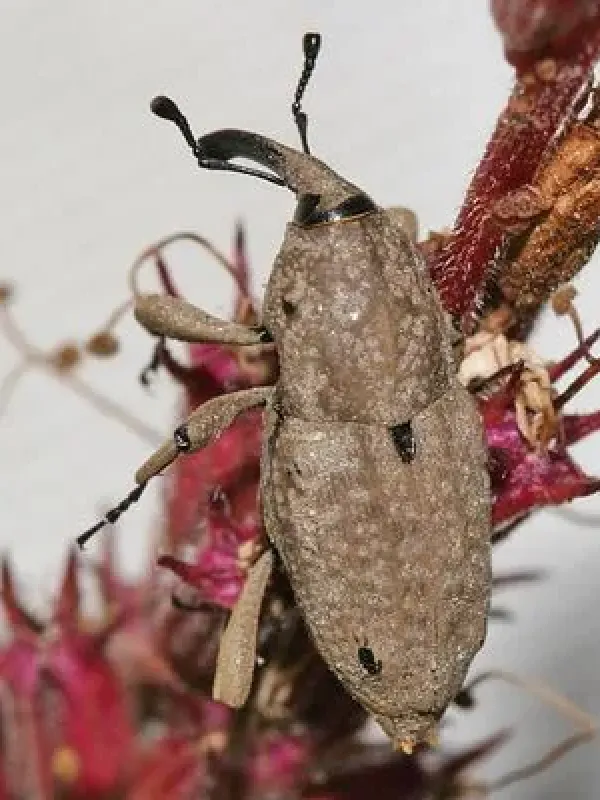
The American wood-boring weevil (Dryophthorus americanus) is a small beetle belonging to the family Dryophthoridae. These beetles are characterized by an elongated, cylindrical body typically measuring between 3 and 5 millimeters in length, with a dark brown to black coloration.
The species possesses a short, stout rostrum typical of its family and a deeply pitted surface on the elytra, which features longitudinal grooves. This morphology allows the beetle to efficiently maneuver within the narrow cracks and fissures of tree bark.
As a member of the order Coleoptera, its life cycle includes egg, larval, pupal, and adult stages. The larvae are legless and white, possessing strong mandibles adapted for boring through various stages of drying or decaying wood.
Dryophthorus americanus is commonly associated with both deciduous and coniferous tree species, particularly those that are already compromised by environmental stress or secondary infection.
Adults are capable of flight, allowing them to disperse effectively and colonize new suitable habitats, such as fallen timber or weakened stands within their native range.
What it damages
This beetle is primarily a secondary pest, preferring fallen trees, stumps, and wood that has been weakened by fungal pathogens or environmental damage. It rarely attacks healthy, vigorous trees.
The damage is caused by larvae that bore extensive galleries throughout the sapwood and inner layers of the timber. This activity undermines the structural integrity of the wood, rendering it unsuitable for high-quality construction use.
While the species plays a beneficial role in forest ecosystems by facilitating the decomposition of dead organic matter, it represents a significant economic threat to log yards and timber storage facilities.
Infestation is often accompanied by the introduction of wood-decaying fungi, which accelerate the rotting process. This combined impact leads to rapid degradation of the affected wooden materials.
Increased density of larval galleries can lead to a significant loss in the strength and market value of the timber, making early detection crucial for management.
Signs of infestation
The most visible sign of infestation is the presence of small, circular exit holes on the bark or exposed wood surface, typically 1-2 millimeters in diameter.
Beneath the bark or near the exit holes, one can often find frass, which is a fine mixture of wood dust and beetle excrement. The presence of this material is a strong indicator of active larval feeding.
Peeling back the bark reveals a network of irregular or longitudinal galleries etched into the wood surface, often packed with debris from the boring process.
During the summer months, adult beetles may be observed on the bark surface, particularly during the twilight hours, as they search for mates or suitable sites for oviposition.
- Small circular entry/exit holes on the wood surface.
- Accumulations of fine frass near the base of the wood.
- Visible gallery patterns in the inner wood layers.
- Occasional presence of adults on logs during active periods.
Control measures
Effective management begins with strict sanitation practices in forests and log yards. Removing dead, dying, or infested timber promptly eliminates breeding sites and suppresses population growth.
Proper storage of timber is essential; keeping logs dry or moving them quickly to milling facilities helps prevent infestation by these wood-boring insects.
Heat treatment, particularly kiln drying, is the most reliable method for eradicating all life stages of the weevil within the wood, ensuring the product is pest-free.
Chemical applications on log surfaces can provide temporary protection in lumber yards during periods of peak adult activity, though they should be used as part of an integrated management plan.
Routine monitoring using visual inspections or traps allows managers to assess the population pressure and implement necessary sanitation harvests before significant economic damage occurs.
Taxonomy
- Latin name
- Dryophthorus americanus
- Order
- Coleoptera (beetles)
- Family
- Dryophthoridae
- EPPO code
- DRPHAM
Discussion
No discussions yet — be the first.