
Mushroom moth Dryadaula
Dryadaula pactolia
Description
How to identify
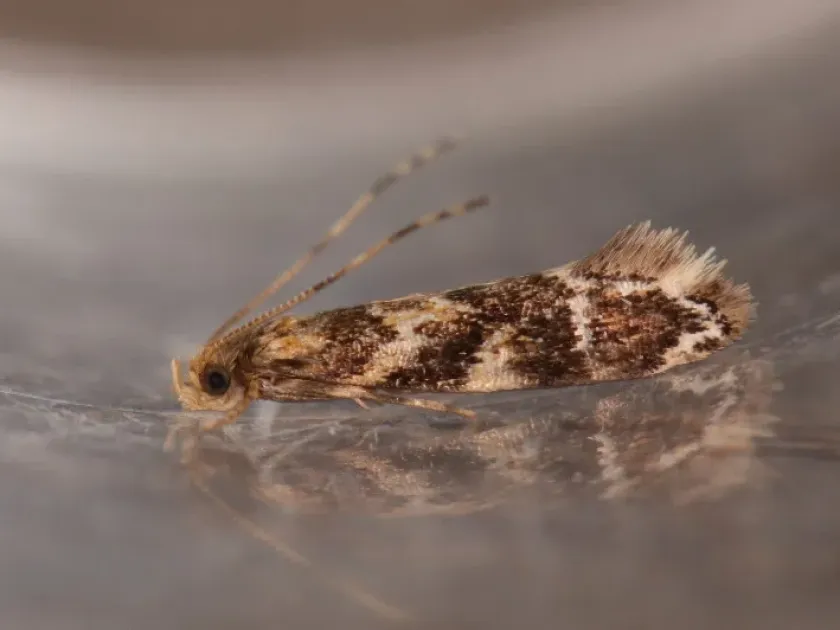
The mushroom moth Dryadaula pactolia belongs to the family Dryadaulidae of the order Lepidoptera. The adult moth is a small insect with a wingspan of approximately 10–12 millimeters.
The forewings are yellowish-brown with distinct dark spots, providing excellent camouflage against the substrate and fungal casing layer.
The larvae are small caterpillars, reaching up to 8–10 millimeters in length, with a cream-colored body and a prominent brown head capsule.
To identify the pest in professional mushroom growing facilities, pheromone traps or sticky boards are utilized to detect adult moths early in the cycle.
The life cycle is closely linked to the mycelium, where larvae feed and pupate, making early detection difficult without regular monitoring.
What it damages
This moth species primarily feeds on cultivated mushrooms, particularly white button mushrooms (Agaricus bisporus), attacking both the mycelium and the fruit bodies.
Larvae disrupt the casing layer and penetrate deep into the mushroom beds, feeding on the mycelium and significantly reducing the potential crop yield.
Damaged mushrooms show internal tunneling, which ruins their commercial value and serves as an entry point for secondary bacterial and fungal infections.
In addition to physical damage, the movement of larvae within the grow room facilitates the spread of spores from other pathogens and pests.
A mass outbreak can lead to severe losses, as a single infestation cycle can impact large areas of the cultivation shelves within a short timeframe.
When it appears
In indoor mushroom cultivation facilities, the mushroom moth can develop year-round if proper temperature and humidity controls are not strictly enforced.
Elevated temperatures exceeding 18–20 degrees Celsius promote rapid larval development and shorten the generation time, leading to population explosions.
Multiple generations can occur within a single growing season if the hygiene protocol is compromised or if initial substrate inoculation is infested.
Active flight periods of adult moths are often observed during the substrate preparation phase or when rooms are transitioned to the fruiting stage.
Insects can migrate between cultivation rooms via airflow and ventilation systems if these are not protected by fine-mesh insect screens.
Signs of infestation
The presence of adult moths in the grow rooms during the evening or night hours is the primary indicator of an active pest population.
Thin silk webbing on the surface of the casing soil or substrate indicates larval activity and the construction of protective tunnels for pupation.
Visible small holes or dark tunnels in the mushroom stalks and caps provide definitive evidence of larval feeding damage from within the fruiting body.
Localized patches of dying or discolored mycelium, often accompanied by a musty or rotting odor, suggest concentrated larval feeding in those areas.
Mushroom clusters may show signs of stunted growth, deformation, or discoloration, which are clear symptoms of extensive substrate infestation.
Control measures
The primary control strategy is rigorous sanitation, including thorough disinfection of rooms, shelving, and equipment between every crop cycle.
Effective pasteurization of the substrate and casing layer is essential to eliminate any eggs or larvae present before the mushrooms start growing.
Implementing light traps and pheromone-based monitoring is crucial for early detection and for reducing the number of adult moths in the environment.
If an infestation is detected, growers should employ approved biological control agents that are safe for human consumption and do not leave toxic residues.
Securing ventilation inlets with fine-mesh screens is a necessary preventative measure to stop the migration of moths between different cultivation zones.
Taxonomy
- Latin name
- Dryadaula pactolia
- Order
- Lepidoptera (butterflies)
- Family
- Tineidae
- EPPO code
- DRYAPA
Discussion
No discussions yet — be the first.