
Many-lined land planarian
Diversibipalium multilineatum
Description
How to identify
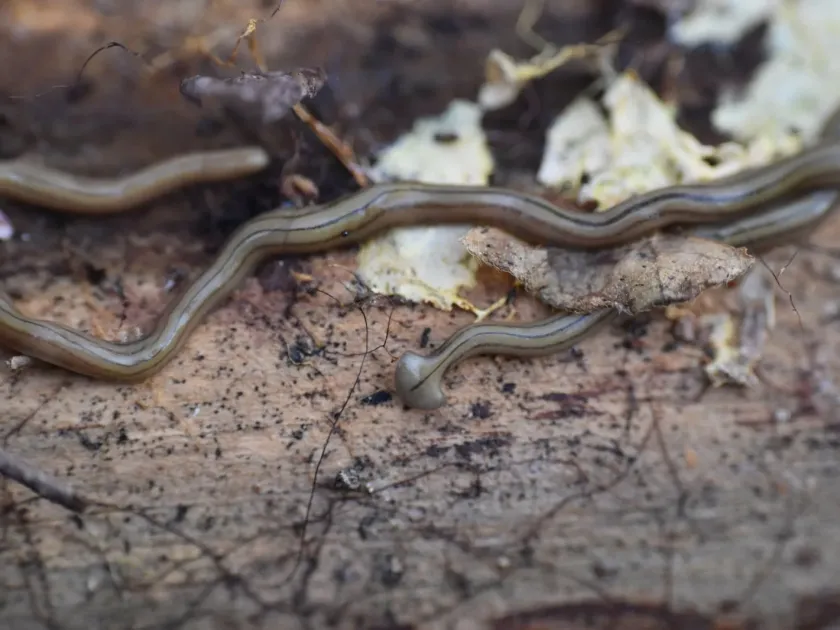
The many-lined land planarian (Diversibipalium multilineatum) is a predatory flatworm known for its distinctive hammer-shaped head. Adult specimens typically measure between 10 and 20 cm in length.
Their bodies are elongated and marked with five dark longitudinal stripes against a yellowish-brown or olive-colored background. The ventral surface is usually lighter, and the entire body is covered in a protective mucus layer.
Taxonomically, this species belongs to the phylum Platyhelminthes, class Turbellaria, and family Geoplanidae. It is considered an invasive species in many parts of the world, often spread through international plant trade.
These planarians are hermaphroditic and possess significant regenerative capabilities. If a worm is cut into pieces, each fragment can potentially develop into a new, fully functional individual, making control efforts difficult.
Their life cycle involves laying cocoons in moist, hidden environments. Upon hatching, the juveniles are capable of hunting earthworms immediately, showing no parental care but high survival rates.
What it damages
The primary damage caused by Diversibipalium multilineatum is the depletion of earthworm populations. By preying on these essential soil organisms, planarians severely disrupt the natural soil food web.
As earthworms are responsible for soil aeration, drainage, and nutrient cycling, their absence leads to soil compaction and reduced root health. This affects the growth and development of virtually all garden and greenhouse plants.
Although they do not feed on plant foliage, the indirect damage to the rhizosphere can be catastrophic for nurseries and organic farms that rely on healthy biological activity for plant productivity.
In contained environments like greenhouses or pots, the loss of earthworms results in rapid degradation of the growing medium, forcing growers to rely on synthetic fertilizers to maintain plant growth.
The ecological impact is significant, as these predators have few natural enemies in non-native environments, allowing them to dominate the soil microfauna and suppress biodiversity in the garden.
When it appears
Activity is highly dependent on environmental moisture. Planarians are most active during damp seasons, typically spring and autumn, when moderate temperatures allow them to hunt on the surface.
In greenhouses and indoor gardens, they can remain active year-round if the microclimate provides high humidity and stable temperatures, allowing for continuous population growth.
During dry or sunny days, they retreat into the soil or under debris, such as mulch, rocks, or pots, to avoid desiccation. This makes them difficult to spot during normal daylight working hours.
Peak movement usually occurs at night or immediately after heavy rainfall or irrigation, providing the best opportunities for garden inspection and population management.
In colder regions, while outdoor activity decreases, they can survive in protected microhabitats, such as heated greenhouses or sheltered soil areas, waiting for favorable conditions to expand their range.
Signs of infestation
A major indicator of infestation is a noticeable decline or total disappearance of earthworms in areas where they were previously abundant. If soil turning yields no earthworms, suspect planarian presence.
Look for slimy trails on smooth surfaces like ceramic pots, greenhouse floors, or garden stones. These trails are evidence of the planarian’s movement during the previous night.
Direct visual sighting of the worms is the most definitive sign. Their hammer-like head shape is unique and differentiates them from other common garden worms or slugs.
Plants showing unexplained stagnation, poor drainage symptoms, or slow growth in otherwise healthy soil conditions might be suffering from the consequences of the degraded soil ecosystem caused by these predators.
- Rapid decline in earthworm numbers.
- Mucus trails on container surfaces or damp pathways.
- Presence of long, striped worms with expanded heads.
- Unexpected decline in soil structure quality.
Control measures
Currently, there are no specific chemical pesticides or insecticides approved for the control of land planarians. Management relies entirely on physical removal and environmental modification.
Manual collection is the most effective method. Using gloves, capture the worms and drop them into a container with salt water or isopropyl alcohol to ensure complete extermination.
Strict quarantine protocols for all new plant stock are essential. Inspect the root balls and undersides of pots thoroughly before introducing new plants into your garden or greenhouse.
Managing soil moisture can help limit their success. If conditions allow, improve drainage and avoid over-irrigating to create an environment that is less hospitable for these moisture-loving predators.
Maintain general garden hygiene by removing excess organic debris, mulch, and leaf litter where planarians hide during the day, thereby reducing their safe breeding and resting areas.
Taxonomy
- Latin name
- Diversibipalium multilineatum
- Family
- Bipaliidae
- EPPO code
- DIVBMU
Discussion
No discussions yet — be the first.