
Bipalium kewense
Bipalium kewense
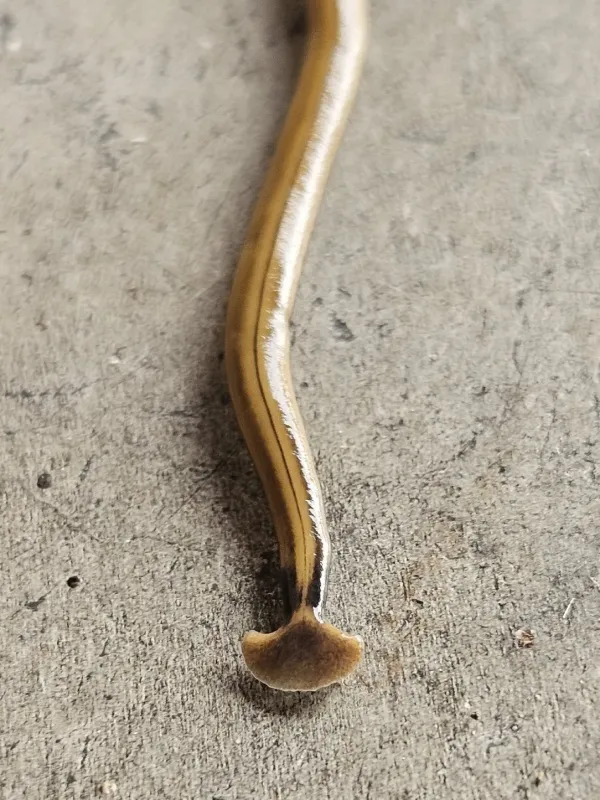
Description
How to identify
Bipalium kewense, commonly known as the hammerhead flatworm, belongs to the order Tricladida and the family Geoplanidae. It is a large terrestrial flatworm capable of reaching lengths of 20–30 centimeters.
Its most distinctive feature is the expanded, crescent-shaped head that resembles the head of a hammer. The body is smooth, typically light brown or yellowish, featuring dark longitudinal stripes along the dorsal side.
This organism is a hermaphrodite and possesses significant regenerative capabilities. If a worm is fragmented, each piece can grow into a new individual, complicating eradication efforts.
Movement is achieved through muscular contractions and the secretion of a thick mucus layer, which leaves a visible, shiny slime trail on soil or other surfaces.
The worm is strictly nocturnal and prefers damp, shaded environments, making it difficult to detect during daylight hours in greenhouses or gardens.
What it damages
Bipalium kewense does not feed directly on plant tissues; rather, it is a specialized predator that hunts earthworms. By consuming earthworms, it creates a severe ecological imbalance.
Earthworms are essential for soil aeration and nutrient cycling. Their decline due to predation by flatworms leads to poor soil structure, reduced aeration, and hampered plant nutrient uptake.
In greenhouses and nursery pots, a high population of these flatworms can completely deplete the earthworm community, causing long-term degradation of the growing medium.
The high-humidity environments favored by Bipalium kewense also coincide with conditions that promote root rot and other fungal diseases, indirectly affecting plant health.
Ultimately, the economic damage caused by this pest is realized through the loss of natural soil fertility and the subsequent decline in crop yield and plant vigor.
When it appears
The activity of Bipalium kewense is highly dependent on humidity levels and ambient temperatures. They are most active during warm and moist seasons, typically from spring through autumn.
In outdoor garden settings, activity peaks after heavy rainfall when the soil moisture is ideal for the flatworm to migrate and search for prey.
In controlled environments such as greenhouses, nurseries, and conservatories, the worm can remain active and reproductive throughout the entire year, provided that high humidity is maintained.
Reproduction and spread are often exacerbated by the trade of potted plants, where the worms can hide deep within the moist root ball and be transported to new locations.
During cold winters in temperate climates, outdoor populations may die back, but they persist in protected areas or indoors, quickly re-establishing when conditions improve.
Signs of infestation
A primary indicator of a Bipalium infestation is the sudden and unexplained disappearance of earthworms from flower beds or potting soil.
The presence of shiny, dried mucus trails on soil surfaces, pots, or garden paving is a clear sign of nocturnal movement of terrestrial planarians.
Direct sightings of the worms, particularly under pots, rocks, or garden debris during wet mornings, confirm their presence in the area.
Plants may show signs of stunted growth or chlorosis, not due to direct damage but because the loss of earthworms has negatively affected the physical quality of the soil.
The absence of typical earthworm activity, such as soil castings (excrement) on the surface, should prompt a thorough inspection for the presence of these flatworms.
Control measures
There are no specific chemical pesticides currently approved for the eradication of Bipalium kewense, so control focuses on physical removal and environmental management.
If found, worms should be collected manually using gloves, as some species secrete irritants, and disposed of in a solution of salt or vinegar to ensure they are killed.
Strict quarantine measures should be applied to new plants: carefully inspect root balls and consider replacing the growing medium before introducing plants into your greenhouse.
Reducing excessive moisture and practicing regular soil cultivation can help disrupt the flatworm’s habitat, making the area less attractive for colonization.
Avoid moving soil, compost, or mulch from known infested sites to clean areas to prevent the accidental introduction of this invasive predator into your garden or greenhouse.
Taxonomy
- Latin name
- Bipalium kewense
- Family
- Bipaliidae
- EPPO code
- BIPAKE
Discussion
No discussions yet — be the first.