
Winter moth (Diurnea lipsiella)
Diurnea lipsiella
Description
How to identify
Diurnea lipsiella, often referred to in the context of winter-active moths, belongs to the family Chimabachidae. It is a unique pest characterized by distinct differences between males and females.
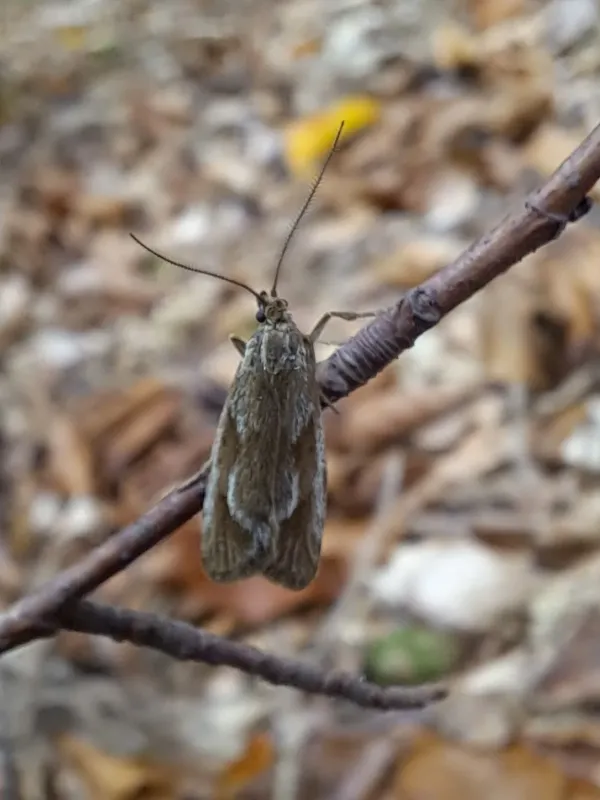
The adult male is a medium-sized moth with fully developed wings, typically displaying a mottled brown and grey pattern that provides excellent camouflage on tree bark.
Females are flightless, possessing only vestigial, rudimentary wings. They are often found crawling on tree trunks during the late autumn months to locate mates and lay eggs.
Larvae are relatively agile caterpillars, usually pale green or yellowish with a dark head capsule, capable of dropping on silk threads when disturbed to avoid predators.
The pupation process occurs within a silk cocoon, which is carefully constructed by the mature larva inside folded leaves or hidden within the deep crevices of the host tree's bark.
What it damages
This pest primarily attacks a variety of deciduous trees, including essential orchard fruit crops such as apples, pears, plums, and cherries.
Beyond cultivated orchards, Diurnea lipsiella is frequently found on forest trees like oaks, birches, and beeches, which act as secondary hosts and sources of infestation.
The larvae are the destructive stage, feeding aggressively on leaves. They create ragged holes or perform heavy skeletonization, which significantly reduces the tree's photosynthetic capacity.
Severe infestations can lead to premature leaf drop, which drains the tree's energy reserves and makes it more susceptible to secondary infections or winter damage.
In addition to foliage damage, the stress caused by large caterpillar populations can hinder fruit development and reduce the overall quality of the harvest.
When it appears
The lifecycle of Diurnea lipsiella is highly unusual as the flight period for adults occurs in late autumn, typically spanning from October to November.
Eggs are deposited by the flightless females on the bark of host trees. These eggs undergo diapause and remain on the branches throughout the winter months.
Hatching coincides with the arrival of spring, specifically during the period of bud burst and the emergence of fresh, tender leaves, which are critical for the survival of early-instar larvae.
The larval feeding stage typically lasts through the spring, with maximum activity observed in May and June as the caterpillars reach their final growth stages.
Once mature, the larvae enter the pupal stage, remaining dormant through the heat of the summer until the environmental cues of autumn trigger the emergence of the next generation.
Signs of infestation
Early signs of an infestation include the presence of curled or rolled leaves held together by fine silken threads, which serve as protective shelters for the larvae.
Visual inspection reveals irregular feeding damage, with holes in the leaf surface or veins left behind after the softer leaf tissue has been consumed.
In late autumn, observers may notice the presence of adult moths on tree trunks, which is a clear indicator that the population is currently in its mating phase.
Accumulation of larval excrement within silk nests is another telltale sign of an active colony living within the canopy of the tree.
- Rolled leaves tied with silk.
- Skeletonized leaf patches.
- Ragged foliage edges.
- Presence of small moths on bark in autumn.
- Silk threads hanging from branches.
Control measures
Cultural control includes winter pruning to remove heavily infested branches and cleaning tree trunks to destroy potential egg-laying sites on the bark.
The use of sticky grease bands wrapped around tree trunks in early autumn is an effective way to prevent flightless females from crawling up to lay eggs.
Biological control methods involve the application of Bacillus thuringiensis sprays, which target the caterpillars during the spring without harming beneficial insects.
Chemical intervention should be timed carefully with the bud-burst stage, as this is when the larvae are most exposed and susceptible to conventional insecticides.
Maintaining a healthy, well-pruned orchard with good airflow helps reduce the overall suitability of the environment for this moth species to thrive.
Taxonomy
- Latin name
- Diurnea lipsiella
- Order
- Lepidoptera (butterflies)
- Family
- Chimabachidae
- EPPO code
- CHIBPH
Discussion
No discussions yet — be the first.