
Willow leaf miner moth
Dasystroma salicella
Description
How to identify
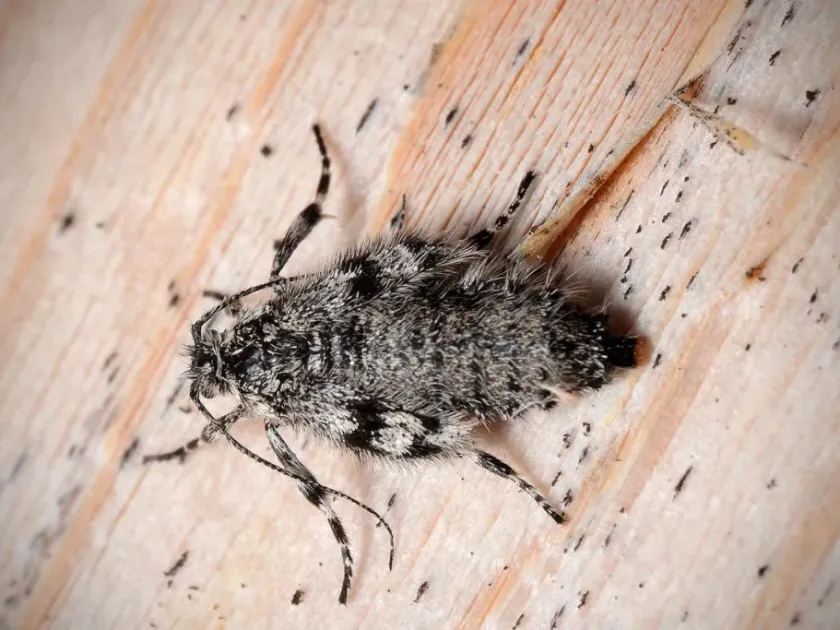
The willow leaf miner moth (Dasystroma salicella) is a member of the Gracillariidae family within the order Lepidoptera. This small moth is well-adapted to surviving on willow bark, thanks to its cryptic coloration which acts as perfect camouflage.
The adult moth features narrow wings with an intricate, mottled pattern. This pattern allows the insect to blend seamlessly into the texture of the tree bark, making it notoriously difficult for observers and predators to spot during the daylight hours.
The larvae, or caterpillars, undergo several developmental stages (instars) while feeding. As they grow, they move through the leaf tissues, constantly changing their size and the impact they have on the plant's structural integrity.
The life cycle of this species is intricately tied to the phenology of the host plant. They have evolved to emerge and feed precisely when the willow leaves provide the highest nutritional value for their development.
Hibernation typically occurs in the pupal or adult stage, protected within deep bark crevices. This strategic choice of winter shelter allows the species to endure harsh winter climates and emerge early in the spring.
What it damages
The primary host for Dasystroma salicella is the willow tree (genus Salix). They exhibit a specialized preference for these trees, making willow plantations and ornamental plantings particularly susceptible to infestation.
The damage is caused by larvae that mine the leaf tissue. By consuming the inner layers of the leaf, they create visible tunnels, which eventually lead to large, necrotic brown patches and premature leaf drop.
In cases of high infestation, the entire canopy of the willow can appear scorched or wilted. This significant loss of photosynthetic capacity hinders the tree’s growth and weakens its overall physiological health.
The moth also causes damage to young shoots and emerging buds. When these vital parts are compromised, the tree's architectural development is stunted, which can lead to unsightly and misshapen growth patterns.
Continuous feeding sessions deprive the tree of energy reserves necessary for survival and reproduction, eventually making the host more prone to secondary infections from fungi and other opportunistic pathogens.
Signs of infestation
The most telltale sign of an infestation is the presence of winding, light-colored tunnels or "mines" within the leaf blades. These marks indicate active feeding sites where larvae are consuming the internal tissue.
As the infestation progresses, leaves often become distorted and curl at the edges. Inside these rolls, one can often find larvae, their webbing, and frass, which are classic indicators of a colony's presence.
Small exit holes may also appear on the leaf surface, marking the points where the larvae have emerged to move to new feeding spots or to prepare for the pupation phase of their development.
During the pupation stage, one might spot fine, silk-like cocoons attached to the undersides of leaves or tucked away in bark grooves. These cocoons are often camouflaged with leaf fragments or debris.
General yellowing or browning of the foliage in mid-summer is a major red flag. If a tree loses its leaves prematurely, it is likely that the population density of the willow leaf miner moth has exceeded the plant's tolerance.
Control measures
Effective management begins with sanitary practices. Removing and disposing of infested leaves during the growing season and cleaning up leaf litter in the fall significantly reduces the overwintering population.
Chemical control can be implemented using systemic insecticides, which are particularly effective if applied during the early stage of larval hatching, before the caterpillars have burrowed too deeply into the leaf tissue.
Promoting a healthy environment for natural predators is a sustainable approach. Parasitoid wasps and predatory bugs are known to naturally suppress the moth population, providing an essential balance to the ecosystem.
For ornamental or high-value trees, pheromone traps can be used to monitor moth activity and disrupt the mating cycle, which serves as a non-toxic method to decrease the reproductive success of the pest.
- Monitor early spring emergence using pheromone bait traps.
- Apply biological control agents like Bacillus thuringiensis.
- Ensure proper hydration and soil nutrition to strengthen tree resistance.
Taxonomy
- Latin name
- Dasystroma salicella
- Order
- Lepidoptera (butterflies)
- Family
- Chimabachidae
- EPPO code
- DSSTSA
Discussion
No discussions yet — be the first.