
Mushroom-infesting nematode
Ditylenchus myceliophagus
Description
How to identify
The mushroom-infesting nematode (Ditylenchus myceliophagus) is a microscopic worm belonging to the order Tylenchida and the family Anguinidae. Due to its size, which rarely exceeds 1 mm, it is impossible to detect with the naked eye in the early stages of infestation.
The nematode possesses a specialized stylet used to puncture fungal hyphae. It feeds by extracting the cell contents, which disrupts the normal metabolism and growth of the mushroom mycelium.
These nematodes reproduce rapidly in the humid environment of mushroom houses. The life cycle consists of several stages, and the organism is capable of entering a state of anhydrobiosis to survive unfavorable conditions.
Dissemination is primarily mechanical, occurring through contaminated substrate, tools, clothing, or footwear. Additionally, mushroom-infesting flies, such as sciarids, act as vectors, transporting the nematodes between growing beds.
Laboratory diagnosis is essential for confirming an infestation. Nematologists use extraction techniques followed by microscopic observation to quantify the population density within the mushroom compost.
What it damages
Ditylenchus myceliophagus primarily targets cultivated mushrooms, most notably Agaricus bisporus. It is a highly specialized parasite that feeds exclusively on the vegetative mycelium.
By consuming the mycelium, the nematode stops the expansion of the fungal colony, which prevents the formation of primordia. This leads to a severe reduction in yield, which can escalate to total crop failure in heavily infested farms.
Beyond direct feeding, these nematodes contribute to secondary damage by facilitating bacterial infections. The punctured hyphae become susceptible to various opportunistic pathogens, which rapidly degrade the compost.
Mushrooms that manage to form in infested beds are often malformed, water-soaked, or exhibit premature senescence. Such products are of poor market quality and may contain high levels of microbial contaminants.
Ultimately, the compost loses its structure and nutritional value. The texture becomes mushy, and a distinct, foul-smelling odour develops as the mycelium completely dies off and the organic matter decomposes.
When it appears
The lifecycle of the mushroom-infesting nematode is independent of outdoor seasons due to the controlled environment of modern mushroom facilities. It remains active throughout the year as long as internal conditions are maintained.
The optimal temperature for nematode development is between 20°C and 25°C, matching the requirements of mushroom cultivation. Under these conditions, the pest completes its generation within approximately 10 to 14 days.
The risk of infestation is highest when hygiene protocols are neglected between production cycles. Nematodes can survive in residual compost or cracks in the floor, providing a source for the next batch of mushrooms.
Constant vigilance is required as the nematode can multiply very quickly. If left unchecked, the population can reach levels that cause commercial damage within a single production wave.
Management remains a year-round priority. Proper composting and pasteurization are the first lines of defense, and any break in the sanitary chain can lead to a rapid resurgence of the nematode population.
Signs of infestation
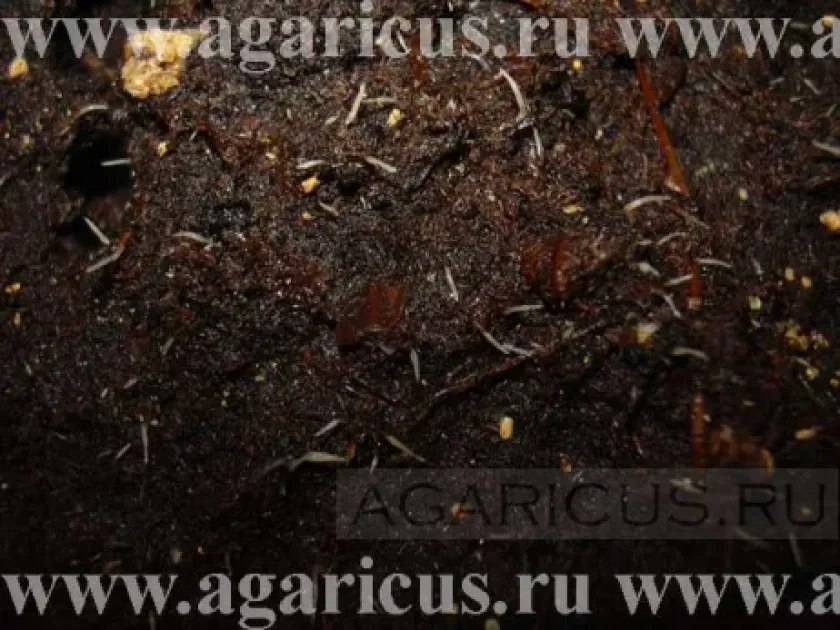
The first clinical sign of an infestation is a patchy or retarded growth of the mycelium. Instead of a thick white mat, the compost surface may look greyish, sparse, or entirely degraded.
- Development of "bald spots" where mycelium fails to colonize.
- A foul, damp, or rotten smell emanating from the beds.
- Stunted, deformed, or discolored fruiting bodies.
- Shrinkage and densification of the casing layer.
- Overall decline in mushroom production despite adequate climate controls.
As the infestation progresses, these patches expand until the entire bed is affected. The mycelium disappears, and the surface of the compost becomes slick, indicating a breakdown in microbial balance.
Early detection is crucial. If these signs appear, it is recommended to stop harvesting the affected area and conduct a microscopic analysis of the substrate to confirm the presence of Ditylenchus myceliophagus.
Control measures
The most effective control strategy is rigorous thermal pasteurization of the compost and casing material. Temperatures above 60°C must be maintained throughout the substrate mass to ensure total elimination.
Strict hygiene standards are mandatory. This includes the use of disinfection mats for staff, regular cleaning of all equipment, and the removal of all organic debris after each production cycle.
Integrated Pest Management (IPM) should focus on controlling fly vectors. Using yellow sticky traps and safe insecticides is necessary to limit the spread of nematodes through sciarid and phorid flies.
Following a crop, the rooms should undergo thorough steaming to kill any resting stages of the nematode. Proper waste disposal, ensuring that spent mushroom substrate is kept away from the growing area, is equally important.
Chemical nematicides are generally not recommended for use during the growing phase due to residue risks and toxicity to the mushrooms. Consequently, reliance on thermal and sanitary protocols is the gold standard.
Taxonomy
- Latin name
- Ditylenchus myceliophagus
- Order
- Nematodes
- Family
- Anguinidae
- EPPO code
- DITYMY
Discussion
No discussions yet — be the first.