
Stem and bulb nematode
Ditylenchus
Description
How to identify
The stem and bulb nematode (lat. Ditylenchus) belongs to the Anguinidae family, order Tylenchida. It is a microscopic, thread-like worm, typically reaching no more than 1.5 mm in length, making it invisible to the naked eye during standard field scouting.
The life cycle of this pest is highly specialized. It penetrates the inner tissues of plants, using its stylet to feed on cell sap. This process releases enzymes that degrade plant cell walls, leading to significant structural damage and nutrient uptake interference.
Under adverse conditions, these nematodes can enter a state of dormancy known as anhydrobiosis. In this state, they can survive in dried plant tissues, soil, or seeds for several years, waiting for the reintroduction of favorable conditions and a suitable host.
Reproduction takes place entirely within the plant tissue. Females lay eggs in the internal cavities they create. With high humidity and optimal temperatures, the lifecycle can be completed in just a few weeks, leading to rapid population explosions.
Transmission occurs through infested bulbs, seeds, irrigation water, contaminated farming tools, and soil moved by agricultural machinery. Consequently, strict quarantine measures are essential for preventing the spread within and between farms.
What it damages
This pest has a very broad host range, causing severe damage to onions, garlic, potatoes, strawberries, and several pulse crops. It is particularly notorious for causing systemic issues that render produce unmarketable and significantly reduce overall yields.
In potatoes, the nematode invades the tubers, causing the skin to crack and the inner flesh to become grey and spongy. Such potatoes are highly susceptible to secondary bacterial and fungal infections, leading to rapid rotting in storage facilities.
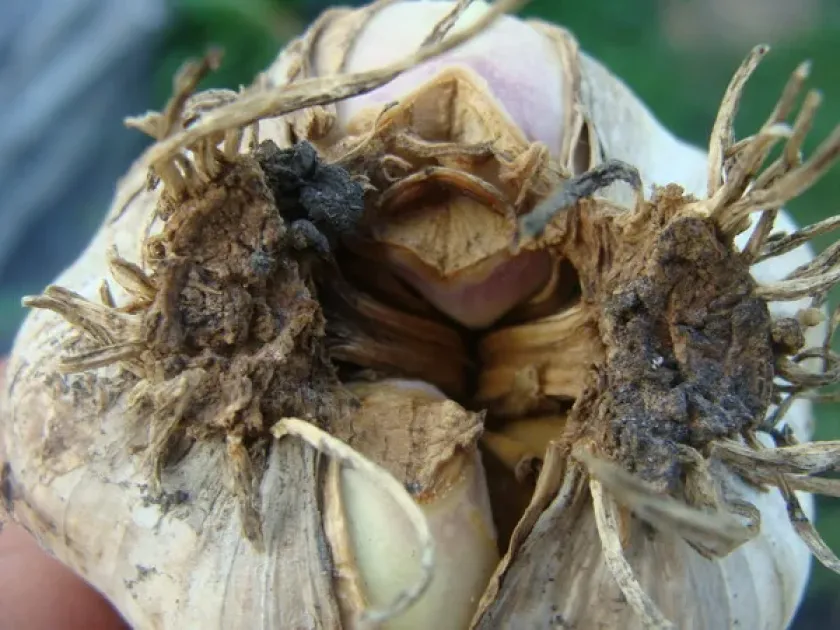
Onions and garlic are highly vulnerable. The pest causes the "bloated" effect, where the bulb base softens and scales become thickened and distorted. This prevents the bulb from developing properly and often results in complete crop loss if left unchecked.
In legumes, the nematode causes stem swelling, internode shortening, and deformation. Infested plants show stunted growth, reduced pod formation, and an inability to maintain normal physiological functions, which eventually leads to plant collapse.
Strawberries suffer from "cauliflower disease" symptoms, where the crown becomes misshapen, leaf stalks thicken, and foliage twists. The pest severely limits the plant’s vigor and fruit production, making the entire plantation unproductive over time.
Signs of infestation
Visual symptoms usually involve morphological deformities. Look for twisted stems, thickened petioles, leaf curling, and abnormal lumps or swellings on the surface of plant organs. These symptoms often appear in patches across the field.
An internal inspection of bulbs or tubers often reveals a characteristic "spongy" or "mealy" appearance. Infected tissue loses its firmness and turns into a brownish or greyish mass, which is a definitive sign of nematode colonization.
Stunted growth is a key warning sign. Infested plants appear significantly smaller than their healthy counterparts. Because the nematodes spread from a primary point of infection, affected areas in the field will clearly stand out from the surrounding healthy crop.
Early wilting is common during dry spells, as the root system and vascular tissues are often damaged, preventing the plant from effectively absorbing and transporting water. This wilting is often disproportionate to the available soil moisture.
It is important to note that symptoms can be easily confused with other soil-borne diseases. Laboratory analysis remains the only method to confirm the presence of Ditylenchus and distinguish it from fungal pathogens.
Control measures
Crop rotation is the most effective cultural practice. Growing non-host crops for at least 3–4 years helps reduce nematode populations in the soil to negligible levels, as they cannot survive indefinitely without a suitable host.
Use only certified, pest-free planting material. Since the nematode is often carried through infested bulbs or seeds, sourcing quality material is the first and most crucial step in preventing an initial infestation on your farm.
Sanitation is vital. Remove and destroy all crop residues after harvest, as these serve as the primary reservoir for the pest. Controlling weeds in and around the field is also necessary, as many weeds can act as alternative hosts for the nematode.
Biological control options, such as using specific antagonistic fungi or bacteria, are gaining popularity as sustainable alternatives to chemicals. When applied correctly, these agents can suppress nematode populations in the soil and rhizosphere.
Chemical control, specifically using nematicides, is generally a last resort. Due to their toxicity and the strict regulations surrounding their use, chemical applications should be reserved for severe cases and handled only by trained personnel with appropriate equipment.
Taxonomy
- Latin name
- Ditylenchus
- Order
- Nematodes
- Family
- Anguinidae
- EPPO code
- DITYSP
Discussion
No discussions yet — be the first.