
Dirioxa
Dirioxa
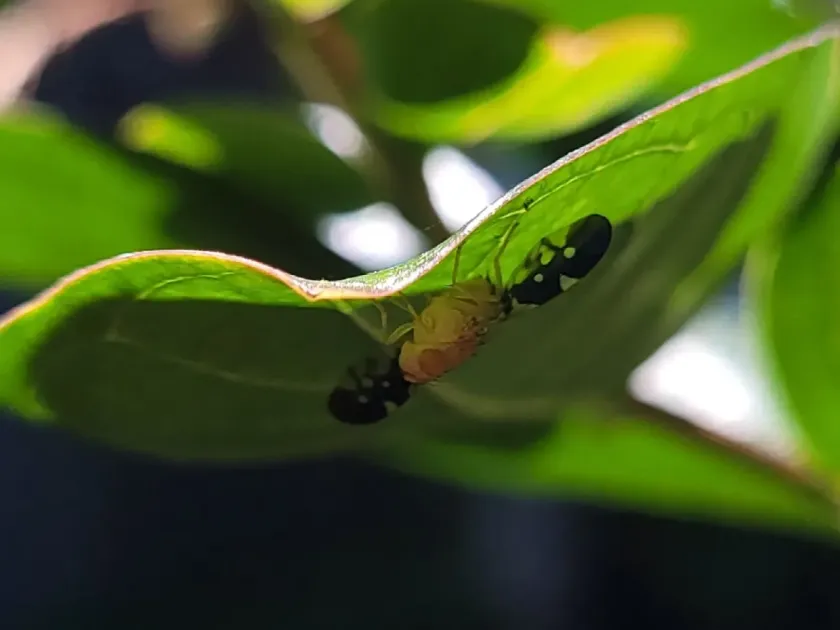
Description
How to identify
Dirioxa, specifically the species Dirioxa pornia, belongs to the fruit fly family (Tephritidae), order Diptera. This insect is a small fly characterized by a reticulated or banded wing pattern typical of its family.
Adults possess distinct pigmentation, usually in shades of brown or ochre. The flies are small, making them difficult to detect visually in an orchard without specific monitoring traps.
Larvae are typical of fruit flies: legless, maggot-like, white or yellowish, with a tapered front end specialized for boring into plant tissues.
Field identification often relies on analyzing fruit damage, as the insects themselves are most active at dusk or under specific climatic conditions.
Systematically, this genus is closely related to other economically significant tephritids, which means monitoring protocols are similar to those for common fruit fly pests.
What it damages
The primary hosts for Dirioxa pornia are various fruit trees. The pest shows a preference for the soft tissues of ripening fruits.
Host crops at risk include tropical and subtropical fruits, as well as some stone fruits grown within the pest's geographic range.
Larvae develop inside the fruit pulp, creating tunnels and causing premature softening, which leads to total loss of market value.
Damage to the fruit skin is frequently followed by secondary fungal and bacterial infections, as the integrity of the protective layer is compromised.
The severity of the infestation can be substantial during years with high adult populations, particularly in neglected orchards or small-scale gardens.
When it appears
The activity of Dirioxa is directly dependent on temperature and humidity levels. Adult emergence usually coincides with the fruit formation and ripening period.
In regions with favorable climates, the insect can produce multiple generations within a single growing season, complicating control efforts.
Maximum activity is observed during the warmer months. Development may slow down during dry spells but resumes with high intensity following rainfall.
Oviposition occurs directly into injured or ripening fruit. Embryonic development is rapid, allowing larvae to start feeding almost immediately upon hatching.
The species typically overwinters in the soil or in decaying plant debris where larvae or pupae survive the unfavorable period.
Signs of infestation
The first sign of infestation is the appearance of tiny punctures on the fruit skin, left by the female during egg-laying.
Discoloration, slight depressions, or juice droplets often appear around the puncture sites, indicating the onset of internal rotting.
When the fruit is sliced, characteristic winding tunnels filled with larval excrement can be observed. The pulp in affected areas turns dark and watery.
A high population of these insects frequently leads to mass fruit drop before the produce reaches full technical maturity.
A distinct fermented odor emanating from the fruit is a reliable indicator that the pest larvae are actively developing inside.
Control measures
Sanitation is the most crucial control measure. It is essential to collect and destroy fallen fruit regularly to prevent larvae from pupating in the soil.
The use of yellow sticky traps or pheromone lures allows for population monitoring and timely implementation of protective measures.
Chemical control involves the application of systemic or contact-stomach insecticides authorized for use in fruit cultivation.
Strict adherence to pre-harvest intervals is mandatory, so spray programs must be precise and based on active monitoring data.
Biological control methods, such as the use of natural enemies or bio-pesticides based on fungal agents, show promising results in integrated pest management systems.
Taxonomy
- Latin name
- Dirioxa
- Order
- Diptera (flies)
- Family
- Tephritidae
- EPPO code
- DIRXSP
Discussion
No discussions yet — be the first.