
Dioxyna chilensis
Dioxyna chilensis
Description
How to identify
Dioxyna chilensis is a species of fruit fly belonging to the Tephritidae family, order Diptera. These insects are closely related to other seed-feeding flies that target plants in the Asteraceae family.
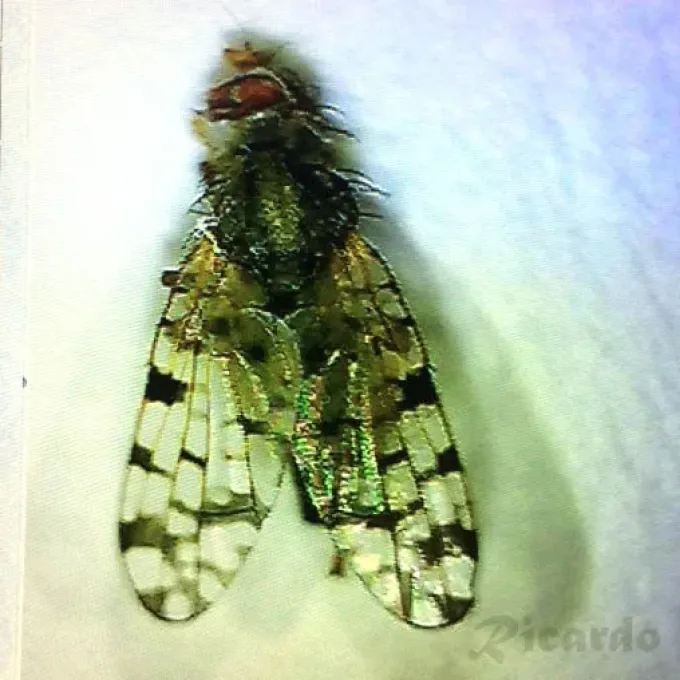
Adults are small flies characterized by a distinctive wing pattern, which serves as a primary morphological trait for species-level identification in entomological studies.
The larvae follow the typical morphology of Tephritid fruit flies: they are legless, creamy-white in color, and have a cylindrical body adapted for life inside plant tissues.
The life cycle encompasses complete metamorphosis, consisting of the egg, larval (three instars), pupal, and adult stages, synchronized with the phenology of host plants.
Field identification often requires careful inspection of the flower heads for the presence of larvae or the characteristic emergence holes left by the insects.
What it damages
The primary damage is caused by larvae feeding on the seeds within the flower heads (capitula) of host plants. This consumption destroys the generative potential of the plant.
Infested plants suffer from reduced seed viability, which is a major concern for both wild plant populations and cultivated crops used in herbal or industrial sectors.
Feeding behavior often leads to the premature shedding of seeds, significantly reducing yield quantity and quality for farmers engaged in seed production.
The damage caused by larvae facilitates the entry of secondary pathogens, such as fungi, which accelerate the decay of the flower head and further impair the crop.
The economic impact depends on the pest density, which can vary significantly depending on seasonal climatic conditions and the availability of suitable host plants.
When it appears
Adult activity typically commences during the flowering period of host plants. In many regions, this occurs in late spring or throughout the summer months.
Females lay their eggs directly into the developing buds, ensuring that the emerging larvae have immediate access to nutritious tissue.
Larval development takes place during the maturation phase of the seeds, with the duration of the larval stage being heavily influenced by ambient temperature and humidity.
Pupation frequently occurs inside the flower head or in the soil layer beneath the host plant, a critical factor for timing tillage and other control measures.
Depending on the region, the species may produce several generations per year, provided that the climate and host plant availability remain favorable.
Signs of infestation
Early signs of infestation include small, subtle entry holes on the sides or the base of the flower buds, which may be overlooked during routine crop inspections.
Visible deformation of the flower head, browning of bracts, and stunted development are common indicators that larvae are feeding internally.
- Excrement found at the base of the florets.
- Webbing or sticky secretions around the flower head.
- Empty seed hulls observed upon dissecting the capitulum.
Upon opening a suspect flower head, one may find the larvae themselves or distinct galleries created by their feeding, confirming an infestation.
The presence of adult flies hovering over the crop during sunny periods acts as an early warning for producers to initiate more detailed monitoring.
Control measures
Cultural control, such as deep plowing after harvest, is an effective way to destroy pupae overwintering in the soil and break the pest's reproductive cycle.
Sanitation practices, including the removal and destruction of infested plant debris, significantly reduce the population carryover to the following season.
The use of yellow sticky traps or pheromone-based lures provides a reliable method for monitoring population levels and determining the need for intervention.
Chemical control with systemic or contact insecticides may be necessary during the budding stage if the infestation levels threaten to exceed economic thresholds.
Biological control strategies, utilizing parasitic wasps or other natural enemies of Tephritidae, offer a sustainable alternative to conventional pesticide applications.
Taxonomy
- Latin name
- Dioxyna chilensis
- Order
- Diptera (flies)
- Family
- Tephritidae
- EPPO code
- DIOXCH
Discussion
No discussions yet — be the first.