
Dioxyna
Dioxyna
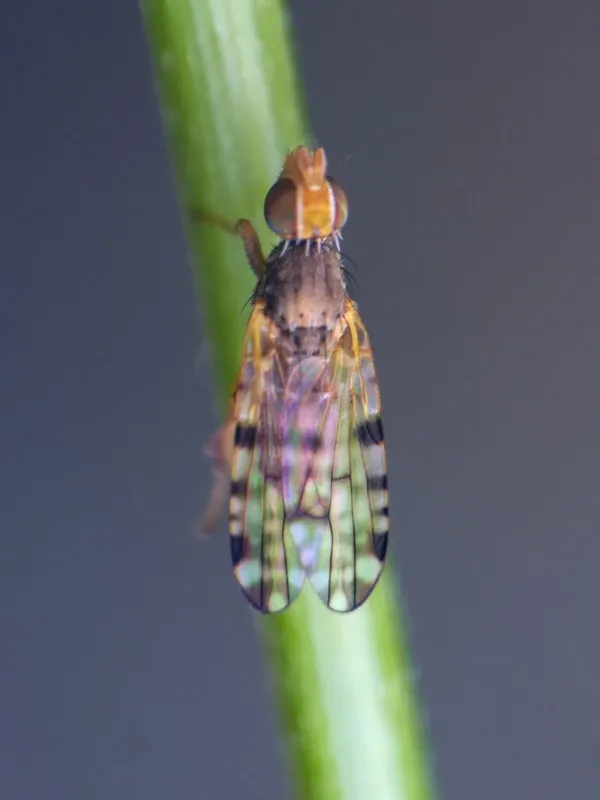
Description
How to identify
The genus Dioxyna belongs to the family Tephritidae, commonly known as fruit flies, which are characterized by their intricate wing patterns.
These insects are small flies that exhibit significant morphological adaptation for laying eggs inside the flower heads of their host plants.
Adults are identified by the specific coloration and veining of their wings, which are used for species-level differentiation.
The larvae are typical dipteran maggots, evolving within the tissues of the host and lacking legs, which is a common trait for the family.
Identification often requires careful examination of the insect's thoracic bristles and genitalia in a laboratory setting.
What it damages
Dioxyna species primarily target members of the Asteraceae family, causing significant injury to the floral structures.
Larvae consume developing seeds and receptacle tissues, which disrupts the reproductive cycle of the infested plant.
Damage is characterized by the hollowed-out appearance of the flower head and the reduction of seed production capacity.
Secondary infections, such as fungi or bacteria, often follow the larval feeding, exacerbating the damage to the floral structure.
For ornamental plants, the aesthetic impact is severe, as deformed and blackened flower heads become unmarketable.
When it appears
The activity of the adult stage is closely linked to the flowering period of host plants, usually occurring in late spring and throughout the summer.
The species typically undergoes multiple generations per season, depending on local climate conditions and host availability.
Overwintering usually occurs in the pupal stage, often tucked away in dry plant residues or protected soil layers.
Seasonal peaks in population density are driven by temperature and precipitation, which influence the success of egg-laying and larval development.
Early season generations target the first blooms, while later generations focus on late-flowering wild or cultivated species.
Signs of infestation
Visual signs of infestation include the swelling or asymmetrical shape of buds that have yet to bloom.
Small punctures on the surface of the bracts indicate the locations where the female has deposited her eggs.
Inside the flower head, the presence of larval frass and partially consumed seeds are clear indicators of an active infestation.
Premature browning of petals or the failure of the flower head to open properly are late-stage symptoms.
Checking for the presence of adult flies hovering around flowers during sunny hours can confirm their presence in the area.
Control measures
Sanitation is a primary control method, involving the thorough removal and destruction of infested plant waste after harvest.
Weed control is essential, as many wild Asteraceae act as reservoirs for the pest, allowing populations to persist near cultivated fields.
Systemic insecticides can be applied during the adult flight period to prevent egg-laying and subsequent damage.
Integrated Pest Management (IPM) practices recommend using sticky traps to monitor adult flight and time pesticide applications accurately.
Encouraging the presence of natural predators, such as braconid wasps, can help keep population levels below the economic injury threshold.
Taxonomy
- Latin name
- Dioxyna
- Order
- Diptera (flies)
- Family
- Tephritidae
- EPPO code
- DIOXSP
Discussion
No discussions yet — be the first.