
Diocalandra frumenti
Diocalandra frumenti
Description
How to identify
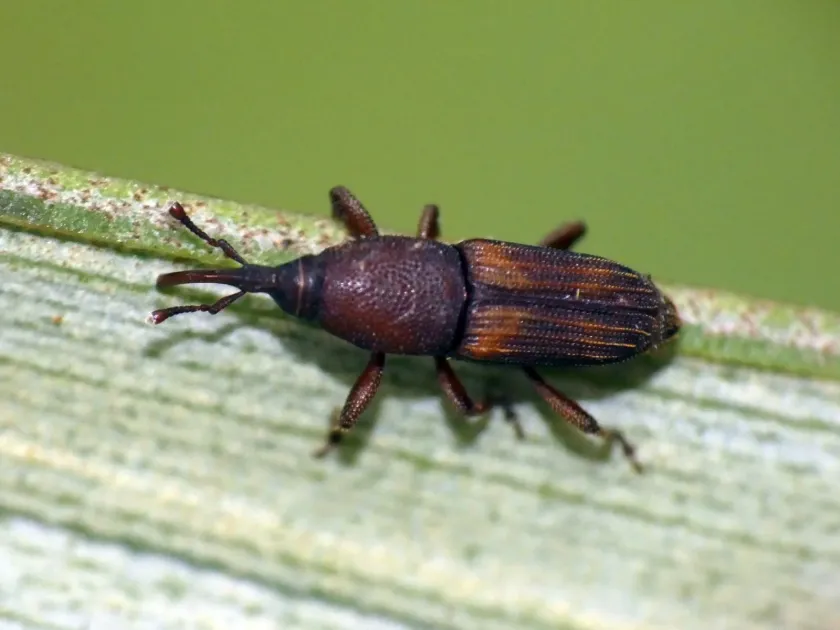
Diocalandra frumenti, commonly known as the four-spotted palm weevil, is a beetle belonging to the Curculionidae family. Adult weevils are slender, measuring approximately 5–8 mm in length, with a dark brown to black body, often featuring distinct red or orange spots on the elytra.
The life cycle consists of four distinct stages: egg, larva, pupa, and adult. Adult weevils typically inhabit hidden areas within palm tissues, making them difficult to detect during the initial phases of colonization.
Larvae are legless, fleshy, and white to creamy-yellow with a brown head capsule. They spend their entire developmental period inside the host plant, boring galleries through the soft tissues.
This species is recognized as a significant invasive pest in tropical and subtropical regions. Its ability to spread rapidly through trade makes it a major concern for biosecurity agencies globally.
Taxonomically, it falls under the order Coleoptera. Unlike many other weevils that attack stems or seeds, this species shows a strong preference for the growing points and vascular tissues of various palm species.
What it damages
The primary hosts of Diocalandra frumenti are various palm species, including coconut palms, date palms, and numerous ornamental palm varieties. Both juvenile nursery stock and mature trees are highly susceptible to attack.
Larval boring activity disrupts the vascular system, inhibiting the transport of water and nutrients. This structural damage weakens the tree, eventually leading to growth stunting or complete dieback.
Wounds created by the pest facilitate the entry of secondary pathogens, including fungi and bacteria, which cause rot and accelerate the decline of the host tree. Often, the internal decay is far more severe than the external symptoms suggest.
For commercial palm nurseries, infestation results in severe economic losses due to the destruction of stock and strict quarantine regulations that restrict the movement of plants from affected areas.
In mature coconut plantations, the beetle targets inflorescences and stems, leading to significant yield reduction and, in cases of severe infestation, the death of the crown, which is terminal for the plant.
Signs of infestation
Early symptoms of infestation include small, circular exit or entry holes on the petioles or stems. These openings are often accompanied by the oozing of sap or gum, which may harden on the surface.
Visual decline in palm health, such as premature yellowing and wilting of lower fronds, is a common sign. In severe cases, the fronds may break or hang limp, indicating structural failure at the base of the petiole.
The presence of fine, brown, sawdust-like frass extruding from holes in the stem or leaf bases is a definitive indicator of internal larval activity.
Infected inflorescences may fail to develop properly, with flowers drying up or fruits dropping prematurely. External inspection often reveals a lack of vigor before more drastic physical changes occur.
Monitoring using pheromone-baited traps is the most effective way to detect the presence of adult weevils in a nursery or plantation before visible damage reaches an irreversible stage.
Control measures
Strict phytosanitary control is the first line of defense. Moving palm material from infested areas must be avoided to prevent the spread of this pest to new regions.
Cultural management practices include the regular sanitation of plantations. This involves the identification, removal, and safe destruction (by burning or chipping) of heavily infested trees to reduce the population pressure.
Systemic insecticides can be applied to protect young plants or trees in areas of high pest pressure. However, application must be timed correctly to target adult weevils before they lay eggs or penetrate deep into the trunk.
Biological control research focuses on the use of entomopathogenic fungi and specific parasitoid wasps that can naturally regulate weevil numbers within native environments.
- Utilize pheromone traps for routine monitoring.
- Implement rigorous quarantine and inspection protocols.
- Promptly remove and destroy infested palm specimens.
- Apply systemic insecticides based on local IPM guidelines.
Taxonomy
- Latin name
- Diocalandra frumenti
- Order
- Coleoptera (beetles)
- Family
- Dryophthoridae
- EPPO code
- DIOCFR
Discussion
No discussions yet — be the first.