
Diatraeophaga striatalis
Diatraeophaga striatalis
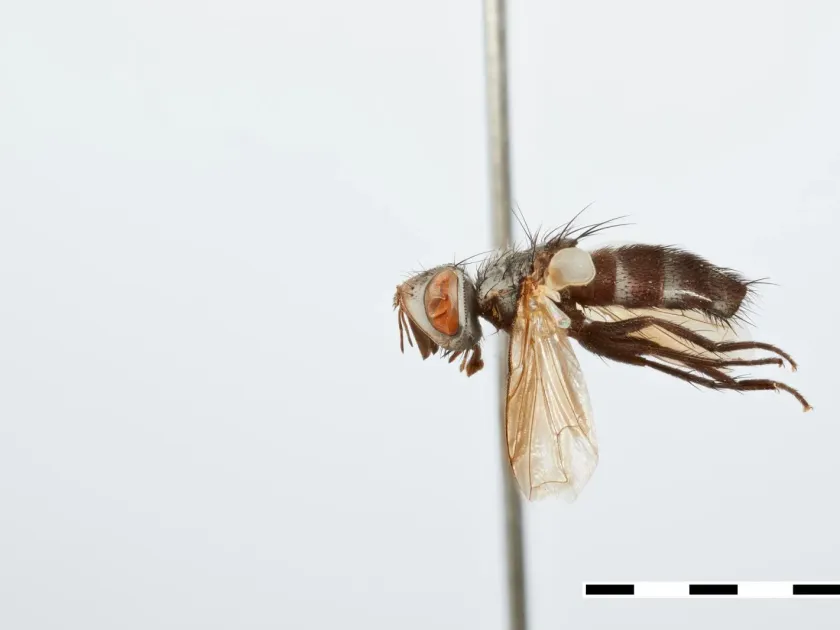
Description
How to identify
Diatraeophaga striatalis is a species of moth belonging to the Crambidae family. It is recognized as a significant stem-boring pest that primarily affects sugarcane plantations in tropical environments.
The adult moth is relatively small with a wingspan of approximately 25–30 mm. Its forewings exhibit a pale brownish color with distinct dark longitudinal stripes, providing excellent camouflage against sugarcane foliage.
The larval stage is the most destructive phase of the life cycle. The caterpillars have creamy-white bodies with darkened head capsules and small sclerotized spots, growing up to 25 mm in length.
Pupation occurs within the plant tissue, specifically inside the tunnels created by the larvae within the sugarcane stalks, which provides them with significant environmental protection.
The species biology is highly dependent on humidity and temperature, with optimal conditions leading to multiple overlapping generations throughout the crop cycle.
What it damages
The primary economic impact of Diatraeophaga striatalis is caused by larval feeding within the sugarcane stalks, which directly reduces the quality and quantity of the harvest.
As the larvae bore through the stalks, they consume the internal tissues, disrupting the plant's vascular system and causing a significant decrease in sugar accumulation.
Mechanical damage to the stalks weakens the plant, making it highly susceptible to wind-induced lodging and secondary infestations by various fungal or bacterial pathogens.
Infested stalks often exhibit stunted growth and reduced vigor, leading to significant yield losses in industrial sugarcane cultivation and processing.
Severe infestations can lead to the death of the main shoot, forcing the plant to produce secondary tillers that may not reach maturity by harvest time.
Signs of infestation
The most characteristic sign of infestation is the appearance of a "dead heart" in young plants, where the central shoot withers and dies due to larval damage.
External signs include small holes on the surface of the stalks, often accompanied by frass (a mixture of excrement and plant tissue) accumulating at the entry points.
Foliar symptoms include premature yellowing and drying of leaves, which occurs because the internal damage hinders the transport of water and nutrients to the upper parts of the plant.
Dissection of the sugarcane stalks will reveal internal tunneling and larvae or pupae, providing definitive confirmation of the pest presence.
Reduced stand density and uneven growth across the field are key indicators that the pest population has reached a damaging level.
Control measures
Effective management begins with strict field sanitation, including the removal and destruction of crop residues where pupae may survive between planting cycles.
The use of resistant or tolerant sugarcane varieties is highly recommended to minimize the impact of boring insects on overall crop productivity.
Biological control methods involve the release of parasitoid wasps and other beneficial insects that naturally predate on the eggs and larvae of the moth.
Chemical control interventions must be timed precisely during the early stages of larval development, before the larvae penetrate deep into the stalks.
- Implementing systematic crop rotation to disrupt the pest life cycle.
- Monitoring pest populations using light traps and pheromone lures.
- Applying selective systemic insecticides during the most susceptible growth stages of the sugarcane.
Taxonomy
- Latin name
- Diatraeophaga striatalis
- Order
- Diptera (flies)
- Family
- Tachinidae
- EPPO code
- DIAGST
Discussion
No discussions yet — be the first.