
Diasemia grammalis
Diasemia grammalis
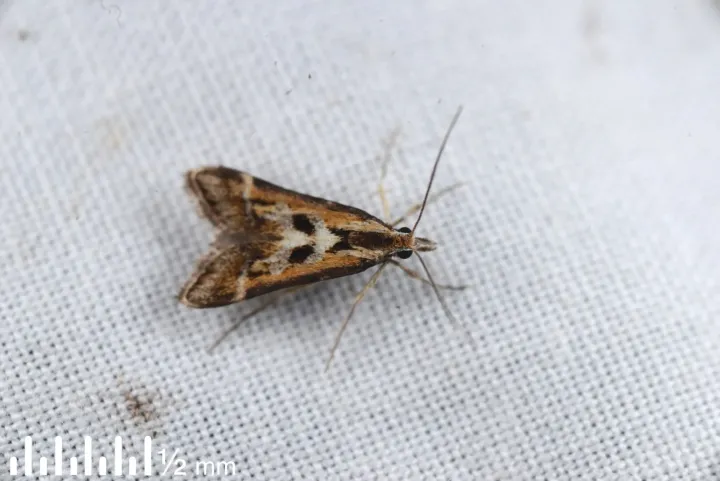
Description
How to identify
Diasemia grammalis belongs to the order Lepidoptera and the family Crambidae (grass moths). This species is a small moth, typically nocturnal, which makes observing its presence in the field quite challenging for farmers and agronomists.
Adult moths possess coloration that provides effective camouflage, making them blend in with dry leaves and soil debris. Identifying them often requires using light traps or pheromone monitoring during the peak flight season to confirm their presence.
The larvae, or caterpillars, pass through several developmental stages (instars). They are equipped with chewing mouthparts that allow them to consume plant tissues rapidly as they grow in size, making them a significant threat to crop health.
The life cycle includes the egg, larva, pupa, and adult stages. The duration of these stages is highly dependent on environmental variables such as temperature and humidity, which dictate the number of generations per year in a given region.
As part of the Crambidae family, this species shows high adaptability to various environments, utilizing both cultivated crops and wild host plants to survive and reproduce effectively throughout the growing season.
What it damages
The damage caused by Diasemia grammalis is primarily inflicted by the larvae, which feed on the leaves of a variety of herbaceous plants. When population densities are high, these pests can move into agricultural fields and cause extensive damage.
By consuming leaf tissue, the larvae reduce the photosynthetic surface of the plant, which hampers growth and overall vitality. Severe infestations can lead to significant yield losses if the plants are at critical stages of development.
Typical damage symptoms include leaf skeletonization, where the softer tissues are eaten while veins remain, or the presence of irregular holes in the leaf blades. In some cases, larvae may also damage the growing tips of young plants.
The level of harm depends on the growth stage of the crop and the density of the larvae. If left uncontrolled, the pest can cause defoliation, leading to stunted plant growth and a significant reduction in market-quality produce.
Monitoring for larval activity should be constant during the vegetation period, especially in fields bordering unmanaged lands, where the pest often establishes its primary colonies before migrating to crops.
When it appears
The flight period of adult moths usually begins when temperatures stabilize in late spring or early summer. Activity increases as the summer progresses, depending on the cumulative active temperatures recorded in the area.
The insect may complete several generations per year, depending on the climatic conditions. The final generation of the season typically enters the pupal stage to overwinter in the soil or protected plant debris until the following spring.
Environmental factors such as rainfall and excessive heat play crucial roles in regulating population spikes. High humidity often favors larval survival, while extreme heat may accelerate the life cycle but also impact larval development rates.
Field monitoring should commence early in the season. Utilizing light traps is the standard approach to identify the start of moth activity, which serves as a signal for scouting for egg batches on the undersides of leaves.
Understanding the seasonal dynamics is vital for scheduling protective measures. Effective timing ensures that interventions are applied when larvae are most susceptible and before significant structural damage to the crop occurs.
Signs of infestation
The presence of larvae on the underside of leaves is the primary sign of infestation. They often create small, delicate webs that act as protective shelters, making them difficult to detect without careful inspection of the foliage.
Early-stage damage manifests as transparent spots, often called windowing, where the larvae have scraped away the leaf surface. As the caterpillars mature, these spots enlarge, eventually becoming jagged holes that penetrate the entire leaf.
Frass (larval excrement) found on the leaves or the soil surface beneath the plants is a clear indicator that feeding is currently taking place. This is a crucial diagnostic sign for locating the exact areas of infestation in the field.
Leaf curling or rolling is another common behavior, as larvae seek to protect themselves from predators and harsh environmental conditions while feeding. This behavior often hides the larvae from direct insecticide applications.
Visual inspection during the early morning or late evening increases the success rate of finding the larvae. During the heat of the day, they are more likely to hide in leaf axils or in the top layer of the soil.
Control measures
Effective management requires an integrated approach that combines cultural practices, biological agents, and, where necessary, chemical interventions based on economic thresholds.
Cultural methods, such as deep plowing after harvest, are highly effective in destroying pupae overwintering in the soil. This practice disrupts the life cycle and reduces the starting population for the next season significantly.
Maintaining clean field borders by removing weeds reduces the number of host plants available for the pest. This minimizes the risk of migration from wild areas to the main crop, acting as a natural preventative barrier.
Biological control methods, including the application of Bacillus thuringiensis, have proven successful against young larvae. These treatments are environmentally friendly and preserve natural predator populations in the field.
Chemical control should be applied strictly when damage thresholds are exceeded. Selecting systemic insecticides and rotating active ingredients is essential to prevent the development of resistance within the pest population over time.
Taxonomy
- Latin name
- Diasemia grammalis
- Order
- Lepidoptera (butterflies)
- Family
- Crambidae
- EPPO code
- DIIAGR
Discussion
No discussions yet — be the first.