
Cotton leafworm
Diaphania indica
Description
How to identify
The cotton leafworm (Diaphania indica), also known as the cucumber moth, belongs to the order Lepidoptera and the family Crambidae. The adult moth is small, with a wingspan of approximately 20–25 mm.
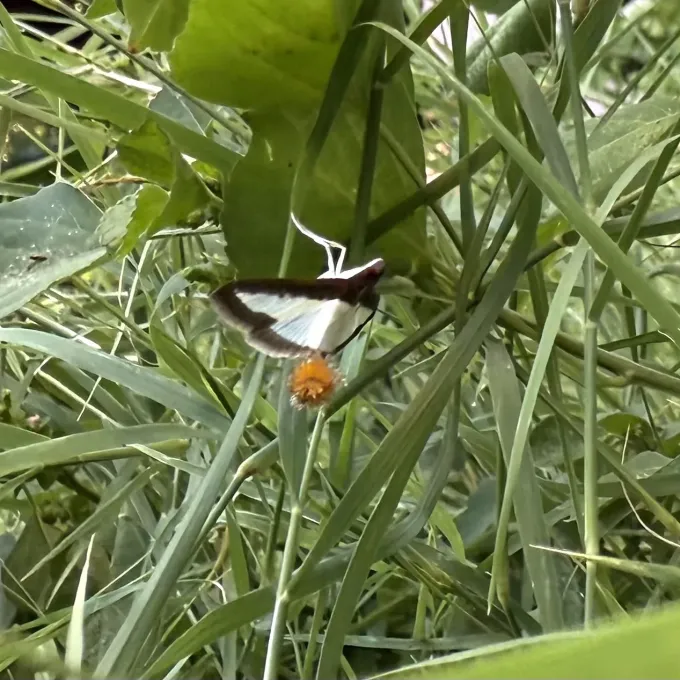
The wings are characterized by a translucent white center surrounded by a distinct, broad, dark-brown margin. The abdomen is slender and often features a characteristic tuft of hairs at the tip.
Females lay eggs in clusters on the undersides of leaves or on tender shoots. These eggs are small, oval, and typically protected by a thin layer of secretions.
Larvae pass through five instars. A fully grown larva is bright green with two prominent white longitudinal stripes along its back, providing excellent camouflage among foliage.
Pupation occurs within leaves that have been rolled or folded and secured with silk threads. The pupa darkens in color as it approaches the adult emergence stage.
What it damages
This pest primarily attacks plants in the Cucurbitaceae family, including cucumber, melon, pumpkin, squash, and watermelon. It can infest these crops at various growth stages.
In addition to vegetable crops, it is a significant pest of cotton. Wild cucurbitaceous weeds often serve as alternative hosts, allowing the population to thrive between crop cycles.
When it appears
The insect thrives in warm, humid climates, with optimal development occurring at temperatures between 25°C and 30°C. In tropical and subtropical regions, it breeds continuously throughout the year.
In temperate zones, the moth appears during the warm season. Depending on local conditions, several overlapping generations can occur within a single growing season, leading to rapid population explosions.
Signs of infestation
Early signs of infestation include small, irregular holes in the leaves caused by young larvae feeding on the leaf tissue. This damage is often concentrated on the lower leaf surface.
As larvae grow, they consume more leaf tissue, often leaving behind only the skeleton of veins. This heavy defoliation significantly reduces the plant's ability to photosynthesize.
The most damaging behavior involves larvae boring into fruits and buds. This leads to premature fruit drop, rot, and complete loss of market value for the affected produce.
Rolled or tied leaves are a key diagnostic feature. Larvae use silk to bind leaves together to create a sheltered environment for feeding and protection from predators.
The presence of dark, granular frass (excrement) around fruit stalks or on the ground beneath the plants is a clear indication of an active and feeding larval population.
Control measures
Integrated Pest Management (IPM) is essential. Cultural practices, such as removing cucurbitaceous weeds, help to eliminate secondary breeding grounds.
The use of pheromone traps is highly effective for monitoring moth activity, allowing growers to time the application of pesticides more accurately.
Biological control agents, such as Bacillus thuringiensis, can provide effective suppression of larval populations without harming beneficial insects.
Chemical control should be reserved for cases of high infestation, using selective insecticides to preserve natural predators and parasitoids.
- Regular field monitoring for egg clusters.
- Hand-picking larvae in small garden settings.
- Destroying infested fruits to prevent larval maturation.
- Maintaining optimal irrigation to support plant vigor.
Taxonomy
- Latin name
- Diaphania indica
- Order
- Lepidoptera (butterflies)
- Family
- Crambidae
- EPPO code
- DPHNIN
Discussion
No discussions yet — be the first.