
Diaphania
Diaphania
Description
How to identify
Diaphania is a genus of moths belonging to the family Crambidae, with Diaphania hyalinata (the melonworm) being one of the most prominent agricultural pests.
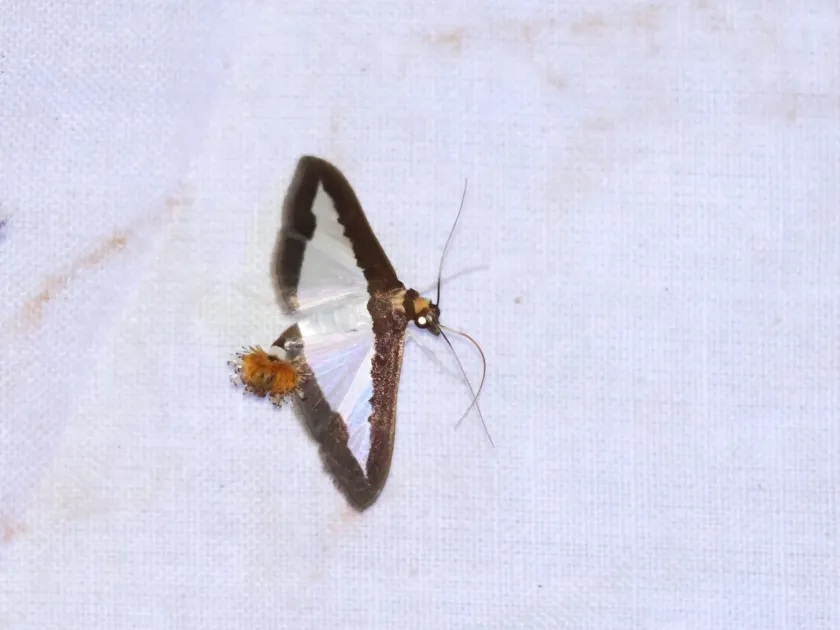
Adult moths possess distinctive, thin bodies and wings with a clear, semi-transparent center bordered by a dark, thick margin, making them easily identifiable.
Larvae pass through five instars, with late-stage caterpillars showing a characteristic pale green color with longitudinal white stripes along their bodies.
Pupation typically occurs within a protective shelter formed by leaves rolled together and tied with silk, which acts as a camouflage against potential predators.
The life cycle duration is highly temperature-dependent, allowing for multiple generations per year in tropical and subtropical growing regions.
What it damages
The primary hosts of Diaphania include various cucurbitaceous plants such as cucumbers, squash, pumpkins, melons, and watermelons.
Young larvae initially feed on the surface of the leaves, causing small necrotic spots, while older larvae skeletonize leaves, leaving behind only the veins.
Beyond leaf damage, larvae exhibit a preference for flowers and young fruits, significantly impacting the final yield and marketability of the produce.
By boring into the fruit, larvae create tunnels that not only ruin the interior quality but also introduce secondary pathogens like bacteria and fungi.
Heavy infestations can lead to complete destruction of the foliage and significant yield losses, making it a major economic concern for producers.
When it appears
Diaphania activity is highly correlated with warm weather, peaking during the summer months when environmental conditions favor rapid population growth.
The moth is primarily nocturnal, meaning adult activity and egg-laying processes occur predominantly during the night hours, complicating manual scouting.
In temperate zones, the pest often appears as migratory populations during the summer, while in tropical regions, it remains a constant threat throughout the year.
Greenhouse environments offer an ideal year-round breeding ground for Diaphania, provided the temperature and host plants are consistently available.
The emergence of the pest often synchronizes with the onset of flowering in cucurbit crops, which are the most susceptible stage for initial infestation.
Signs of infestation
The first sign of Diaphania infestation is often the presence of folded or tied leaves in the canopy, which contain feeding larvae inside the webbed shelter.
Frass (larval excrement) accumulation on the leaf surfaces or near the entrance holes of fruits is a reliable indicator of recent pest activity.
Visible entry holes in the rind of developing fruits, accompanied by localized decaying tissue, indicate that larvae have successfully penetrated the product.
Sudden wilting or damage to the apical buds of the vines can suggest that the larvae are boring into the stem or petioles, causing structural damage.
High moth counts captured in light traps during evening inspections serve as an early warning signal for farmers to implement protective measures.
Control measures
Cultural control practices, such as the prompt removal and destruction of crop residues, are essential to break the life cycle and reduce overwintering sites.
Strategic crop rotation and the use of physical barriers or floating row covers can effectively minimize the initial colonization of the plants.
Biological control agents, specifically products containing Bacillus thuringiensis, are highly effective when applied against early-instar larvae.
Chemical control should be reserved for periods when the pest threshold is exceeded, focusing on using selective insecticides that preserve beneficial insect populations.
Integrated Pest Management (IPM) programs incorporating pheromone traps and regular scouting help to make informed decisions regarding the timing of interventions.
Taxonomy
- Latin name
- Diaphania
- Order
- Lepidoptera (butterflies)
- Family
- Crambidae
- EPPO code
- DPHNSP
Discussion
No discussions yet — be the first.