
Diactor leaf-footed bug
Diactor
Description
How to identify
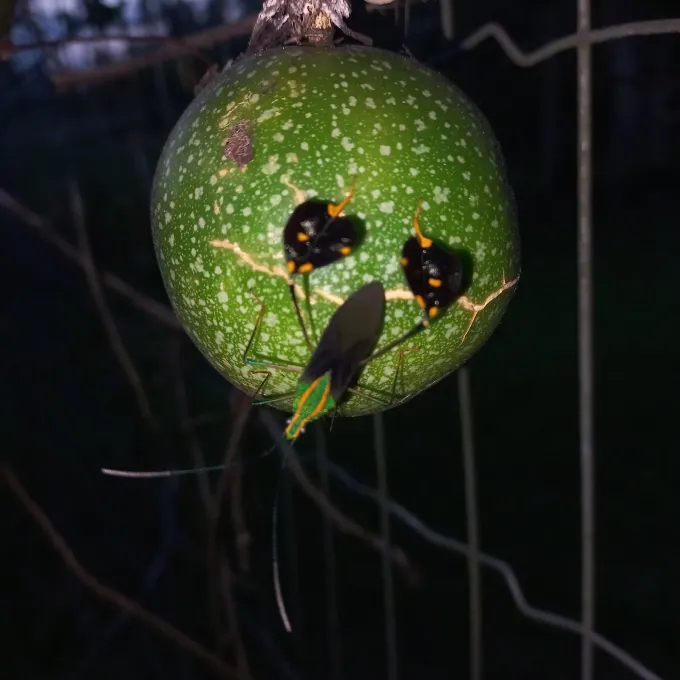
The Diactor leaf-footed bug (Diactor bilineatus) is a member of the family Coreidae within the order Hemiptera. These insects are easily recognized by the leaf-like expansions on their hind tibiae.
Adults are elongated insects with body colors ranging from brown to greenish-yellow, often featuring longitudinal stripes that serve as camouflage.
The head is relatively small and triangular, equipped with a long, needle-like proboscis used to pierce plant tissues and suck fluids.
Nymphs resemble smaller versions of adults but lack fully developed wings and reproductive organs, gradually changing as they molt through several instars.
They are well-adapted to tropical and subtropical climates, where they can maintain high population densities throughout the year.
What it damages
This species is primarily known for attacking plants in the Passifloraceae family, especially passion fruit (Passiflora edulis).
Both adults and nymphs cause damage by feeding on the sap of young stems, leaves, flower buds, and developing fruit.
The feeding process involves injecting saliva containing enzymes that cause necrosis and deformation in the affected plant parts.
Severe infestations can lead to significant yield losses, fruit drop, and stunted growth of the host plant, rendering the fruits unmarketable.
The physical damage caused by the bugs also creates open wounds that are prone to colonization by secondary fungal and bacterial pathogens.
When it appears
Diactor leaf-footed bugs are most active during warm, humid periods when host plants are in their peak vegetative and flowering stages.
They thrive in tropical conditions, allowing for multiple generations per year as long as there is an available food source.
Activity levels typically peak during the day when insects are seeking food and mates, often congregating in clusters on the plant canopy.
In greenhouses or controlled environments, the breeding cycle can continue indefinitely without a dormant period.
Movement between plantations often increases during the fruiting season, as the bugs are highly attracted to the developing ovaries of the passion fruit.
Signs of infestation
The most common sign of infestation is the presence of small, discolored necrotic spots on the leaves and stems at the site of feeding.
Deformation of young, tender shoots and terminal growth is a strong indicator that the bugs are actively feeding on the plant's vascular tissue.
Early abscission of flower buds and immature fruit is frequently observed as the plant sheds parts weakened by sap loss.
Egg masses, which are typically laid in small, organized batches on the underside of leaves, can be spotted during routine manual inspections.
The presence of dark excrement on the leaf surface and the visibility of the insects themselves confirm a local population buildup.
Control measures
Effective management begins with regular monitoring of plantations to identify hotspots before the pest reaches economic threshold levels.
Manual removal of bugs and egg masses is a viable strategy for small-scale gardens or when infestations are localized.
Biological control agents, such as specialized entomopathogenic fungi or predators, have shown potential in reducing bug populations sustainably.
If chemical intervention is necessary, systemic insecticides should be applied carefully, ensuring compliance with harvest intervals for food crops.
Good cultural practices, such as removing weeds that act as alternative hosts and clearing crop debris, are essential to minimize the pest's overwintering survival.
Taxonomy
- Latin name
- Diactor
- Order
- Hemiptera (bugs, aphids, leafhoppers)
- Family
- Coreidae
- EPPO code
- DACOSP
Discussion
No discussions yet — be the first.