
Dexiosoma caninum
Dexiosoma caninum
Description
How to identify
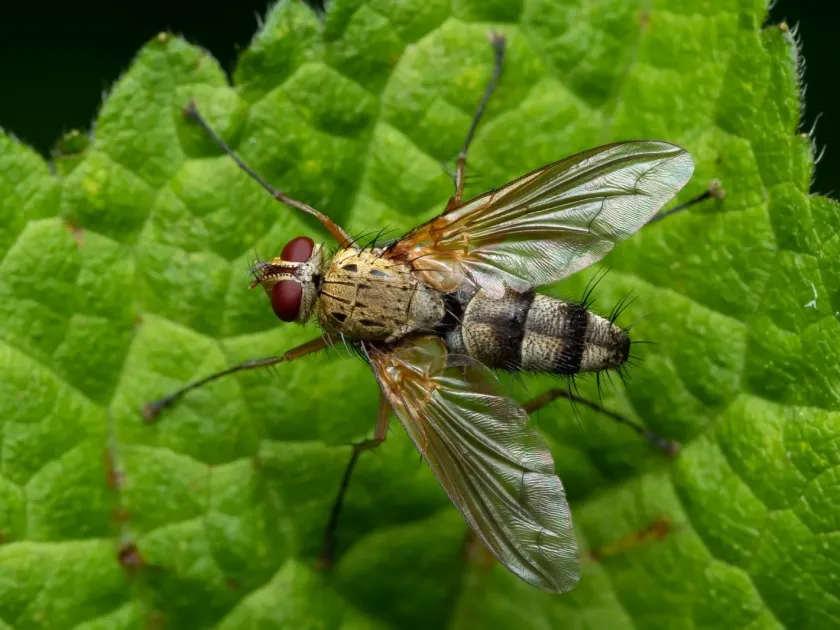
Dexiosoma caninum is a species of parasitic fly belonging to the family Tachinidae, order Diptera. These flies are easily identified by their robust bodies covered in dense, coarse bristles, which is a hallmark of the Tachinid family.
Adult flies are typically greyish-brown in color, providing effective camouflage within vegetation. They grow to a size of approximately 10 to 15 millimeters, depending on the availability of nutrients during their larval stage.
These flies possess well-developed sensory organs, allowing them to locate host larvae with high precision. Their behavior is specifically adapted for finding larvae that reside within the soil or decaying organic matter.
Taxonomically, they are highly regarded in agricultural sciences due to their specialized lifestyle. Unlike pests, they have evolved to serve as vital links in the food chain by regulating insect populations.
Morphologically, they are built for agility, enabling them to move rapidly between host sites. This evolutionary adaptation ensures the survival of the species across varying agricultural landscapes.
What it damages
In the context of agronomy, Dexiosoma caninum is not classified as a pest. Instead, it is an important natural enemy of several soil-dwelling insect pests that damage agricultural crops.
The larvae of these flies parasitize the larvae of various scarab beetles (Scarabaeidae), including common root-feeding grubs. These grubs often cause significant damage to the roots of grains and vegetables.
By keeping the populations of root-feeding pests in check, these flies provide a natural service that helps maintain plant health and soil productivity without human intervention.
There is no evidence of this species causing harm to agricultural plants. They do not feed on tissues, stems, or leaves, and their entire cycle is dedicated to host regulation.
Preserving this species is a key objective for sustainable farming practices, as it reduces the need for heavy applications of synthetic pesticides against soil pests.
When it appears
Adults of Dexiosoma caninum are typically active during the summer months. Their peak flight period usually occurs from June through August, when temperatures are most suitable for reproduction.
During their adult stage, these flies rely on nectar from blooming plants for energy. Field margins and hedgerows with wild flowers are essential for supporting their populations.
Their life cycle is synchronized with the growth stages of their insect hosts. The fly larvae develop within the host, transitioning through several instars before emerging as adults.
Overwintering usually takes place in the larval stage, either protected inside the host or within the soil, allowing the species to survive low winter temperatures effectively.
The synchrony between the emergence of the flies and the presence of susceptible host larvae is a critical factor in the population dynamics of this beneficial species.
Control measures
No control measures are required for Dexiosoma caninum; in fact, farmers should encourage their presence. They are valuable allies in the integrated pest management strategy.
To support their population, growers should minimize the use of broad-spectrum insecticides, especially during the summer months when adult flies are most active in the field.
Increasing plant diversity by including flowering cover crops or buffer strips can provide the necessary food sources for adult flies, thereby enhancing their survival and reproductive success.
Reduced tillage practices are generally beneficial for maintaining the habitat of soil-dwelling larvae, which indirectly supports the population of these parasitic flies.
Adopting sustainable agricultural practices ensures that natural regulation mechanisms remain intact, reducing reliance on chemical inputs for soil pest control.
Taxonomy
- Latin name
- Dexiosoma caninum
- Order
- Diptera (flies)
- Family
- Tachinidae
- EPPO code
- DEXSCA
Discussion
No discussions yet — be the first.