
Dexiosoma
Dexiosoma
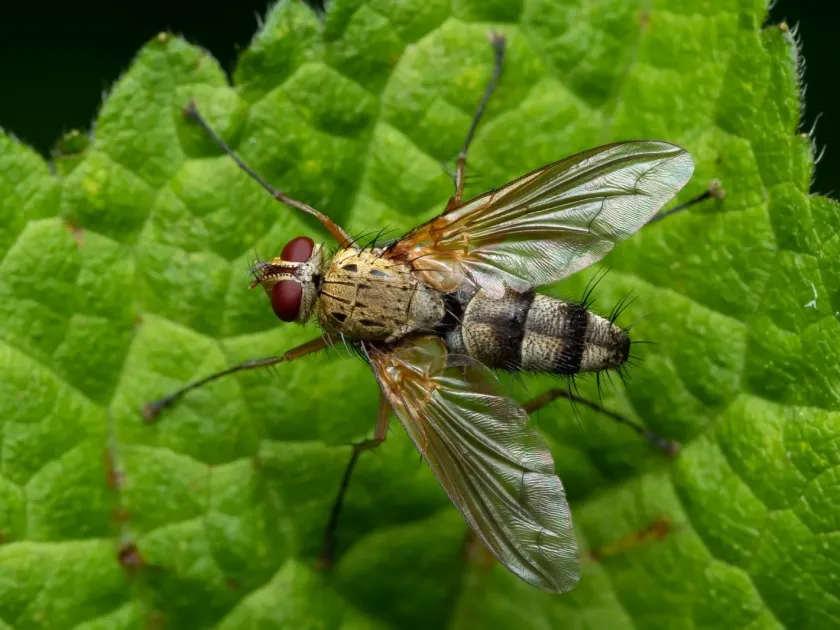
Description
How to identify
Dexiosoma is a genus of flies belonging to the family Tachinidae (tachinid flies), which are part of the order Diptera. These flies are widely recognized for their role as parasitoids in various ecological systems.
Adult flies are typically of medium size, possessing a robust body densely covered with bristles. Their head features large compound eyes, and their mouthparts are adapted for feeding on nectar from flowers.
The larval stage is internal; larvae are cylindrical and highly specialized for living inside the bodies of their hosts, where they consume tissues to facilitate their development and subsequent metamorphosis.
The life cycle involves complete metamorphosis, including egg, larva, pupa, and adult stages. This biological complexity makes them significant actors in the population dynamics of other insects.
Systematically, they are classified as beneficial or parasitic depending on the target host, requiring careful identification to assess their actual role in agricultural and garden settings.
What it damages
Dexiosoma species primarily parasitize the larvae of various beetles, particularly those in the Scarabaeidae family, which are known as pests of root systems in many crops.
The primary concern regarding this genus is its potential to parasitize other beneficial entomophagous insects, thereby disrupting the natural control of agricultural pests and causing a shift in the local insect population.
While the fly itself does not cause mechanical damage to plants, its presence can be detrimental if it reduces the effectiveness of biological control agents that help keep harmful insect populations in check.
The impact is often indirect, as the parasitism of beneficial species may lead to increased pest pressure on crops, forcing growers to intervene with additional management strategies.
Therefore, farmers must assess the presence of these flies in the context of the overall insect community to determine if their population levels require mitigation or if they are performing a useful service.
When it appears
Adult activity of Dexiosoma generally begins in late spring, continuing throughout the summer months, which provides the necessary time for their life cycle to align with host availability.
Peak population activity often occurs in mid-summer, when temperatures are optimal for the flies to seek out hosts and deposit their eggs effectively for larval development.
The larval development phase is dependent on the host's lifecycle and environmental temperature, often proceeding through several instars before the larvae reach maturity and pupate.
Overwintering typically takes place in the pupal stage or as a late-stage larva, hiding in the soil or protected organic debris to survive the colder dormant months of the year.
Environmental factors such as humidity and rainfall significantly impact the emergence timing of the adult generation, making seasonal monitoring essential for accurate prediction.
Signs of infestation
Observing adult flies hovering over flowering plants or specific areas where beetle larvae are present is the most immediate sign of their activity in a field or garden environment.
Infected hosts may show reduced vigor, unusual sluggishness, or external marks such as exit holes left behind after a larva has completed its development and emerged from the host.
Soil inspections might reveal puparia, which are hardened, dark capsules representing the pupal stage of the fly, often found near the roots or in the leaf litter of affected areas.
A noticeable decline in the number of naturally occurring beneficial insects can serve as a circumstantial sign that parasitic flies are active and potentially interfering with existing pest control.
Using yellow sticky traps or light traps provides a clear indicator of the adult population density, allowing for a quantitative analysis of the species present in the crop environment.
Control measures
Management of Dexiosoma should focus on integrated pest management (IPM) practices that favor biodiversity and natural balance rather than indiscriminate elimination.
Cultivation practices such as deep autumn plowing can help disrupt the life cycle of overwintering pupae, effectively reducing the emergence of the next generation in the following spring.
Broad-spectrum insecticides should be avoided, as they kill natural enemies and beneficial pollinators, potentially leading to long-term issues with pest outbreaks that the flies might have otherwise helped manage.
Maintaining diverse habitats and providing non-crop floral resources supports the entire insect community, allowing natural competition to stabilize the populations of parasitic flies.
- Monitor insect populations regularly to ensure ecological balance.
- Use cultural methods like crop rotation to manage host availability.
- Prioritize selective biopesticides if suppression becomes absolutely necessary.
Taxonomy
- Latin name
- Dexiosoma
- Order
- Diptera (flies)
- Family
- Tachinidae
- EPPO code
- DEXSSP
Discussion
No discussions yet — be the first.