
Dexia
Dexia
Description
How to identify
Dexia is a genus of flies belonging to the family Tachinidae. These flies are widely recognized for their role as specialized parasitoids of various soil-dwelling insects.
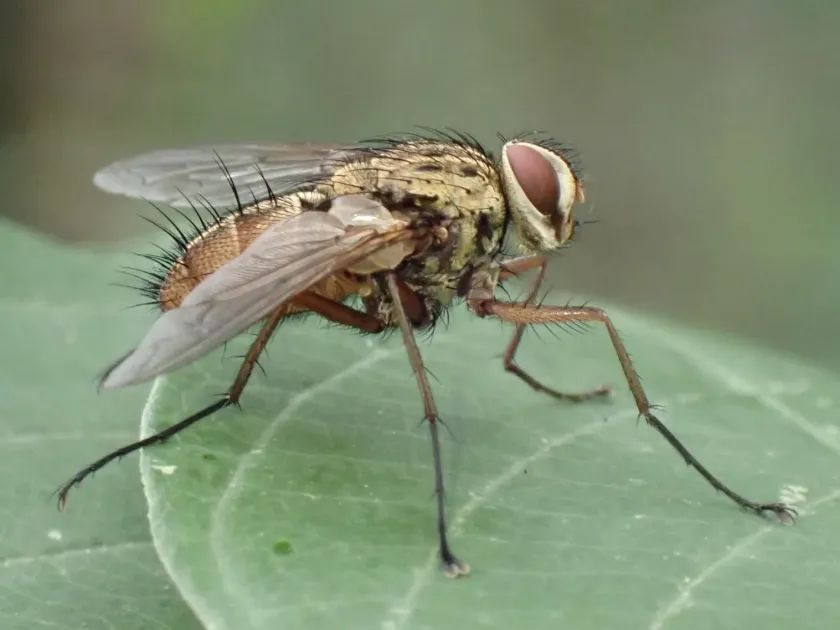
Taxonomically, they are classified within the order Diptera. They possess typical tachinid morphological traits, including a bristly appearance and robust sensory structures.
Adult flies are generally medium-sized and feature a grayish-brown or black coloration, which serves as camouflage during their search for hosts.
Identifying this genus involves observing their flight behavior near soil surfaces and their association with flower-rich edges of agricultural fields.
The larvae are specialized to penetrate the exoskeleton of their hosts, making them highly effective natural population controllers for agricultural pests.
What it damages
Dexia flies do not cause damage to crops; they are considered beneficial insects within the agricultural ecosystem, acting as natural biological control agents.
They specifically target the larvae of scarab beetles, including major pests like cockchafers that destroy the root systems of essential field crops.
By parasitizing these larvae, Dexia prevents the potential destruction of crops caused by root-feeding beetles, thus directly supporting agricultural productivity.
The internal development of the parasitoid larva gradually consumes the host, effectively eliminating the pest before it reaches adulthood.
Farmers are encouraged to view these flies as allies, as their presence indicates a healthier soil environment and less reliance on chemical inputs.
When it appears
The activity of adult Dexia flies typically occurs throughout the spring and early summer, synchronized with the peak feeding periods of their beetle hosts.
During this timeframe, females focus on locating larval hosts in the soil, using chemical and sensory cues to find suitable targets for oviposition.
The lifecycle is complex and often spans several months, as the larvae grow within the host body, ultimately pupating in the soil environment.
Adult emergence is largely temperature-dependent, usually peaking when soil conditions become warm enough to trigger the activity of both the pest and the parasite.
Maintaining awareness of the seasonal cycles of Dexia is essential for integrated pest management strategies on modern farms.
Signs of infestation
Identifying the presence of Dexia in a field is challenging because the parasitism occurs entirely underground, hidden from casual observation.
A notable sign is a marked reduction in the population density of scarab larvae in areas where they were previously problematic for crop roots.
Examination of soil samples may occasionally reveal the presence of puparia or the remains of parasitized larvae, which appear empty or degraded.
Observations of adult tachinid flies resting on vegetation near the field are a reliable indicator of a healthy population of beneficial insects.
- Decrease in root damage to crops associated with soil-dwelling beetles.
- Presence of puparia within the soil substrate near target hosts.
- Visibility of adult flies on field edges and flowering hedgerows.
Control measures
Protecting and preserving Dexia populations is a critical component of sustainable and integrated pest management (IPM) practices.
The primary recommendation is to avoid the indiscriminate use of broad-spectrum insecticides, which can decimate populations of beneficial parasitoids.
Enhancing biodiversity through the planting of flower strips and preservation of field margins provides the necessary food sources for adult flies.
Minimizing intensive soil tillage during the sensitive larval stages of the fly can significantly improve their survival rates and population density.
Integrated strategies should focus on fostering these natural control agents to manage soil pests and ensure long-term agricultural stability.
Taxonomy
- Latin name
- Dexia
- Order
- Diptera (flies)
- Family
- Tachinidae
- EPPO code
- DEXISP
Discussion
No discussions yet — be the first.