
Desmia
Desmia
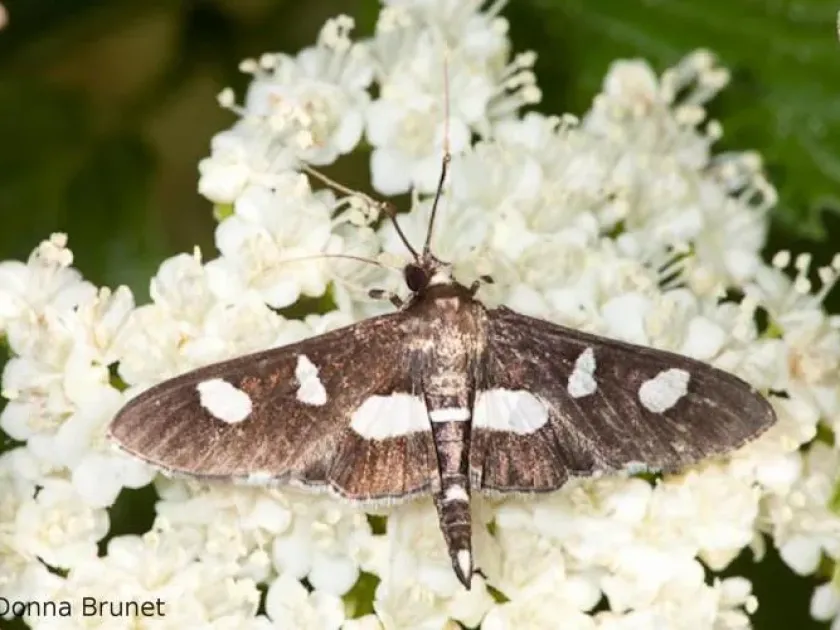
Description
How to identify
Desmia is a genus of moths belonging to the Crambidae family, order Lepidoptera. These moths typically feature dark-colored wings with distinctive white markings.
Adult moths have a wingspan ranging from 20 to 25 millimeters, making them relatively small but visible during flight periods in the vineyard.
The larvae, or caterpillars, progress through several instars, usually appearing bright green with a shiny, dark-colored head capsule.
Eggs are laid by adult females on the underside of grapevine leaves, providing a sheltered location for the larvae to hatch and begin feeding.
The number of annual generations depends on environmental factors, with warmer climates potentially supporting up to three distinct cycles per season.
What it damages
The primary host for Desmia species is the grapevine (Vitis). The larvae are highly specialized leaf feeders that prioritize young, tender foliage.
Feeding damage involves the larvae scraping the leaf surface before consuming the tissue, eventually skeletonizing the leaf structure entirely.
Severe infestations can lead to a significant loss of green leaf area, which reduces the plant's overall photosynthetic capacity during critical growth stages.
This reduction in photosynthesis negatively impacts the vine's vigor, berry quality, and sugar accumulation, leading to lower yields at harvest time.
Furthermore, the physical damage created by larvae can facilitate the entry of secondary pathogens, including various fungal and bacterial grapevine diseases.
Signs of infestation
The most diagnostic sign of a Desmia infestation is the presence of leaves rolled or folded into cylindrical tubes, often secured with silk webbing.
Larvae hide inside these rolled leaves, where they are protected from environmental extremes, predators, and direct exposure to spray applications.
Inspection of the leaves often reveals patches of missing leaf tissue, resulting in a characteristic skeletal appearance once the green tissue is consumed.
Small dark fecal pellets (frass) found within the rolled leaf structures are a clear indicator of active larval feeding and infestation.
As the infestation progresses, the damaged leaves may brown and drop prematurely, creating visible bare patches in the vineyard canopy.
Control measures
Monitoring the vineyard for the presence of adult moths and early larval signs is essential for timing the implementation of control measures.
In small-scale or organic vineyards, manual removal and destruction of the rolled leaves can effectively suppress the population of the pest.
Chemical control should target young larvae before they successfully secure themselves inside the leaf rolls, as later stages are much harder to treat.
Biological control, including the use of Bacillus thuringiensis, is an effective and environmentally friendly option for managing caterpillar populations.
Integrated Pest Management (IPM) practices, including the preservation of natural predators and parasitoids, play a vital role in long-term suppression.
Taxonomy
- Latin name
- Desmia
- Order
- Lepidoptera (butterflies)
- Family
- Crambidae
- EPPO code
- DESMSP
Discussion
No discussions yet — be the first.