
Coconut leaf moth
Decadarchis flavistriata
Description
How to identify
Decadarchis flavistriata is a moth species belonging to the Tineidae family. It is primarily recognized as a pest within tropical and subtropical agricultural systems.
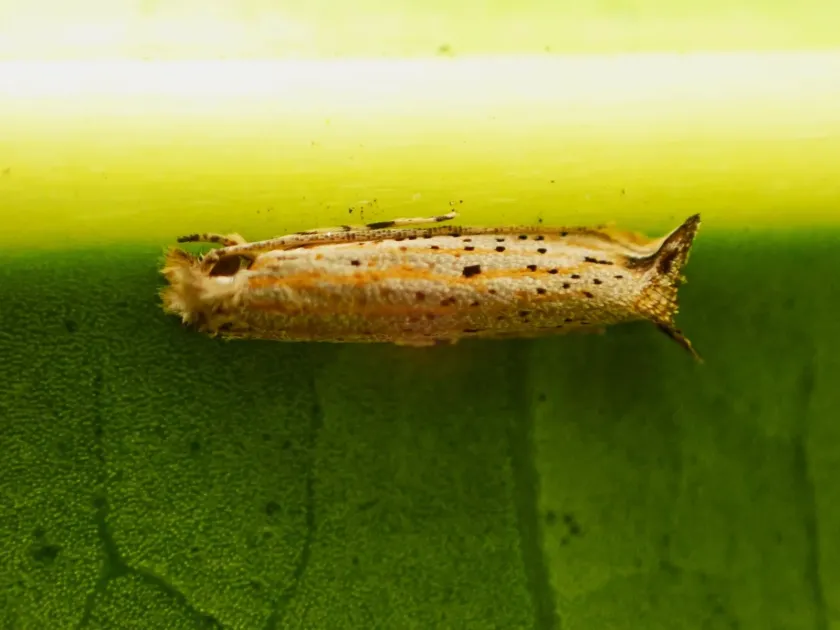
The adult moth is characterized by its relatively small size and narrow wings marked with yellowish stripes, providing effective camouflage against the bark and fibrous palm materials.
The larval stage is the most destructive phase, characterized by strong mandibles suited for boring into the dense fiber of host plants like coconut palms.
The life cycle follows complete metamorphosis, where environmental temperature and humidity play a crucial role in the speed of the pest's development.
This species is highly adaptable, often utilizing accumulation of decaying plant matter as both a food source and a protective habitat for its larvae.
What it damages
This moth is primarily known for infesting coconut palms. It typically attacks the fibrous husks of coconuts and the area between the leaf bases.
While larvae prefer decaying organic matter, they can damage living tissues when population densities are high, potentially weakening the host tree's overall vigor.
The primary economic loss relates to the degradation of coconut fiber (coir quality), as larval tunneling makes the raw material less suitable for processing.
Feeding activities often create entry points for secondary infections by opportunistic fungi and bacteria, leading to rot in both fruit and plant tissues.
Plantations that suffer from poor sanitation are particularly susceptible, as the accumulation of debris provides an ideal nursery for the moth larvae.
Signs of infestation
The most noticeable sign of an infestation is the presence of frass (larval droppings) clustered at the base of leaves or near fruit attachments.
Larval tunneling is visible on the surface of coconut husks, often accompanied by fine webbing that the larvae spin to protect themselves during feeding.
Yellowing and premature senescence of older palm leaves can indicate that the base of the leaf is housing a significant population of the larvae.
The presence of cocoons hidden within the tightly packed fibers of the coconut husk is a definitive confirmation of the pest's life cycle activity.
An accumulation of mold and damp debris at the crown or in the leaf axils is a strong indicator of an environment favorable for this species.
Control measures
Sanitation is the most effective control method. Removing dead fronds, old fruit clusters, and other debris from the crown and trunk is essential.
Biological control can be achieved by encouraging native predators and parasitoids that naturally prey on Tineid moths within the palm ecosystem.
In cases of high infestation, targeted application of selective insecticides to the leaf axils and the stem can significantly reduce larval survival rates.
Strict phytosanitary inspections of exported coconut fiber and nursery stock are necessary to prevent the accidental introduction of this pest to new regions.
Improving air circulation within the plantation helps to dry out potential breeding sites, significantly reducing the moth's ability to establish a foothold.
Taxonomy
- Latin name
- Decadarchis flavistriata
- Order
- Lepidoptera (butterflies)
- Family
- Tineidae
- EPPO code
- DECAFL
Discussion
No discussions yet — be the first.