
Dasynus bug
Dasynus
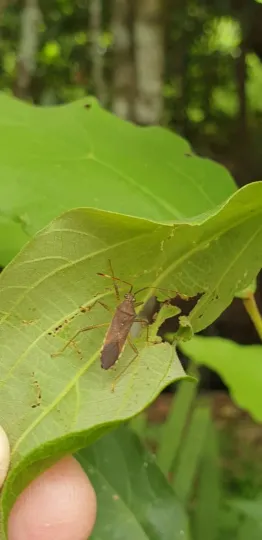
Description
How to identify
The Dasynus bug (genus Dasynus) belongs to the family Coreidae, commonly known as leaf-footed bugs. These insects are characterized by their elongated bodies and, in many species, distinctively widened tibiae on the hind legs, which aids in their classification.
Adults typically exhibit brown or yellowish-brown coloration, providing excellent camouflage against tree bark and foliage. They are strong fliers and can easily migrate between host plants to find optimal conditions for feeding and reproduction.
The life cycle includes the egg stage, five nymphal instars, and the adult stage. Nymphs resemble miniature, wingless versions of the adults but possess softer cuticles, making them more vulnerable to environmental changes and targeted interventions.
A notable biological trait of Dasynus is the presence of scent glands. When threatened, they release a pungent secretion, a defensive mechanism that makes them unappealing to many bird species and smaller insect predators in their native habitats.
Reproduction is temperature-dependent, with eggs usually laid in clusters on the undersides of leaves or within tender shoots. This positioning ensures that newly hatched nymphs have immediate access to food sources, maximizing their survival rate.
What it damages
Dasynus bugs are significant pests for various tropical and subtropical crops, particularly coconut palms. They cause economic damage by piercing the tissues of flowers, young fruits, and developing shoots with their piercing-sucking mouthparts.
The primary harm is caused when the bug injects saliva containing digestive enzymes into the plant. This process softens the fruit tissue and disrupts growth, often leading to premature fruit drop and significant yield reduction.
Because they are polyphagous, these bugs can thrive on a variety of host plants. The damage is not only limited to fruit loss but also includes the deformation of developing crops, making them unsuitable for export or commercial processing.
Continuous feeding by colonies can lead to the yellowing and wilting of affected branches. In severe cases of infestation, the health of the entire plant declines, making it susceptible to drought stress and other environmental challenges.
Furthermore, the puncture wounds created by the bugs serve as entry points for various phytopathogens, including fungi and bacteria. This secondary infection often leads to rot and the total loss of the affected fruit or vegetative tissue.
Signs of infestation
A primary indicator of a Dasynus infestation is the premature shedding of young fruit, which may appear healthy externally. Close inspection often reveals tiny dark punctures on the fruit surface, with necrotic tissue inside.
The presence of insect colonies on the underside of leaves or at the base of flower stalks is a clear sign. An unpleasant odor in the field, especially when plants are disturbed, often indicates a high population density.
Visible signs of plant distress include the yellowing of shoot tips and the blackening of flower buds. If the infestation occurs during the flowering stage, the blooms may wither and die before pollination occurs.
Excrement deposits on the leaves and fruit surfaces are another common sign. These deposits often facilitate the growth of sooty mold, which appears as a black, powdery coating on the surface of the plant tissues.
Affected plants may also show distorted growth patterns, such as twisted or stunted fruit. Regular scouting of the canopy is essential to spot these early warning signs before the population reaches economic injury levels.
Control measures
Effective management of Dasynus requires an Integrated Pest Management (IPM) approach. This involves combining cultural practices with targeted chemical or biological treatments to minimize the environmental footprint.
- Timely application of systemic or contact insecticides during the early stages of fruit development.
- Utilization of natural enemies, such as egg parasitoids, to keep the population in check.
- Sanitation, including the collection and destruction of fallen fruit and pruned debris.
- Monitoring pest density using pheromone traps to make informed treatment decisions.
Pruning is a crucial cultural practice that helps remove infected plant parts and improves airflow. This reduces the humidity around the fruit, making the environment less favorable for the survival of nymphs.
Farmers are advised to rotate insecticide classes to prevent the development of resistance. By monitoring the life cycle stages and applying treatments precisely when nymphs are most vulnerable, producers can significantly mitigate the impact of this pest.
Taxonomy
- Latin name
- Dasynus
- Order
- Hemiptera (bugs, aphids, leafhoppers)
- Family
- Coreidae
- EPPO code
- DASNSP
Discussion
No discussions yet — be the first.