
Dacus xanthopus
Dacus xanthopus
Description
How to identify
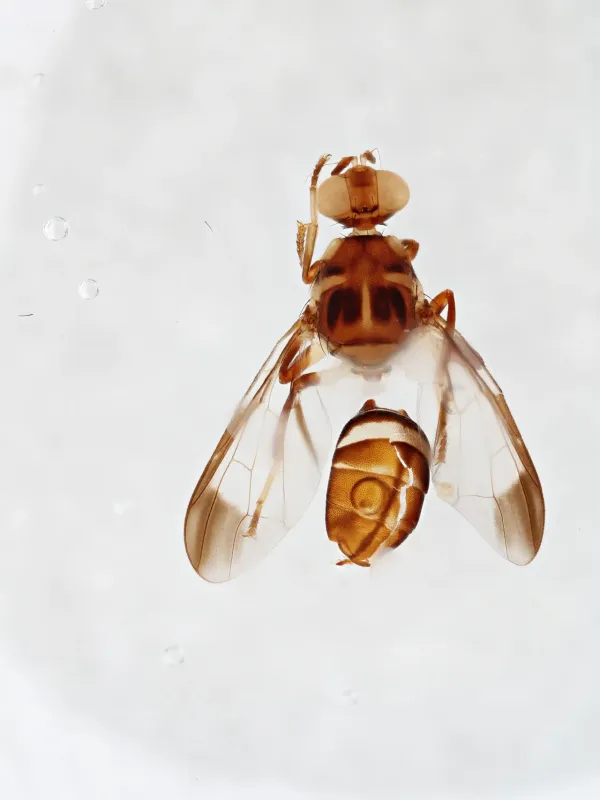
Dacus xanthopus is a species of fruit fly belonging to the family Tephritidae. It is characterized by a yellowish-brown body and patterned wings, which is a common feature among many fruit fly species within the Tephritidae family.
Adult insects are typically small to medium-sized. The female is equipped with a specialized ovipositor, which is used to pierce the skin of fruits and vegetables to deposit eggs inside the plant tissue. This adaptation makes them highly efficient at infesting crops.
The larvae, known as maggots, are legless, cylindrical, and white to yellowish in color. They spend their entire developmental period inside the host fruit, feeding on the fleshy interior, which leads to the rapid decay of the infested product.
The life cycle of this pest is highly dependent on environmental conditions, such as temperature and humidity. In favorable climates, several generations can occur within a single growing season, leading to rapid population growth if left unmanaged.
Monitoring for adults is primarily achieved through the use of sticky or liquid-based lures. Identifying the initial emergence of adults is critical for implementing timely control measures before large-scale infestation occurs.
What it damages
Dacus xanthopus primarily attacks cucurbits, such as cucumbers, squashes, and melons, as well as various other solanaceous crops. The larvae cause severe damage by creating tunnels throughout the fruit as they feed.
This feeding activity often leads to secondary infections by bacteria and fungi, which cause the fruit to soften and rot quickly. Consequently, the infested fruits become unmarketable and are usually discarded as waste.
In cases of heavy infestation, the entire crop can be compromised. This represents a significant financial loss for both commercial farmers and smallholder gardeners, as the fruits are no longer suitable for human consumption or storage.
Because the larvae reside inside the fruit, detection is often delayed until the infestation has already caused significant harm. This hidden nature of the damage makes effective control particularly challenging for producers.
Export markets often impose strict phytosanitary regulations that prohibit the entry of produce from regions where such fruit flies are prevalent. This leads to additional economic burdens, as farmers must undergo rigorous inspections and quality controls.
Signs of infestation
The first indicator of an infestation is the appearance of tiny pin-prick marks on the surface of young or ripening fruits. These marks are the sites where the female fly has deposited its eggs.
As the larvae grow, they create winding tunnels inside the fruit. If the fruit is opened, one can often find larvae, as well as dark, decayed tissue caused by secondary infection and the accumulation of larval waste.
Deformation of the fruit, such as uneven growth or visible depressions, is a common sign of internal larval feeding. Infected fruits may also change color prematurely, turning yellow or brown earlier than their healthy counterparts.
In the early morning, adult flies can often be seen resting on the underside of leaves or on the surface of the fruit. They are sensitive to movement and quickly fly away when disturbed.
A foul odor, characteristic of decomposing plant tissue, often emanates from heavily infested fruits. This smell may also attract other secondary pests, further complicating the condition of the affected crop.
Control measures
Integrated pest management is essential for controlling Dacus xanthopus. Cultural practices, such as the prompt removal and disposal of infested fruit, help to disrupt the life cycle of the pest and prevent future generations.
Ploughing the soil after the harvest can expose pupae to predators and adverse weather conditions, significantly reducing the population that emerges the following season. This is a foundational step in preventative agriculture.
Biological control methods, including the use of entomopathogenic fungi or beneficial insects, can be highly effective. These methods provide an environmentally friendly alternative to chemical pesticides, especially during the fruiting stages.
Chemical control should be applied based on economic thresholds determined by monitoring traps. It is crucial to choose pesticides that are registered for the specific crop and to rotate active ingredients to avoid resistance.
- Use fine-mesh netting to physically exclude flies from plants.
- Deploy pheromone or protein-based lures for early detection.
- Eliminate weeds that might serve as alternative host sites.
- Ensure thorough crop residue destruction post-harvest.
- Apply insecticides in compliance with safe harvest intervals.
Taxonomy
- Latin name
- Dacus xanthopus
- Order
- Diptera (flies)
- Family
- Tephritidae
- EPPO code
- DACUXN
Discussion
No discussions yet — be the first.