
Fruit fly Dacus woodi
Dacus woodi
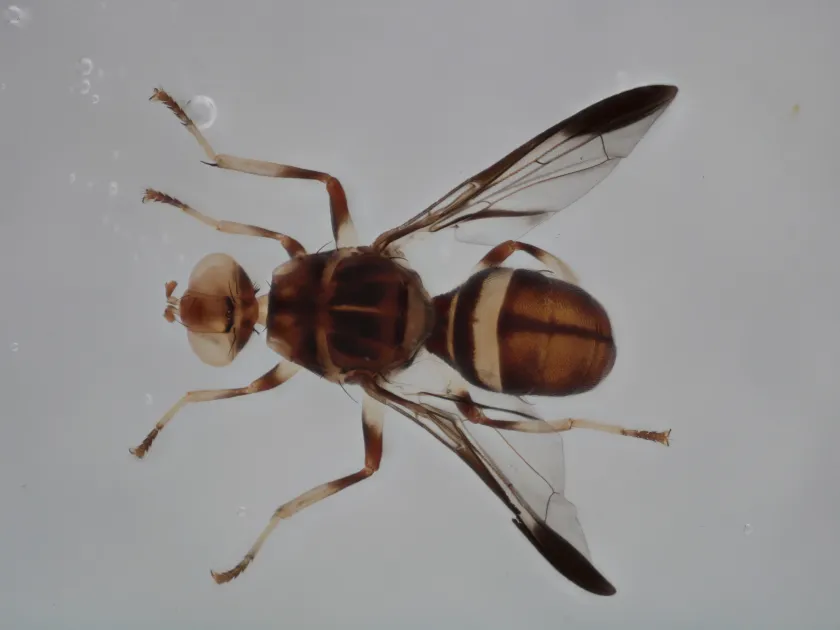
Description
How to identify
The fruit fly Dacus woodi belongs to the Tephritidae family, also known as the fruit fly family. These insects are characterized by their distinct wing patterns and the ability of females to pierce plant tissues with their ovipositors.
Adults are typically active during warm periods and demonstrate specific behavioral patterns related to mating and egg-laying on suitable host plants.
The larvae are vermiform, legless, and cream-colored, specifically adapted for burrowing and feeding inside fleshy fruits where they remain protected from environmental factors.
The life cycle encompasses metamorphosis from an egg through several larval stages to pupation, which usually occurs in the soil beneath the infested host plant.
Field identification requires trained personnel to recognize the morphological characteristics of both the adults and the entry holes created by the females on the fruit surface.
What it damages
The primary damage is caused by the larvae, which tunnel through the fruit flesh, causing internal breakdown and accelerated decay of the product.
Mechanical damage from oviposition punctures often serves as an entry point for secondary bacterial and fungal pathogens, leading to rapid fruit rot.
Infested fruits typically ripen prematurely and drop to the ground, resulting in significant yield losses for commercial orchardists and farmers.
Beyond the direct loss of biomass, the presence of these larvae leads to a total loss of marketability, making the produce unfit for human consumption.
Economic damage is exacerbated in regions where this species has no natural enemies, allowing populations to reach outbreak levels rapidly.
Control measures
Effective management begins with strict adherence to phytosanitary regulations to prevent the accidental introduction of the pest into new areas.
Integrated pest management (IPM) strategies include the use of attractant-based monitoring traps to determine precise timing for interventions.
Cultural practices, such as the systematic removal and destruction of fallen fruit, are essential to break the life cycle by removing the pupation sites.
Chemical control involving target-specific insecticides is applied during the peak adult flight period to prevent egg-laying on the developing crop.
Biological control, utilizing beneficial insects or soil-dwelling predators, offers a sustainable long-term approach to maintaining population levels below economic injury thresholds.
Taxonomy
- Latin name
- Dacus woodi
- Order
- Diptera (flies)
- Family
- Tephritidae
- EPPO code
- DACUWO
Discussion
No discussions yet — be the first.