
Melon fly
Dacus vertebratus
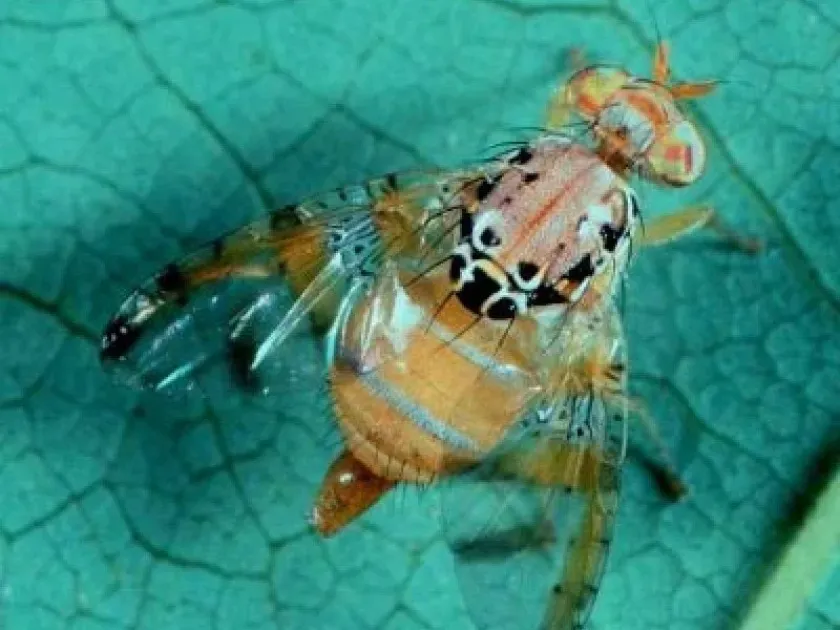
Description
How to identify
The melon fly (Dacus vertebratus) is a destructive insect belonging to the family Tephritidae, commonly known as fruit flies. It is a major threat to commercial cucurbit production worldwide.
Adult flies are typically 6–8 mm in length, featuring distinctive wing patterns and a body coloration that provides camouflage within the foliage of host plants.
The life cycle encompasses four stages: egg, larva, pupa, and adult. The female utilizes a sharp ovipositor to pierce the rind of fruits and deposit eggs directly into the tissue.
Larvae are creamy-white, legless maggots that feed exclusively on the pulp of host fruits, leading to the rapid internal deterioration of the affected vegetables.
Pupation primarily occurs in the soil, allowing the insect to survive in a dormant stage during periods when fresh host plants are unavailable or environmental conditions are unfavorable.
What it damages
The melon fly primarily attacks plants in the Cucurbitaceae family, causing significant losses to crops such as melons, watermelons, cucumbers, and pumpkins.
The larval feeding activity results in internal tunneling, which destroys the fruit's texture and causes the development of unpleasant watery decay.
In addition to direct consumption of the pulp, the fly's feeding sites provide entry points for pathogenic bacteria and fungi, accelerating the rot process.
Infested fruits often exhibit surface scarring, deformation, and stunted growth, rendering them completely unmarketable for either fresh consumption or export.
Heavy infestations can lead to total crop failure, forcing farmers to implement rigorous monitoring and management practices throughout the entire growing season.
When it appears
The emergence of adult flies usually corresponds with the appearance of young fruit on host plants, which provides the necessary substrates for reproduction.
The melon fly is capable of completing multiple generations within a single growing season, provided that temperatures remain within the optimal range for development.
Adults are most active during the cooler parts of the day, such as early morning or late afternoon, while seeking shelter during the heat of the midday sun.
The duration of the developmental stages is heavily influenced by ambient temperature and soil moisture levels, which directly correlate with the speed of reproduction.
As the season draws to a close, the final generation enters pupal diapause in the soil, where it will remain until the environmental triggers of spring induce emergence.
Signs of infestation
The earliest signs of an infestation are small, pin-prick marks on the skin of young fruits, representing the sites where female flies have laid their eggs.
Exudation of sap from these puncture wounds is common, which may harden into small, dark scabs or bumps on the outer surface of the maturing fruit.
A soft, mushy texture in localized areas of the fruit usually indicates internal larval activity, often accompanied by a distinct, foul, or fermented odor.
Aborted or prematurely yellowing fruit is a strong indicator of high fly pressure, as the internal damage prevents the fruit from completing its normal growth.
- Pin-prick punctures on fruit skin.
- Soft, sunken spots on the rind.
- Premature fruit drop and rot.
- Internal pulp liquefaction.
Control measures
Cultural control practices, such as deep plowing after harvest, are essential to expose and kill overwintering pupae hidden in the soil layers.
Crop rotation is a fundamental strategy to disrupt the life cycle of the pest, ensuring that host plants are not grown in the same plot year after year.
Rigorous sanitation, including the prompt removal and deep burial or destruction of all infested fruits, is necessary to reduce the local fly population.
Chemical control involving systemic or contact insecticides is often used to target adult flies, with applications timed precisely to prevent oviposition.
The use of pheromone traps and protein-based bait stations is highly recommended for monitoring fly populations and managing them effectively within an integrated pest management program.
Taxonomy
- Latin name
- Dacus vertebratus
- Order
- Diptera (flies)
- Family
- Tephritidae
- EPPO code
- DIDAVE
Discussion
No discussions yet — be the first.